Sea’s Q1 net loss widens to US$445.1m as gaming arm loses steam
The company has also turned cautious on e-commerce, lowering the bottom band of its revenue forecast.

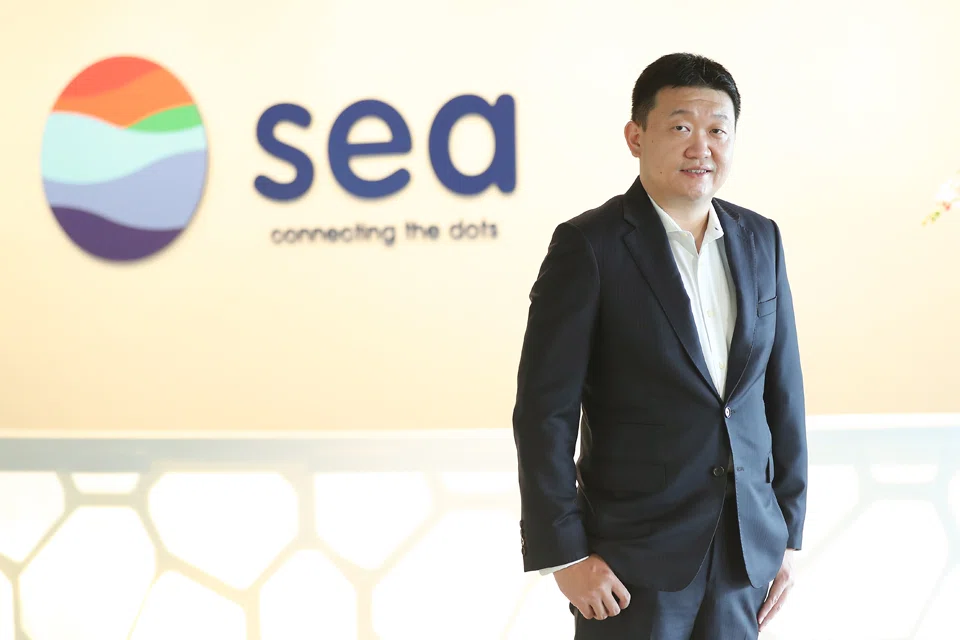
SINGAPORE-BASED tech giant Sea posted a US$445.1 million net loss (excluding share-based compensation) for Q1 ended March, wider than the US$320 million loss a year ago, as both its gaming and e-commerce businesses come under pressure.
The New York-listed company, which owns game developer Garena and online shopping platform Shopee, saw Q1 revenue surge 64.4 per cent year-on-year to US$2.9 billion.
But Sea has turned cautious on Shopee – the company revised its e-commerce revenue forecast to be between US$8.5 billion and US$9.1 billion for FY2022, compared to the previous guidance of between US$8.9 billion and US$9.1 billion.
“While we believe that our previous guidance is still achievable, we are revising (it) to correspondingly reflect our expectations around the upcoming macro uncertainties,” Forrest Li, Sea’s chairman and chief executive, said in an earnings call on Monday (May 17) evening.
Sea’s Q1 e-commerce revenue grew 94.2 per cent to US$1.5 billion, on the back of a 38.7 per cent increase in gross merchandise value (GMV) to US$17.4 billion.
However, the segment’s adjusted earnings before interest, taxes, depreciation and amortisation (Ebitda) loss widened to US$742.8 million, compared to a US$412.9 million Ebitda loss a year ago. It was weighed down by a US$113.3 million increase in staff cost, especially due to the addition of more research and development talent.
Shopee is still on track to achieve a positive adjusted Ebitda, before allocation of headquarter costs, in South-east Asia and Taiwan by this year, Sea reiterated. Headquarter costs include staff cost, general and administrative expenses such as building facilities, and server hosting expenses.
After headquarter costs allocation, the company expects Shopee to hit a positive adjusted Ebitda in South-east Asia and Taiwan by the end of next year.
This outlook comes as Shopee faces challenges in its global expansion. As announced in March, Shopee is shutting down its operations in India, a move that analysts cheered as raising the prospect of profitability. The move came after Shopee’s quick exit from France, as well as India’s ban on Garena’s prominent game Free Fire.
Over at Sea's digital entertainment segment, representing Garena, revenue rose 45.3 per cent to US$1.1 billion. But bookings, which represent generally accepted accounting principles (GAAP) revenue plus change in deferred revenue, came in at US$800 million – lower than the US$1.1 billion a year ago.
The segment posted an adjusted Ebitda of US$431.4 million, translating to 52.2 per cent of bookings. This is a drop from the US$717.3 million adjusted Ebitda a year ago, which had represented 64.4 per cent of bookings.
Quarterly active users also fell to 615.9 million, compared to 648.8 million a year ago. The paying user ratio came in at 10 per cent for the quarter, down from 12.3 per cent.
“While Garena experienced headwinds in its growth post-Covid, we saw some preliminary positive effects from our efforts to improve user engagement in Free Fire. In particular, the monthly user trends for Free Fire began to show some early signs of stabilising toward the end of the first quarter,” said Li.
But he later added: While these are encouraging signs, the longer-term impact of reopening around online gaming and Free Fire specifically remains to be seen and we will continue to focus on user engagement and user base stabilisation.”
Some observers are sceptical. “With Free Fire maturing in a post-pandemic environment (with) weakening mobile gaming demand, Garena’s upcoming major game launches may not be able to keep pace,” said Kristine Lau, an analyst at Third Bridge.
As Free Fire wanes, all eyes are on Sea’s most nascent business, digital financial services. The segment posted a revenue of US$236 million, up by over 350 per cent year-on-year, with an adjusted Ebitda loss of US$124.9 million. Total payment volume for the company’s mobile wallet came in at US$5.1 billion, up 48.5 per cent year-on-year.
Sea has been doubling down on fintech as part of its growth story. On May 11, the company was tipped by The Financial Times to be moving into Indonesia’s insurance sector, via a potential acquisition of insurance company Asuransi Mega Pratama.
Sea’s consortium also recently snagged a digital banking licence in Malaysia, as the company also prepares to launch its digibank in Singapore. Brazil is another key market – earlier this month, Shopee gained authorisation from the country’s central bank to operate as a payment institution.
Shares of Sea had closed at US$70.33 on Monday (May 16), down 6.7 per cent, before the earnings release.
Amendment note: An earlier headline was edited to specify that Sea’s net loss widened.