Covid-19 makes uneasy bedfellows of Grab and Gojek
Rising competition from Sea also adds impetus to a union


Singapore
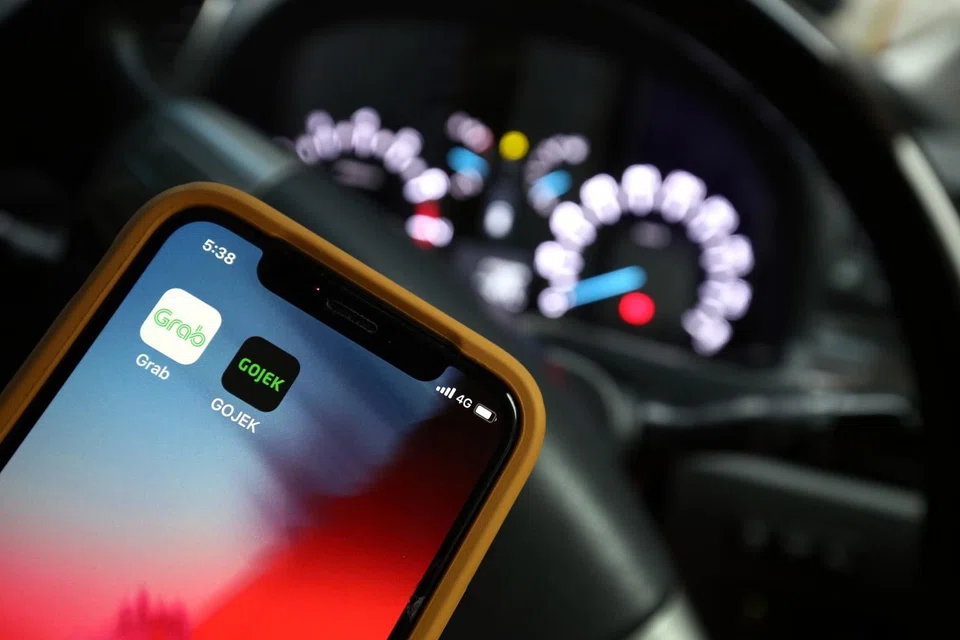
THE dominance of Grab over archrival Gojek outside of Indonesia may have become more obvious with Covid-19, and this may be a key factor spurring both South-east Asian unicorns closer towards a union, industry observers said.
Furthermore, a global tech rally has likely renewed the impetus for both firms to go public. Rising competition from stock market darling Sea is making consolidation a more attractive option as well, the observers told The Business Times (BT).
A report by Bloomberg on Wednesday, based on anonymous sources, said that Grab and Gojek are edging closer to agreeing on merger terms. A day later, Reuters reported that Grab chief Anthony Tan told staff in an internal note that the firm is in a "position to acquire", though he downplayed speculation.
The news reports were enough to prompt Singapore's competition watchdog to look into the matter. The Competition and Consumer Commission of Singapore told BT on Friday that it has written to Grab and Gojek to request more information.
These developments in the merger talks suggest that both parties may be closer to a consensus on who the "bigger fish" is - a key point of contention that reportedly impeded discussions only months ago, said Vincent Fernando, founder of tech-focused research and corporate finance firm Zero One Partners.
"Before, maybe with egos and ambition, neither company wanted to concede that it was going to be the smaller party in a merger. Now, Covid-19 has made it more clear that Grab is indeed bigger, and will be the dominant part of the merger," he said.
According to Bloomberg, one structure said to have substantial support involves Mr Tan becoming chief of the combined entity, while Gojek executives run the combined business in Indonesia under the Gojek brand.
Li Jianggan, chief executive of venture builder Momentum Works, reckons that Grab may not want this structure. He believes that Grab has caught up with Gojek in terms of market share in Indonesia. Meanwhile, Gojek's efforts outside its home base "are not bringing any meaningful market share".
"How to treat the Indonesian market is probably a key contentious point in the negotiations. I think Gojek's recent ad campaigns in Thailand are a last-ditch effort to raise the awareness of its regional efforts," he said.
But not everyone is convinced that Grab has the upper hand over Gojek. Talk of the firms closing in on the terms of a merger seems to reflect "some wishful thinking from Grab and its shareholders", said analyst Angus Mackintosh.
"I'm not sure why Gojek or its shareholders would want to relinquish control to Grab, even if it was to remain 'independent'. Gojek has just started to rebrand its regional operations under the Gojek name, which seems sensible. It is a long way behind Grab but not in a position where it needs to give up," Mr Mackintosh, an Asean insight provider on research portal SmartKarma, told BT.
He noted that while both firms have been moving neck and neck in developing value-added services, GoPay in Indonesia has just brought on board Facebook and PayPal as strategic investors, "which could take it to a new level".
In any case, observers on both sides agree that rising competition from Sea could be another impetus for a union.
Mr Li of Momentum Works noted that Sea's e-commerce platform Shopee has "benefitted significantly" from the pandemic. The firm has also stepped up its market share in digital financial services with SeaMoney.
"The consolidation of Grab and Gojek is necessary to keep their early mover advantages in this area," he said.
Likewise, Mr Mackintosh noted in a Thursday report that SeaMoney may be a serious challenger to Grab in the region, while GoPay is solely an Indonesian challenger.
Sea's share price surge over the past year also "makes a future listing enticing", he added. Grab and Gojek were last valued at US$14 billion and US$10 billion respectively, which "makes them look diminutive in comparison to Sea", whose market value is over US$90 billion.
Of course, regulatory approval will be a big wild card in any merger efforts.
Said Mr Fernando: "People are going to say, wait a second, because they're just so big relative to the other parties that are in the market... Sometimes you have to carve out other businesses to satisfy (regulators), and that can slow down the process."
This potential roadblock may mean the pressure is on for Grab and Gojek to seal the deal. How soon this could happen remains anyone's guess for now.
But Mr Li muses that the recent news reports may be a sign of talks intensifying. He said: "The more noise you hear from outside, the more some concerned party is trying to raise the stakes, which sometimes can mean the talks have reached key stages."