Singapore startup Charged aims to sell 2 million electric motorcycles a year

Derryn Wong
Derryn Wong

Published Wed, Jun 21, 2023 · 05:50 AM
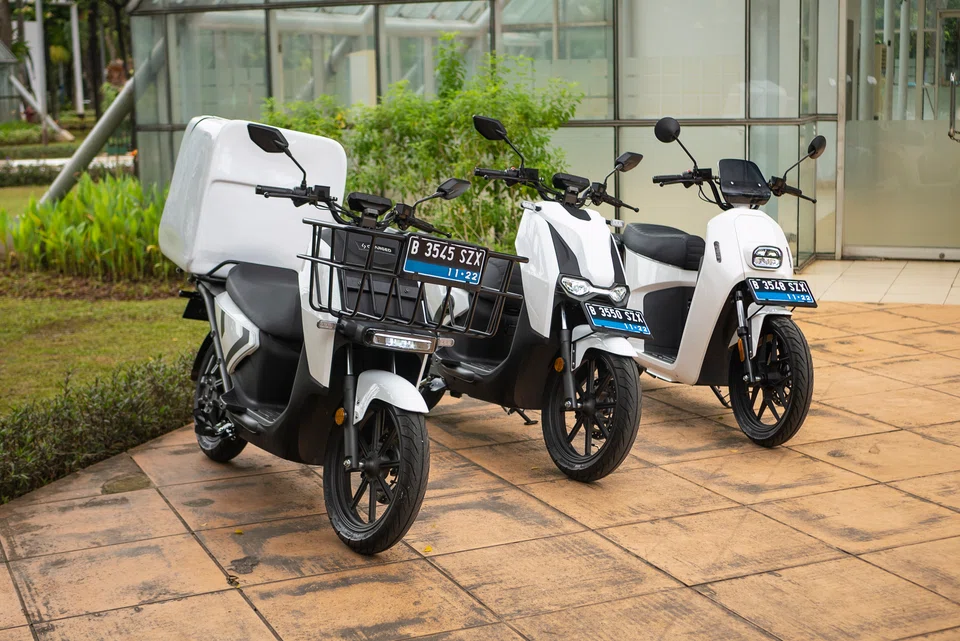
    • Singaporean electric motorcycle and mobility startup Charged has three models - from left: the Anoa cargo bike, the Rimau urban commuter and the Maleo ride-hailing model.
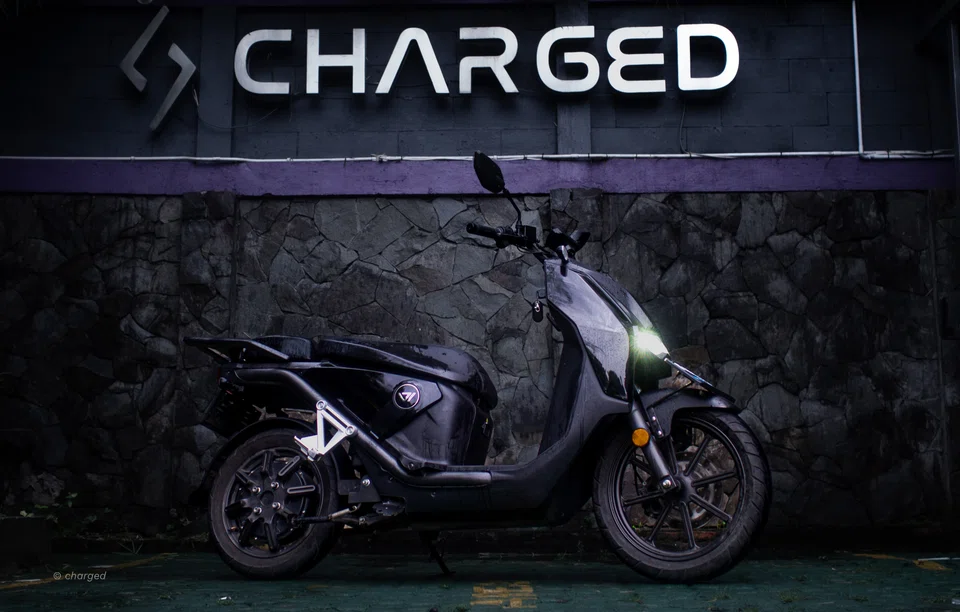
    • The Charged Anoa electric motorcycle.
    • Singaporean electric motorcycle and mobility startup Charged has three models - from left: the Anoa cargo bike, the Rimau urban commuter and the Maleo ride-hailing model. PHOTO: CHARGED
    • The Charged Anoa electric motorcycle. PHOTO: CHARGED

    SINGAPOREAN startup Charged plans to sell 10 million electric motorcycles (e-motos) in the region over the next 10 years, ramping up to annual sales of two million units by the end of that period, said co-founder Joel Chang.

    While Indonesia is its biggest market today, the company aims to take its bikes further in South-east Asia and beyond, he said in an interview with The Business Times (BT).

    Founded in March 2022, Charged has three bike models so far, with its zero-emissions production facility having delivered “more than 1,000 motorcycles” to clients in Indonesia, Malaysia and Vietnam.

    By this year, it plans to enter other South-east Asian markets – including Singapore – and extend its model range to six bikes.

    Charging up and out

    Headquartered in Singapore with offices and a production facility in Indonesia, Charged was founded by automotive industry veteran Chang and corporate and commercial lawyer Soh Chun Bin, who together had sunk in around S$500,000 to get it off the ground.

    Charged received seed funding of US$4.5 million from Singapore-based venture capitalist DeClout Ventures last September, and US$3 million from development partner Vmoto Soco (Vmoto) in a technology and investment agreement last December. According to Vmoto’s Dec 26 press statement, Charged was valued at US$38 million at the time.

    E-motos are something of an unfinished business for Chang, who was previously chief operating officer at two competing Singaporean e-moto startups: Scorpio Electric, from 2017 to 2019, and Ion Mobility, from 2019 to 2021.

    “In a sense, I had to ‘fail’ twice in electric motorcycles to get here,” said Chang of his prior roles. “The failure was, of course, my own, but the experience also showed me that it was possible to do it differently.”

    A quick start was possible because Charged decided not to develop its vehicles from scratch, noted Chang.

    To get to market quickly, it partnered experienced suppliers for key technologies: e-moto maker Vmoto to co-develop the motorcycles, and Chinese battery giant CATL for batteries.

    Setting up shop in Indonesia allowed access to a mature motorcycle supply chain and experienced workforce. Charged has around 80 employees, some with prior experience at Grab, Honda and Hyundai, among others.

    The country’s incentives for electric vehicle (EV) adoption and efforts to establish EV production and supply chains were also key factors in the decision to base Charged there.

    The company’s solar-powered factory in the Greater Jakarta area, measuring 172,000 square feet, can produce up to 230,000 bikes a year.

    Charged has a solar-powered 172,000 square foot factory in Greater Jakarta. PHOTO: CHARGED

    Self-sustaining

    South-east Asia’s motorcycle market is one of the world’s largest, with app-driven gig riding expected to drive growth even further.

    Indonesia’s gig-ridership is estimated at four million – compared with about 50,000 in Singapore – with the scene dominated by Grab and Gojek.

    Charged is attempting to capitalise on this, marketing itself as an eco-friendly EV “mobility provider” with bikes available both for sale and monthly hire.

    The company operates in four areas in Indonesia – central Jakarta, Kemang, Cikupa and Bali – with three available models: the Maleo ride-hailing model, the Rimau urban commuting bike, and the Anoa cargo bike for logistics and deliveries.

    The cheapest model is the Maleo, which can be purchased at 24 million rupiah (S$2,153) or rented at 1.2 million rupiah per month. The basic option has a single 2.7 kilowatt hour battery that gives a range of about 125 km.

    The more expensive models, the Anoa and Rimau, have space for an optional second battery which extends the range to around 200 km. Motorcycles are to be charged at the users’ homes, though the company also offers paid-for battery swap and fast-charging services at its outlets.

    The dual-option business model has found traction: Charged’s biggest pool of users in Indonesia are ride-hailing and food delivery riders, the majority of which rent rather than buy their bikes. The company also has fleet clients, but it declined to reveal details on competitive concerns.

    Chang said that its Indonesia business is currently “self-sustaining”, but needs capital injections to achieve its growth targets. While the company is not actively looking for private equity, it may explore debt financing. “Sustainable or ESG (environmental, social and governance) finance is very interested in funding guys like us because we tick all their boxes. Banks and financiers are under huge pressure… to reduce their carbon lending footprint.”

    Joel Chang, CEO of Charged, says startups such as his offer banks the chance to improve their environmental, social and governance ratings. PHOTO: CHARGED

    Electric motorcycle race charges up

    The global market for e-motos could grow from US$15.7 billion in 2020 to US$30.5 billion in 2030, according to estimates by market intelligence company Motorcycles Data. A report by market research firm Industry Research Biz predicts a market value of US$20.3 billion in 2023, growing to US$28.6 billion by 2028.

    Chang predicts that by next year, the e-moto market could see around half a million in unit sales for Indonesia alone, contributing to a total of one million units for South-east Asia.

    Charged aims to continue expanding its business in Indonesia, Malaysia and Vietnam this year, and to begin deliveries to the Philippines, Singapore and Thailand in 2024.

    In Singapore alone, there are four other e-moto brands with products in various states of development. Regional competition is even stiffer with Gogoro, VinFast, DatBike, Niu and others aiming for part of Asean’s 15 million unit motorcycle market annually.

    GSS Energy group CEO Sydney Yeung with the Iso UNO-X electric motorcycle. PHOTO: GSS ENERGY

    In response to BT queries, Scorpio Electric said its first model, the X1, is “on track for the second half of 2023”. The company announced in January, US$5 million in funding and a claimed valuation of US$150 million, while it is working with “a Chinese conglomerate” to assemble the X1.

    This February, fellow Singaporean startup Ion Mobility received US$18.7 million in Series A funding and signed a strategic partnership with a subsidiary of Indian motorcycle manufacturer TVS Motor Company, aiming to grow its presence in Indonesia.

    Singapore-listed GSS Energy also has e-motos on the road. Its subsidiary Giken Sakata bought over Thai electric motorcycle maker Edison in 2021 and produces its own Iso UNO-X e-moto, which was approved for sale in Thailand in 2022.

    Chang said he sees the closest competition coming from Indonesia, though. For instance, there is e-moto brand Alva, part of the Ilectra Motor Group owned by Indonesian-listed Indika Energy. After receiving approval from the authorities last August, it reportedly delivered a four-figure number of motorcycles by December.

    Competition in South-east Asia is already fierce, but Chang notes even greater opportunity further afield, with Charged having received inquiries on sales to Asia-Pacific markets such as Australia, Hong Kong and Taiwan.

    He said: “If we can get the lead in multiple territories once the e-moto market is in full swing, I think two million units a year is attainable.”