

Singapore startups taking a crack at recycling lithium batteries
Coming up with less pollutive methods will boost the sustainability of electric vehicles

Sharanya Pillai
THERE’S a dirty truth behind supposedly clean electric vehicles (EVs): the lithium batteries they run on can’t be easily recycled.
Current methods include smelting – which involves high-temperature extraction – or leaching with acids. These processes are energy-intensive, costly and can also produce pollutive substances.
Many companies have therefore opted not to recycle – globally, only 5 per cent of the world’s lithium batteries are recycled.
Companies that can figure out a cleaner and more cost-effective solution stand to tap a market projected to be worth US$6.55 billion by 2028, Fortune Business Insights has said.
Singapore-based startups NEU Battery Materials and Green Li-ion hope to be among them.
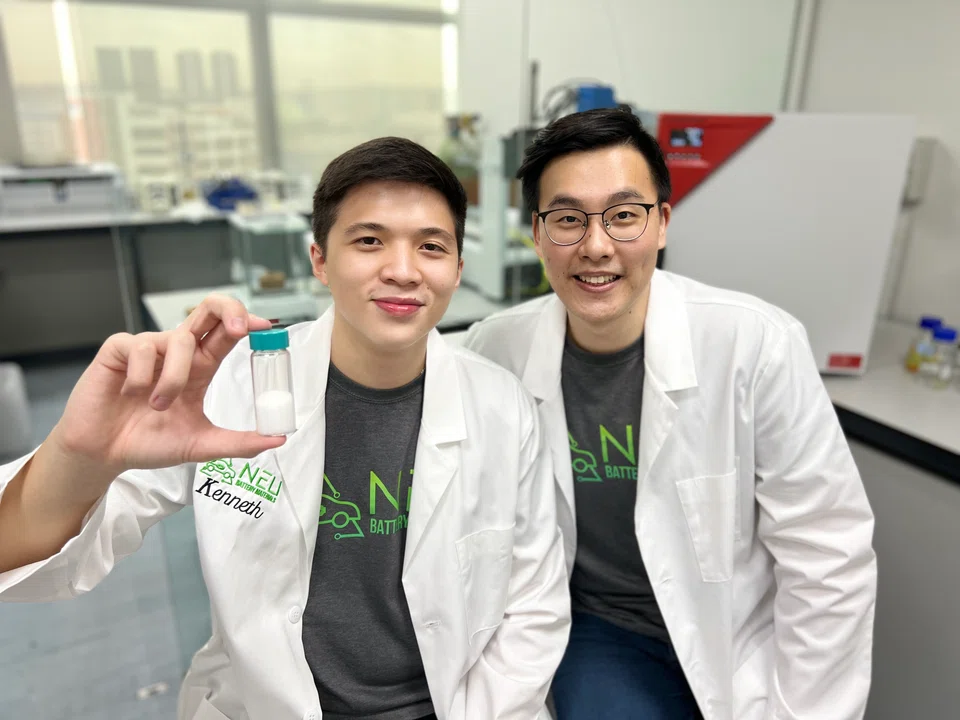
NEU, founded last year, uses electricity to recycle lithium batteries. Its system is the brainchild of Associate Professor Wang Qing of the National University of Singapore (NUS).
Co-founders Bryan Oh and Kenneth Palmer sought to commercialise this technology under an NUS programme, GRIP MAKE, which translates the university’s research into deep-tech startups.
NEU's process involves crushing batteries into a powder known as “black mass”. This is then placed into a solution fed with electricity. The electrochemical reaction separates out lithium in the form of a white powder, lithium hydroxide, which can be sold to battery makers.
NEU has applied for a patent covering several major markets, including Singapore, China, the United States and Europe. It is also building a 100 sq m pilot site in Singapore, supported by a grant from the Temasek Foundation. The facility is slated for completion by Q3 this year.
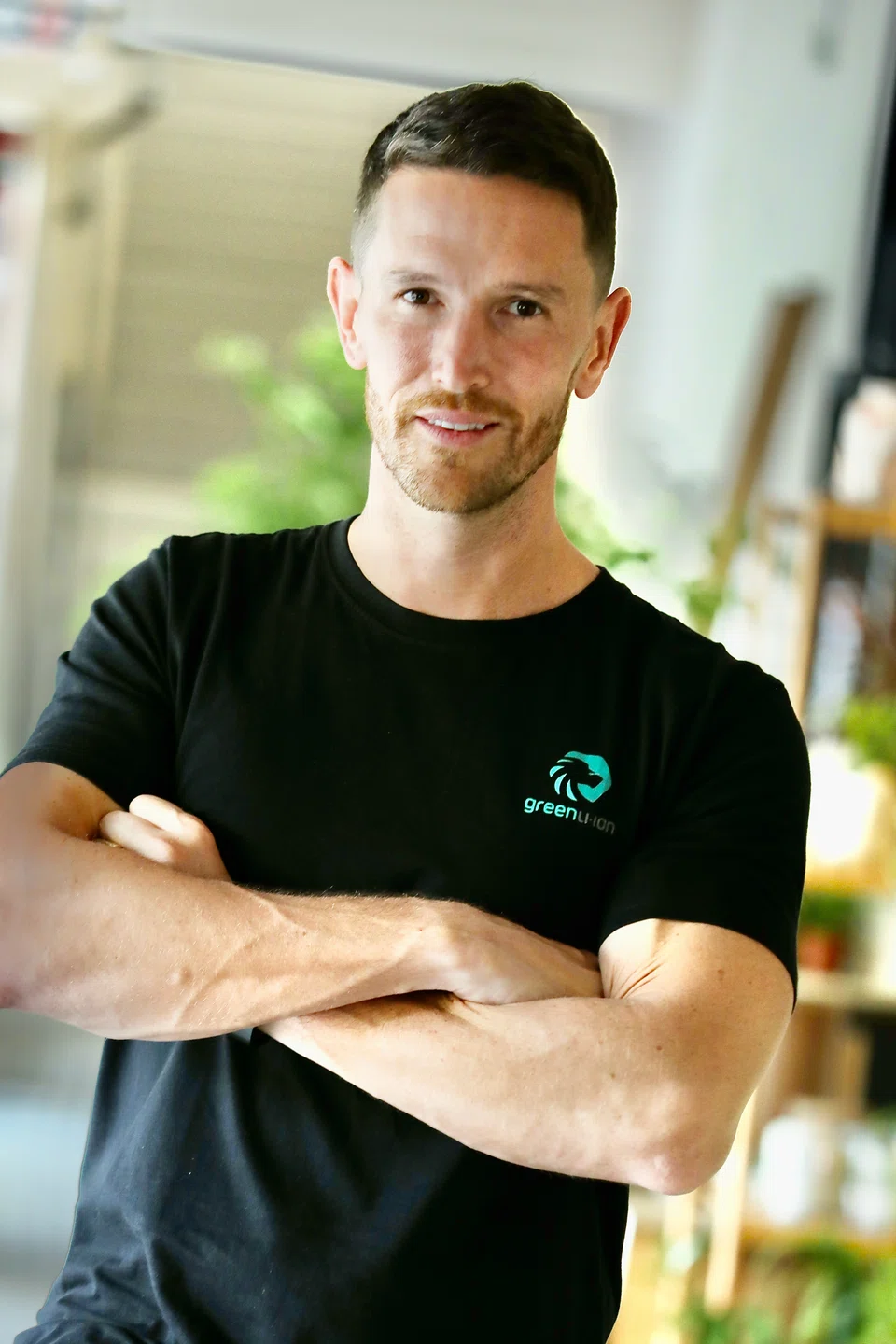
Two-year-old Green Li-ion uses a process developed by co-founder Reza Katal to "rejuvenate" batteries. The startup’s proprietary machine places a protective “bubble” around the cathode materials in the black mass, and discharges the unwanted substances.
The cathode stores the energy charge and is the “brain of the battery”, said co-founder and chief executive Leon Farrant.
The output can be customised according to how the customer wants to use the cathode material – whether for an iPhone or an EV. Green Li-ion has 5 patents pending, covering Singapore and other global markets.
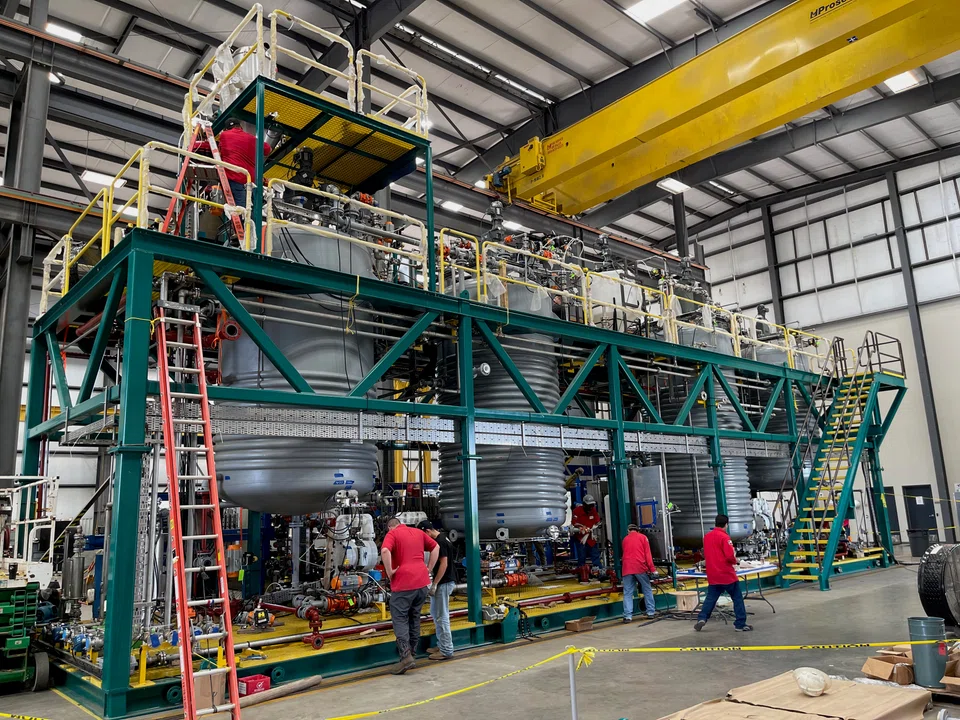
Green Li-ion's machine is modular. "You have a very small upfront investment, and then you can add more and more modules to keep up with capacity,” said Farrant, who is from Australia and previously worked in oil and gas, and in green energy.
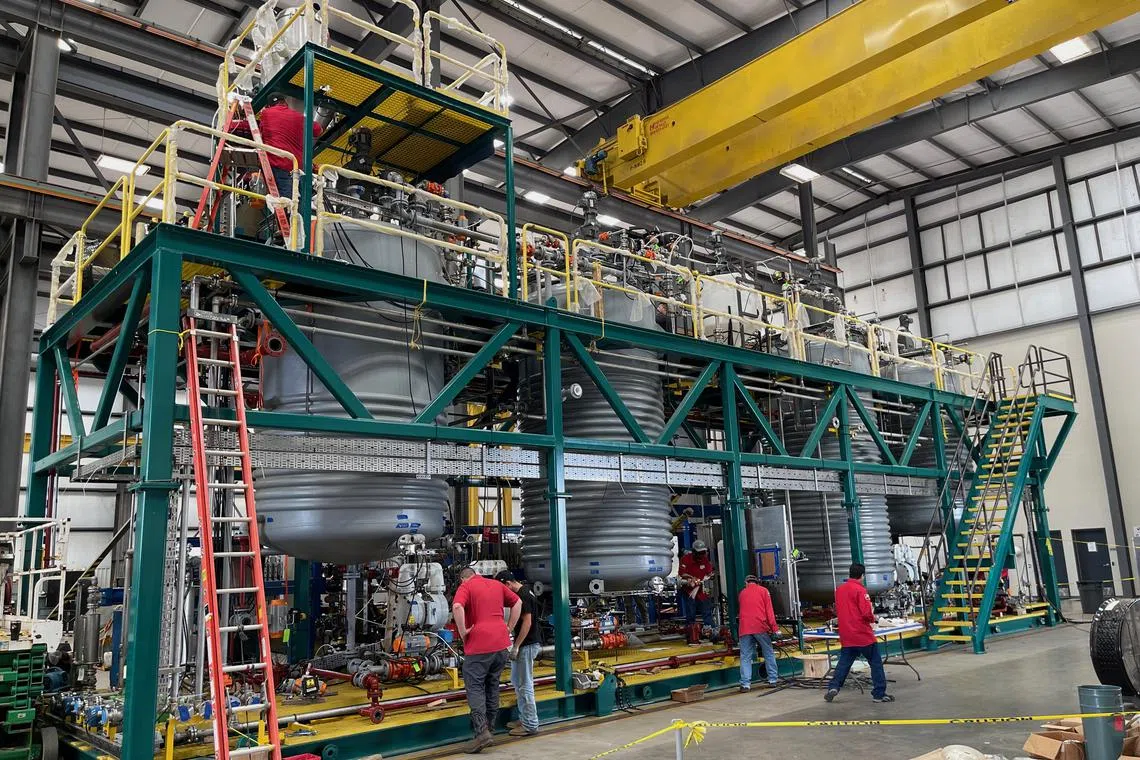
Green Li-ion has sold 8 of its machines, which are built in Houston, Texas, to battery-recycling companies and battery manufacturers. The startup raised US$11.6 million in a Series A round in April led by Energy Revolution Ventures.
Battery types
Green Li-ion’s machine processes a wide variety of lithium batteries, including those containing nickel and cobalt. “Our technology is the only one in the world that can take all those batteries in mixed batches,” said Farrant.
Meanwhile, NEU is specifically targeting Lithium Iron Phosphate (LFP) batteries. While it hopes to process other types of batteries in future, the startup sees a big market for recycling LFP batteries as they are more widely used in EVs. Last year, Tesla announced that it is switching to LFP batteries in its standard-range vehicles from nickel and cobalt-based ones.
“More day-to-day EVs are using LFP batteries because they are cheaper to make, and safer,” Oh said. “But one of the downsides of such cheaper batteries is that, when it comes to recycling, there’s not much value compared to cobalt or nickel-based batteries.”
Besides LFP batteries, other commonly used lithium battery types are Nickel Manganese Cobalt (NMC) and Lithium Cobalt Oxide (LCO). Recycling of these is more common, as companies want to extract the prized nickel and cobalt.
NEU’s process costs 20 per cent that of traditional methods, making it more worthwhile for businesses to recycle their LFP batteries, Oh said.
Both NEU and Green Li-ion face stiff competition. US-based startup Redwood Materials, run by Tesla co-founder JB Straubel, is among the larger players trying to crack this market. As EV usage grows, more startups are likely to emerge.
But Oh is hopeful that a growing sector also produces more opportunities for collaboration. "Collaboration allows us to then provide more solutions faster, to help recycle all types of batteries… so that we can give it back to the battery manufacturers, and then they can make more batteries out of it,” he said.
Farrant said he intends to stay focused on deploying his machines and generating revenue from licensing them out.
He added: “We will, I guess, have to raise another (funding) round next year. But we are quite focused on maybe even a public market listing at some stage.”
TRENDING NOW

Once staunchly pro-China, Malaysian Chinese businesses are now distancing themselves from Beijing
‘How many will survive?’: Bubble fears arise as China’s humanoid robotics face reality check

Philippine power giant First Gen rebuffs foreign offers, plans up to US$2.6 billion in expansion
Indonesia imposes US$116 million in fines over manipulation of Sinar Mas, Prajogo-linked stocks

