Some ‘buy now, pay later’ players eye a slice of the F&B pie
Smaller receipts are not deterring BNPL providers from expanding into the sector in the quest to acquire more customers, but not everyone is keen.

Megan Cheah
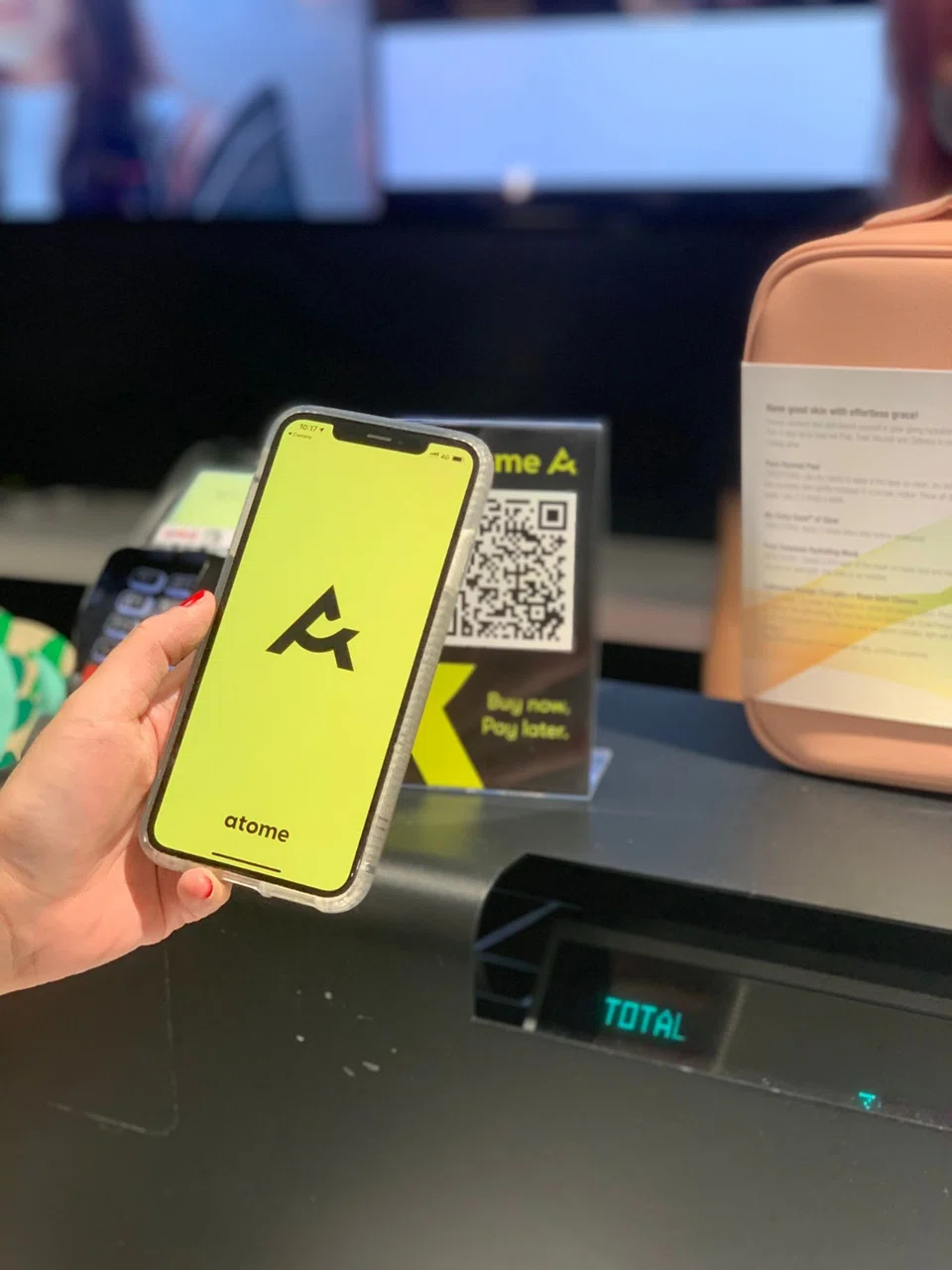
WHEN it comes to large bills for a new refrigerator or travel package, it may make sense to “buy now, pay later” (BNPL) – splitting the payment into interest-free instalments that allow consumers to spread out their costs.
Yet BNPL service providers have started making forays into the food and beverage (F&B) sector, an area with markedly smaller bills than big-ticket items.
In April, Atome brought more than 70 restaurants and cafes on board its BNPL platform. Brands including restaurant chain The Connoisseur Concerto, bakery Paul and Korean restaurant Chir Chir Fusion Chicken Factory now offer Atome’s payment instalment schemes.
Atome, owned by Singapore-based, artificial intelligence-focused startup Advance Intelligence Group, said the push into the F&B industry will enable merchants to tap an alternative digital payment method and acquire more customers through its platform. “This is especially important with falling foot traffic for offline outlets due to the impact of the pandemic,” said Bryan Quek, Atome’s Singapore general manager.
Atome has tied up with over 10,000 retailers in 10 markets, including Singapore, Malaysia and China. This follows high-cheque funding rounds last year, where parent Advance Intelligence Group raised US$400 million in September last year, along with a deal with Standard Chartered for US$500 million in financing. (*see amendment note)

Expanding into F&B could help Atome widen its pool of consumer data points, something it does not have easy access to as the startup is not tied to an e-commerce or ride-hailing platform like some of its rivals, superapp operator Grab and online shopping platform Shopee.
Other BNPL providers have also encouraged F&B businesses to come on board with them, albeit on a smaller scale.
Pace Enterprise, which has over 8,000 points-of-sale across Asia, lists some F&B businesses among its merchants, including restaurants and cafes as well as online merchants like coffee brand Roastedly and local snacks maker The Golden Duck. Purchases on Pace, from under S$100 to over S$2,000, are split into 3 instalments.
Meanwhile, Grab, which branched into BNPL through its financial arm Grab Financial Group, offers a PayLater Postpaid feature that covers ride-hailing and deliveries in various sectors, including F&B.
BNPL came into prominence in recent years and accounted for S$440 million worth of transactions under credit and debit card payments in 2021, out of S$103 billion overall, according to the Monetary Authority of Singapore (MAS). The amount is just 0.4 per cent of the volume of payments transacted that year.
While similar to banks’ instalment payment plans, BNPL in Singapore draws customers with zero interest rates on instalments and ease of use, usually through a mobile app.
But the providers charge for late payments — The Business Times previously reported that Grab and Atome charge S$10 and S$15 late fees respectively, while Pace charges S$10 and an additional S$1 per day that a payment is late, up to 25 per cent of the transaction value or S$60, whichever is less.
It is also an area that is coming into regulatory scrutiny here, drawing questions in Parliament over BNPL’s growing adoption – the service effectively extends credit to consumers without credit checks. A working group comprising industry players under the Singapore FinTech Association, and guided by MAS, aims to launch a code of conduct for the industry in the second half of 2022.

F&B’s generally smaller receipts makes it a curious sector for BNPL to venture into. This is reflected in the low minimum spend – Atome’s is just S$1.50, which the company promoted through a coffee deal at one of its early F&B partners Flash Coffee. Pace has no minimum spend at all.
Perhaps consumers truly do not need to split a S$1.50 dollar drink into three 50-cent instalments. But these terms could allow BNPL providers to widen its net. Flash Coffee’s 33 outlets peppered across the island allow Atome to bring new users to its platform.
In particular, younger shoppers are more likely to turn to BNPL due to their “mobile-first” mindset, said Pace’s founder and chief executive officer (CEO) Turochas Fuad.
In this vein, Pace, which acquired BNPL competitor Rely in March, is “open to partnerships with any F&B merchants, and especially with brands that resonate well with the younger generation”, he added.
Similarly, F&B businesses have been using the new payment feature to extend further into their markets.
Sakae Holdings, which owns Japanese restaurant brands Sakae Sushi and Hei Sushi, hopped onto the BNPL bandwagon with Atome after it found that corporate customers preferred to pay for their event catering with BNPL, said brand and marketing manager Johnny Ho. While still nascent, Ho said the tie-up so far “has shown great promise in increasing (its) corporate sales”.
Derek Ong, group CEO of Tipsy Collective, another F&B merchant on the Atome platform, said he hopes guests will benefit from the flexibility of having another payment method.

But he does not think BNPL will largely change the way consumers spend on F&B: “I believe people are still prudent and careful with their spending so I would not expect sweeping changes in the F&B landscape, (when) looking at BNPL strictly as a payment platform.”
In fact, not all BNPL players are interested in launching into the F&B space.
BNPL operator hoolah, which was acquired by cashback startup ShopBack in November last year, said it has no plans to venture into the F&B sector as ShopBack’s own cashback programme is geared towards F&B merchants.
“We believe that instalments should be used on goods and services that have longer-term tangible and intrinsic value,” said hoolah CEO and co-founder Arvin Singh.
Grab Financial Group’s head Wong Wenbin said the company is focusing its PayLater efforts on its ride-hailing and delivery services for now: “We will consider offering PayLater for F&B merchants in-store or in other settings based on feedback from merchant-partners and consumers.”
Those already in the space are optimistic for growth. Pace’s Fuad cited a report by payments processing company Worldpay, owned by American financial technology corporation FIS – it stated that BNPL transactions only accounted for 0.6 per cent of the Asia-Pacific region’s digital payment transactions in 2021 but is expected to reach 1.8 per cent (or US$78 billion) by 2025.
“There’s considerable room to scale for BNPL payments in Singapore and for BNPL providers to continue evolving and catering to the needs of consumers,” he noted.
*Amendment note: The article has been amended to indicate that Atome’s parent company is in fact Advance Intelligence Group, and not Advance.AI.