

Rising AI entrepreneur Jon Lee - aka Dennis Lee - admits to faking his Cambridge PhD
JON Lee, founder and CEO of Vizzio Technologies, has been busy putting Singapore on the global artificial intelligence map.
Several years ago, the BBC interviewed Lee when he was still running a company in China and touted him as a “star player” and “the real deal”.
In October 2023, Vizzio was the only Singapore-based firm featured in The Information’s 50 most promising startups list. Tech in Asia (TIA) and other publications have also released positive interviews about the company.

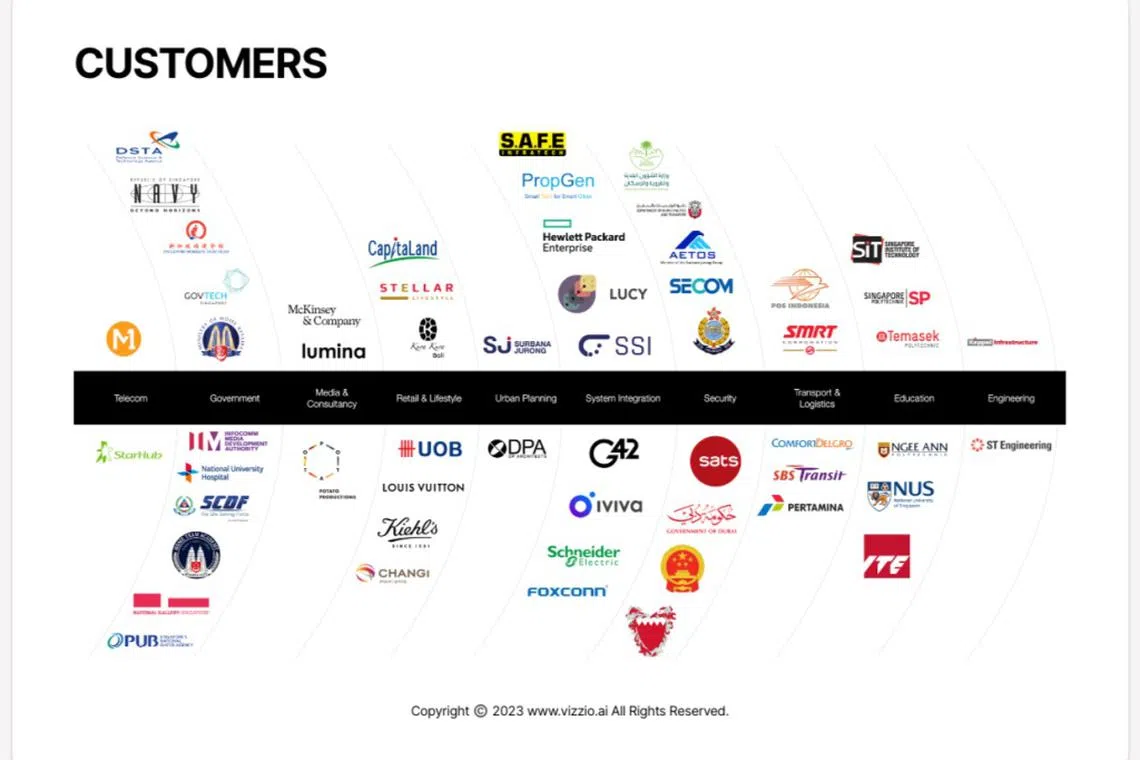
Familiar industry names vouched for Vizzio, which aims to use AI and software to make 3D versions of anything from small objects to entire cities at affordable prices.
Its prominent investors include Singtel Innov8 and Sinovation Ventures. Lee Kai-Fu, a renowned AI scientist who serves as Sinovation’s chairman and CEO, had openly backed Vizzio and its founder in a since-deleted post on Linkedin and even became a board member of the startup that same year.
But by the end of 2023, just days after Tech in Asia published an article about Vizzio, we discovered Jon Lee was hiding secrets that gnawed at him and threatened to unravel the work that his company and staff have done.
Lee himself and three people who have met him have confirmed to TIA that he is in fact Dennis Lee, the former chief technology officer of Elipva, a Singapore-based software development startup established during the dot-com boom in the late 1990s.
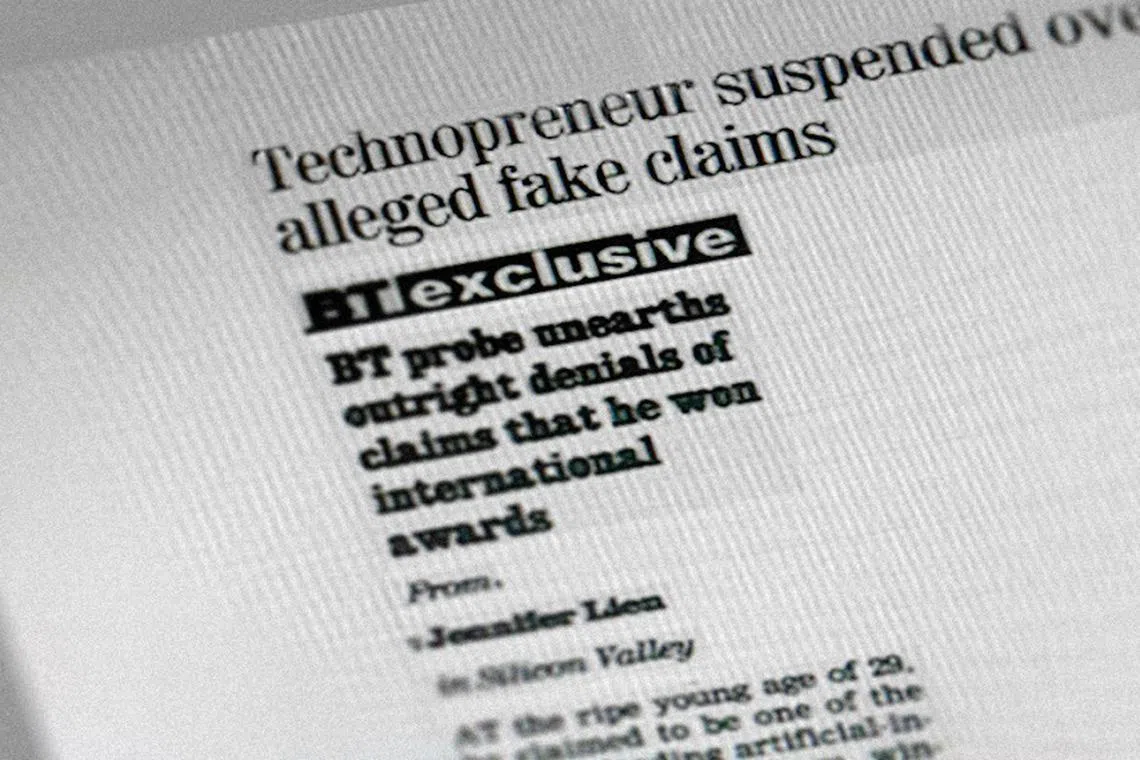
He left the company after a probe by The Business Times (BT) over 20 years ago revealed that he had faked his credentials and awards.
After his departure from Elipva, Lee, who confirmed that his legal name is Lee Seng Fook, sought a fresh start and built businesses in China. Eventually, he founded Vizzio in Singapore in 2019.
TIA has verified that the AI startup was making headway with what appears to be real customers and promising technology. Lee claimed that Vizzio’s revenue soared to US$12 million for the financial year ended June 2023 from just US$2 million in the previous period. However, he did not send Vizzio’s financial statement when asked.
Lee appeared to be on a redemption arc with Vizzio’s growing success, but he relapsed before it could be completed. After launching Vizzio, he began telling people he knew that he had a doctorate in computer science from the University of Cambridge in the UK.
Tech in Asia’s investigation debunked this claim, which Lee had maintained for years. We brought our findings to him during an interview on Jan 12, where he admitted to not only lying about his Cambridge degree but also to the fact that his doctorate certificate was forged.
“I actually did not have a PhD,” he said. “After today, it will be a relief for me. I have no more secrets to hide.”
Despite this declaration, Tech in Asia continues to find gaps in Lee’s answers.
For instance, a Vizzio investor said Lee had personally sent them his fraudulent Cambridge certificate and is adamant about this despite Lee insisting during the interview that he did not do so.
The first fall at Elipva
In May 2001, the dot-com bubble burst, and the Nasdaq went into freefall. Nervous customers were having second thoughts about buying software from Elipva, the startup where Lee – who then went by the first name Dennis instead of Jon – was serving as CTO.
Then came the straw that broke the camel’s back. In an explosive exposé, BT revealed that Lee had been making various false claims. For instance, he said he was the recipient of the MIT-AT&T Innovator 2000 award, which turned out to be fictitious.
Another made-up accolade was what Lee called a “rare AI award” sponsored by the Association for the Advancement of Artificial Intelligence (AAAI) and Stanford University. The two “sponsors” told BT that the award didn’t exist.
Lee shored up this claim with a certificate printed on paper that had a Stanford letterhead and the signature of George Karkowski, a non-existent professor who was supposedly the director of research at AAAI and ran the university’s AI Labs.
Lee also claimed that he had co-authored four books with certain publishers. However, the publishing companies told BT that they have no record of his supposed works or any contracts with him.
One of these books was handed out to journalists during an Elipva conference. It was found to be a self-published work, with content lifted from the in-house magazines of several tech firms including IBM, Sun Microsystems, Netscape, and SAP.
BT also unearthed plagiarised articles that Lee submitted to publications such as CNET Singapore, The Edge in Malaysia, IT Times, and Java Report.
Besides faking fellowships and awards from Stanford University and the Massachusetts Institute of Technology (MIT), Lee was inconsistent about where he studied.
In its 2001 exposé, BT cited an interview with Malaysia’s New Straits Times where Lee said he had graduated from “an accredited master’s programme” from the National University of Singapore in 1995, even though he told TIA that he had actually studied at Nanyang Technological University (NTU).
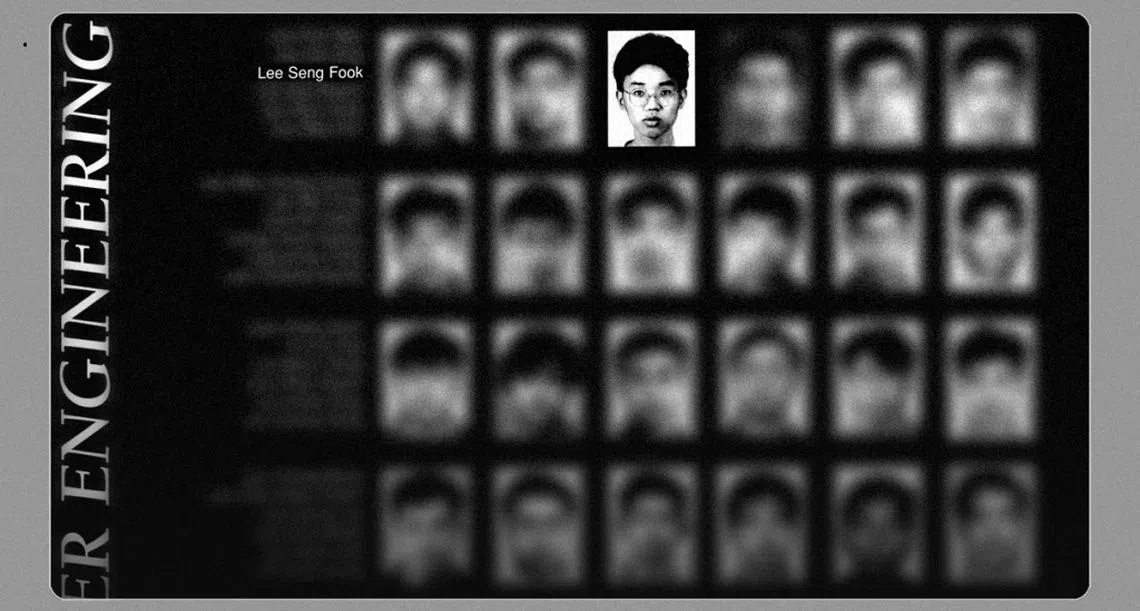
According to various news reports at the time, Lee was ultimately fired from Elipva, though he insisted during his Jan 12 interview with TIA that he had resigned. Regardless, the revelations devastated Elipva employees, who were left to pick up the pieces. Some had even considered him a close friend.
Elipva’s reputation never fully recovered after Lee’s fabrications were uncovered, even though it was a real business and had blue-chip customers.
Back then, Lee had declined interviews with the media. But sitting in the Vizzio boardroom over 20 years later, the 53-year-old, who now has streaks of grey in his hair but retains a youthful face, expressed regret.
“I made the stupid, stupidest mistake,” he said. “When I was younger, I was clamoring for fame and power – more than money. I did a lot of silly things and it was a very humbling experience. I lost credibility.”
His past as Dennis Lee was an open secret. Ex-Elipva staff, who remain tightly knit to this day, were alerted when he resurfaced.
Lee said Vizzio’s chairman, Abu Bakar Mohd, who sits on the boards of many prominent Singapore entities, was told about his past but had continued to back him.
Into the wilderness and back
What happened to Lee in the years between leaving Elipva in 2001 and launching LightMagic – his Chinese company that’s linked to Vizzio – in 2018, is not entirely clear.
“I couldn’t even get a factory job, because nobody will want to hire me,” he recalls. This led him to “move out” of Singapore.
According to Lee, he was a founding member of UK mobile tech firm Picsel between 1999 and 2009. The company filed a US$200 million lawsuit against Apple over copyright infringement claims involving technology featured on the iPhone. Lee told TIA that the case was dropped because Picsel went bankrupt.
His LinkedIn profile states that between 2009 and 2019, he started and sold a Chinese company Pixel Games for 120 million yuan (S$22 million).
However, when TIA asked him about this deal, he declined to provide any evidence tied to it. He only said Pixel was sold to a Chinese gaming conglomerate. While he did give the company’s Chinese name, we could not find any details about the transaction.
Referring to the industry in China during that decade, he said “a lot of the games [and] monetisation strategies [are] not so nice to say in public.”
According to someone who had met him during his stint at Pixel, Lee went by “Mika Li”. The person said Lee claimed he was publishing mobile games and making over 20 million yuan a month – that’s after publishers and distributors got their cut.
Lee told TIA he poured the money he made from Pixel Games into later ventures. LightMagic, which was established around five years ago, provided the technology foundation for Vizzio, which was conceived as its international entity.
While in China, he made his way back into the limelight, getting interviews with the BBC and local media as well as winning a startup competition.
“Dr Jon Lee”
After starting Vizzio, Jon wasn’t looking to stay in Singapore for long because he was still running LightMagic in China. He was also afraid that his past would be dug up.
“The plan wasn’t to come back here and con people with a fake identity,” he contends. But Covid-19 struck, so he stayed in the city-state.
It was during this time that he began claiming to have a doctorate in order to boost the credibility of his company.
TIA found several Vizzio press statements that addressed him as “Dr Jon Lee.” Also, his LinkedIn accounts as well as various media releases and interviews have stated that he has a PhD, either in computer science or computer graphics from Cambridge.
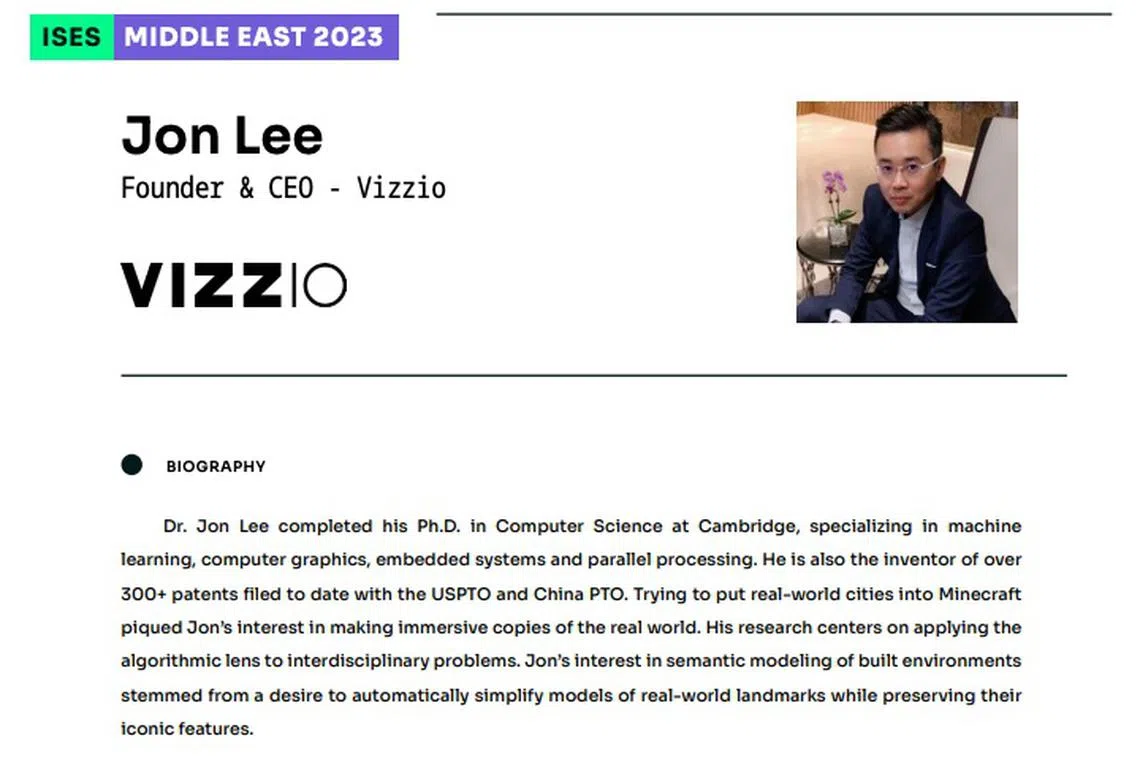
Investors were also sold this fiction, but some didn’t buy it. In the early days of Vizzio, Lee told a potential investor that he had received a doctorate from Cambridge. The firm could not verify this claim and opted to not invest.
Likewise, TIA could not confirm whether Lee’s Cambridge degree is real. The university’s computer science department told us that there are no records of Lee studying there.
When asked to explain these discrepancies, Lee admitted that his doctorate is a sham.
He added that he had told senior Vizzio staff about his supposed PhD. As a result, an employee who created a LinkedIn profile on Lee’s behalf had included the Cambridge degree. Staff then unknowingly spread the lie via press releases and media interviews.
“But I’m to be blamed, not them,” he insists.
A counterfeit document
To cover up the lie about his doctorate, Lee went one step further.
As a part of due diligence by a venture capital firm that ended up investing in Vizzio, it had received a photo of what appeared to be Lee’s PhD certificate, the VC told TIA.
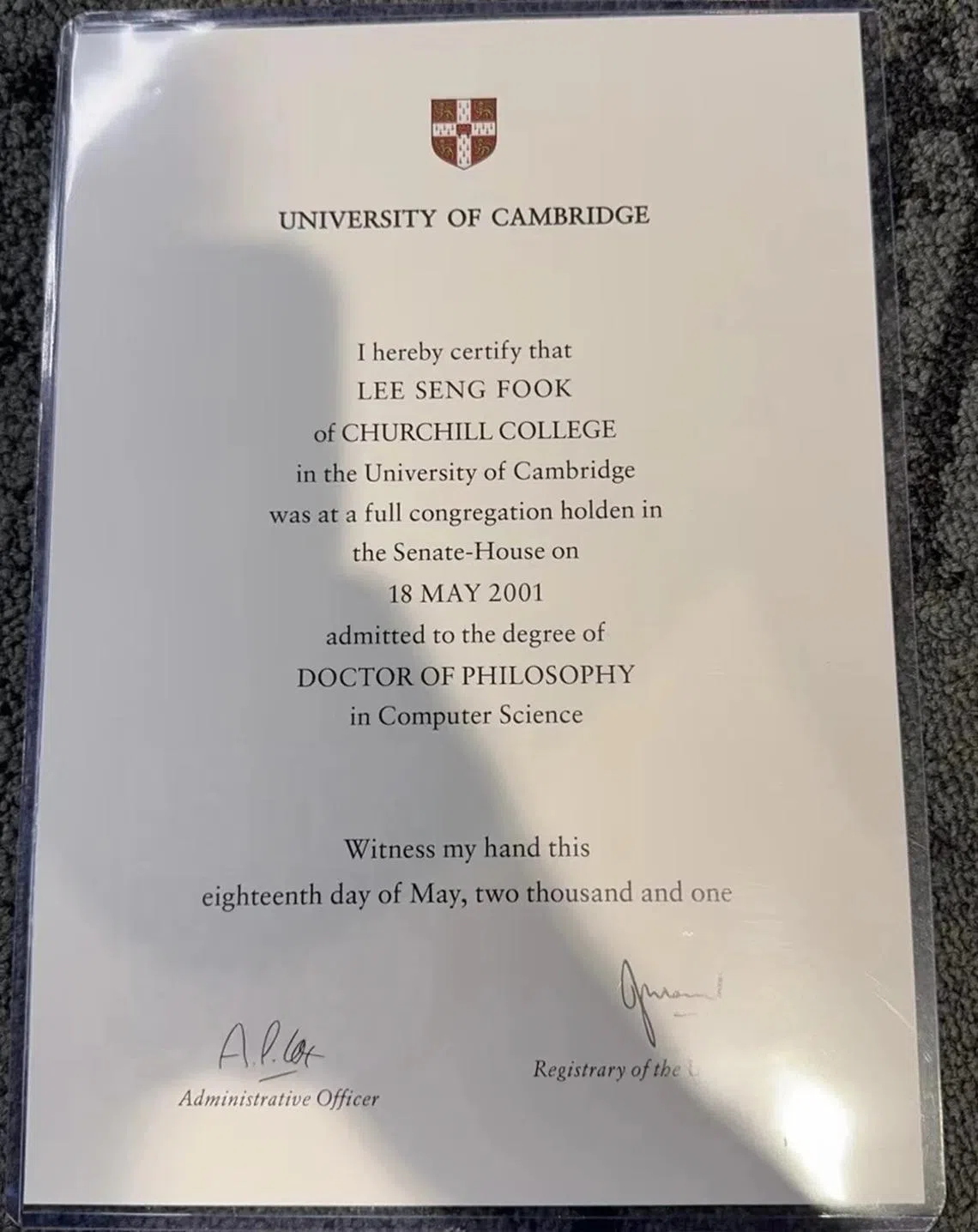
The investor, which declined to be named, sent TIA a copy of the document, which we then forwarded to Cambridge’s Churchill College, where Lee supposedly belonged.
A staff member of the college questioned its authenticity and said there was “no congregation for the conferral of degrees” on the stated date in the certificate. In other words, “it would have been impossible for the student to have graduated then.”
The college also has no record of any of the aliases that Lee goes by, the staff member added.
When TIA brought this up during the Jan 12 interview, Lee explained that there was a “miscommunication” with the VC firm and that he “didn’t pass them any” certificate.
After being pressed further, however, he admitted that he had given the forged document to a Vizzio employee who asked to see it “two or three years ago.”
Around that time, a photo of the fraudulent certificate was then sent to the VC firm, but Lee reiterated that he wasn’t the one who sent it.
On Jan 13, the VC firm disputed Lee’s claim, saying that one of its team members got a “digital copy of the certificate” from the Vizzio CEO himself “via one-to-one personal messaging, unless someone hacked into his account.”
The VC also pointed out that its team only received the certificate less than a year ago. However, Lee contends that it was sent two to three years ago.
Deja vu
The situation at Vizzio echoes what transpired at Elipva over two decades ago. There are differences, to be sure. For one, there is more at stake for Lee this time since he is fully in the driver’s seat as Vizzio’s CEO.
He is also older and has spent 23 years salvaging his reputation. Vizzio seems to be ascending on the back of interest from governments and government-linked entities, which generally shun reputational risk.
But both situations are similar in that Lee is again spinning falsehoods amid a tech winter, and his deception is threatening to undo the work of a startup that has promising technology.
In the case of Vizzio, one question remains: Would he have dropped the facade if no one had found him out?
Lee told TIA he was seeking a successor so he could “quickly get out” of Singapore and work on Vizzio’s technology in obscurity.
Indeed, things appeared to be going according to plan when the AI startup appointed a co-CEO in October 2023: Chau Nguyen, who was a Singapore-based partner at consultancy firm McKinsey & Company.
It’s unclear, though, whether that plan will now change. “I was delaying my time. When I finally got Chau from McKinsey, I thought, ‘This is a guy that’s going to be the front person’,” Lee said.
Meanwhile, Vizzio’s shareholders, board, and senior leadership are now grappling with Lee’s deceit.
He told TIA that prior to the interview, he had confessed to senior management about his sham doctorate. TIA understands some board members have also been informed.
One investor was harsh: “It seems the founder is still producing a series of lies.”
SingTel Innov8 did not respond to repeated requests for comment. In an emailed statement, Sinovation said it has called an emergency board meeting and is taking “necessary steps to protect the investor’s interests”.
Its chairman, Lee Kai-Fu, appears to have removed his LinkedIn post voicing support for Vizzio.
But at least one Vizzio board member and investor continues to back Jon Lee.
“I see the technology and personal journey and how he’s transformed,” says Vizzio COO John Hui, who sat next to Lee during the interview with TIA. “Everyone deserves a chance.” TECH IN ASIA
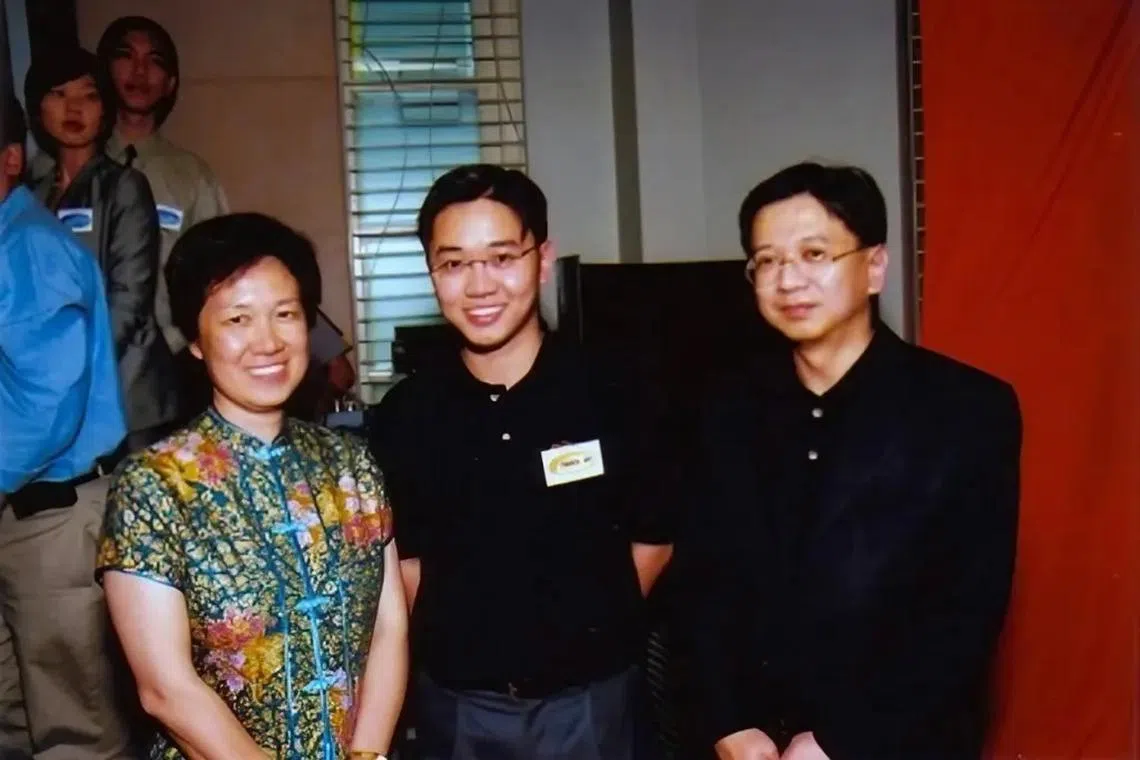
Amendment note: An earlier version of a caption in this article stated that Ho Ching was then the CEO of ST Engineering. This is incorrect. She was then the CEO of Singapore Technologies.
TRENDING NOW

China Investment Corp, PGIM’s 50% stake in Nex mall up for sale; asking about S$1.2 billion

Higher rates, weaker spending: Is the Philippines entering stagflation?

Singapore tech stocks plunge as Nasdaq bloodbath spills into region

OCBC wealth clients turn defensive amid market volatility as Q3 profit rises 3%

