

12 lawsuits and a liquidation later, legal brawls continue for Hearti Lab’s founder
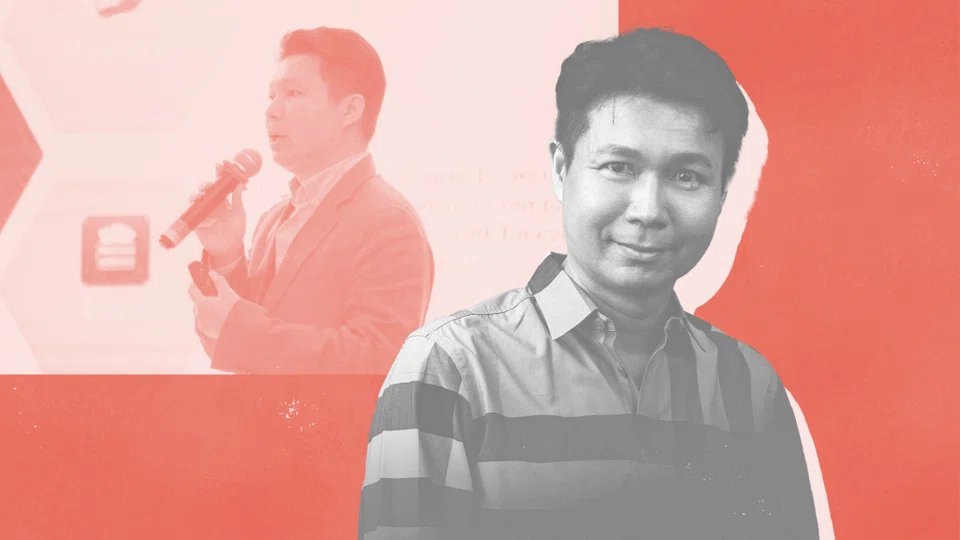
AT 3pm on Jan 28, 2022, stony-faced creditors of Singapore-based Hearti Lab dialled into a Zoom call with its founder Keith Lim and liquidators and learnt about the insurtech company’s winding-up plans.
The announcement shocked Hearti Lab’s trade creditors and investors, who included seasoned entrepreneurs and the CEOs of publicly-listed companies.
Hearti Lab owed debts of over S$2.5 million. An email from liquidators said that while Hearti Lab “is not denying liabilities,” it “has minimal assets” and is unlikely to “pay any of the creditors.”
The liquidation was completed on July 19, 2023, according to Accounting and Corporate Regulatory Authority (ACRA) records. Lim, whose registered name is Lim Chee Seng, was personally on the hook for S$325,000 and faced a bankruptcy order of over S$500,000.
THE DREAM
Described by investors as an intelligent and eloquent salesman, Lim founded Hearti Lab in 2014 to bring insurance services to the uninsured.
The goal was to use blockchain to decentralise insurance, enabling the firm to offer flexible, affordable, and personalised products covering single flights, gadgets, and even farm animals.
It touted big insurance and banking customers like United Overseas Insurance (UOI); SOMPO Insurance, an insurance provider under Nikkei 225-listed SOMPO Holdings; and Malaysia-based Maybank.
A bout of series A fundraising in 2022 valued the company above S$15 million. And yet, Hearti Lab struggled to meet its financial projections or turn profitable, according to documents seen by Tech in Asia.
LEGAL TROUBLES
While Hearti Labs’ inability to repay debts and eventual collapse upset creditors, what irked them even more was how Lim persuaded them to invest, and what they say was his lack of communication and disclosure.
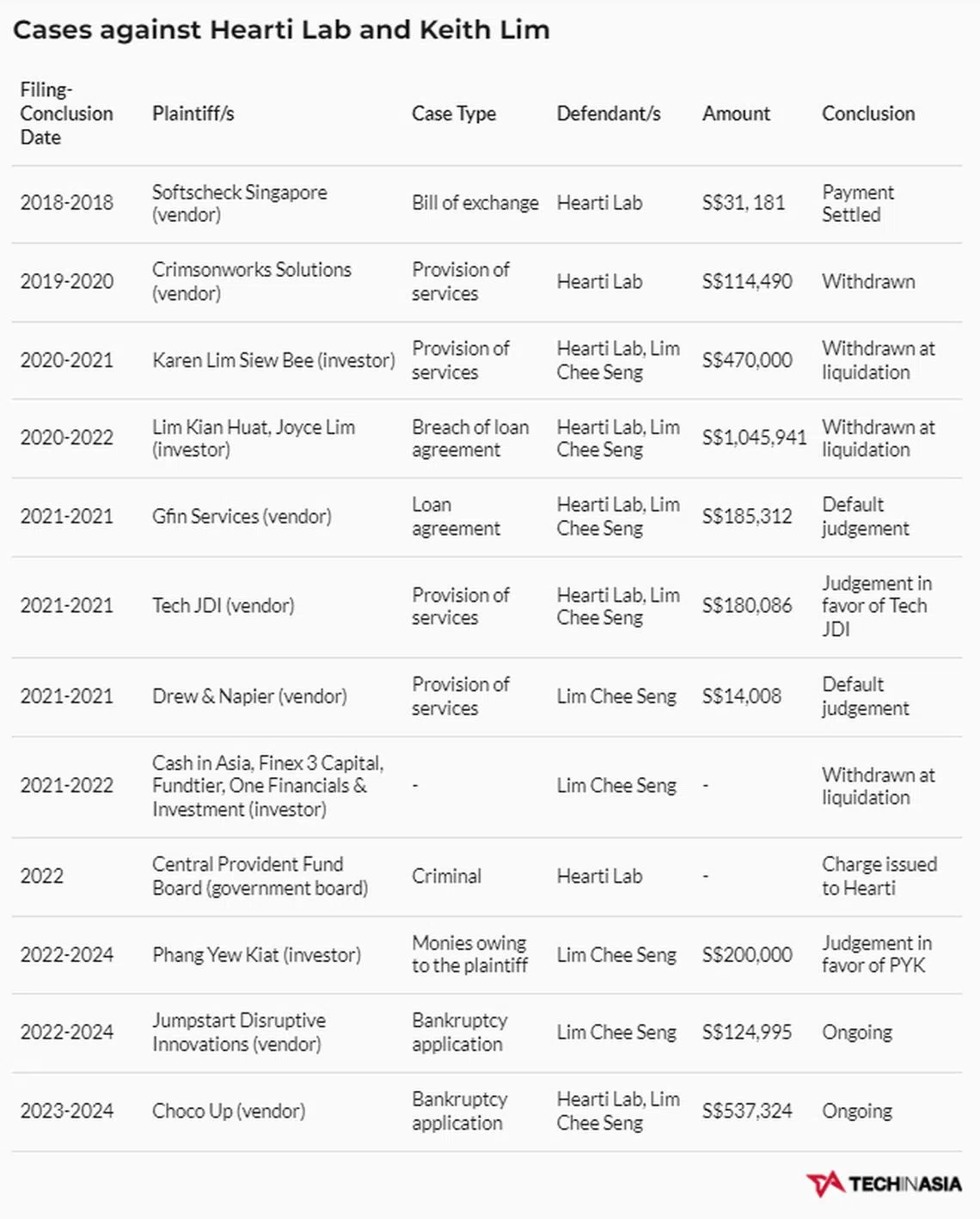
By 2022, the company and Lim had chalked up 12 court cases, including a criminal charge by Singapore’s Central Provident Fund Board over missed CPF payments.
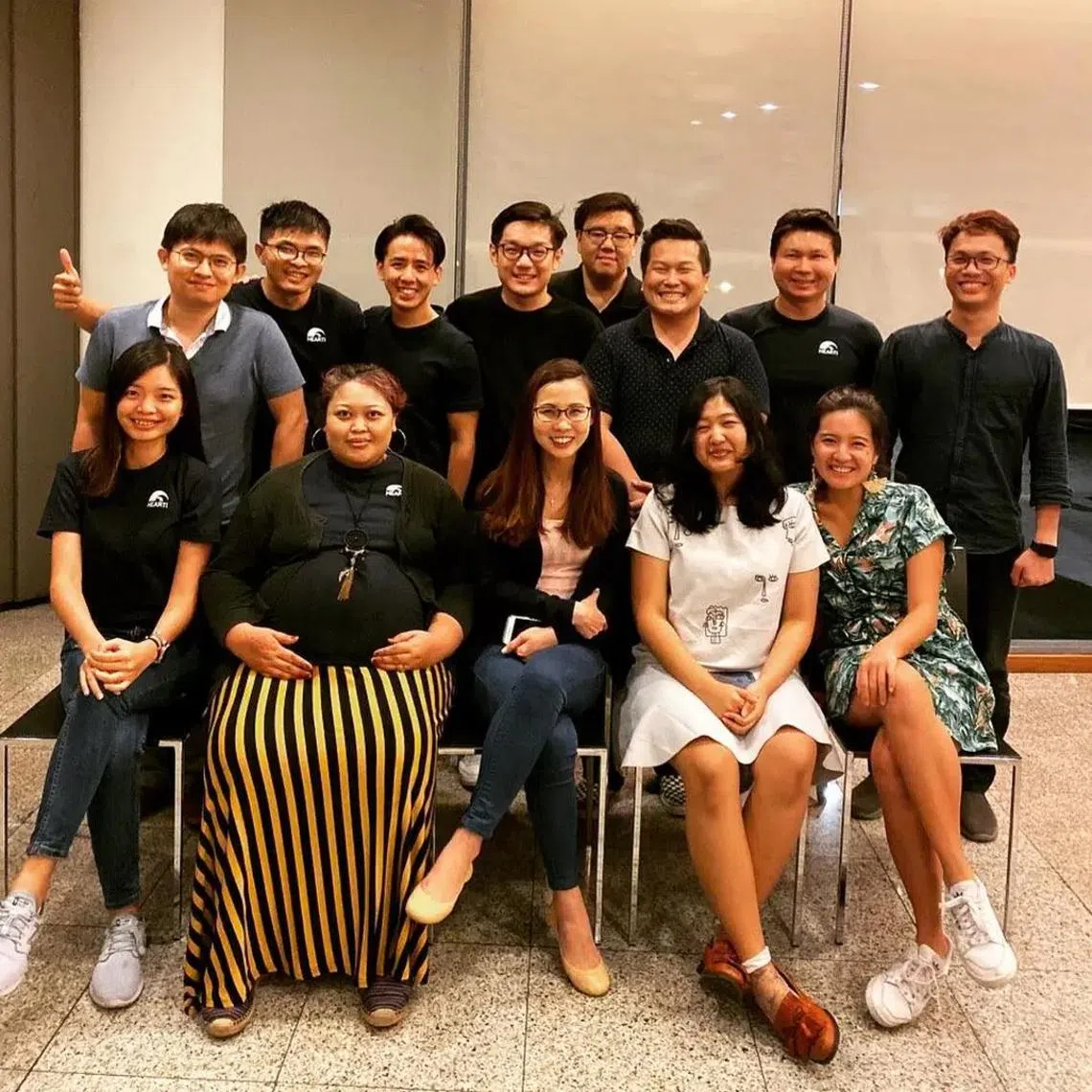
In 2018, the company launched its first artificial intelligence product Surety.AI, an insurance platform envisioned to disrupt the industry. It was also looking to expand beyond Singapore.
To secure funding, Lim told investors they could “get their money back” by selling their shares to the company should it fail to achieve targets.
However, investors that Tech in Asia spoke to had difficulties availing of this buyback offer.
One of them, Peter (not his real name), a notable figure in the fintech industry, said he was under the impression he had extended a loan to Lim, adding that he never received any shares despite signing a share agreement.
In court, Lim claimed there was an oral agreement about the shares, which were held in trust by Lim because Peter’s company was embroiled in fraud rumours.
The judge said there was no documentary evidence or phone records of an oral trust. In April 2024, the court ordered Lim to repay Peter in full.
Things did not pan out as well for angel investor Lim Kian Huat and his daughter Joyce Lim, who sued Lim. (Tech in Asia could not ascertain whether the three Lims are related.)
Kian Huat lent Hearti Lab over S$1 million in a convertible loan note. But when his own business got into trouble, he asked Lim in April 2020 about an early repayment.
But three days later, Lim informed Kian Huat that his loans had been converted into shares, triggered by a supposed capital raise with venture funds Cornerstone Venture Partners and Sony Investment Funds.
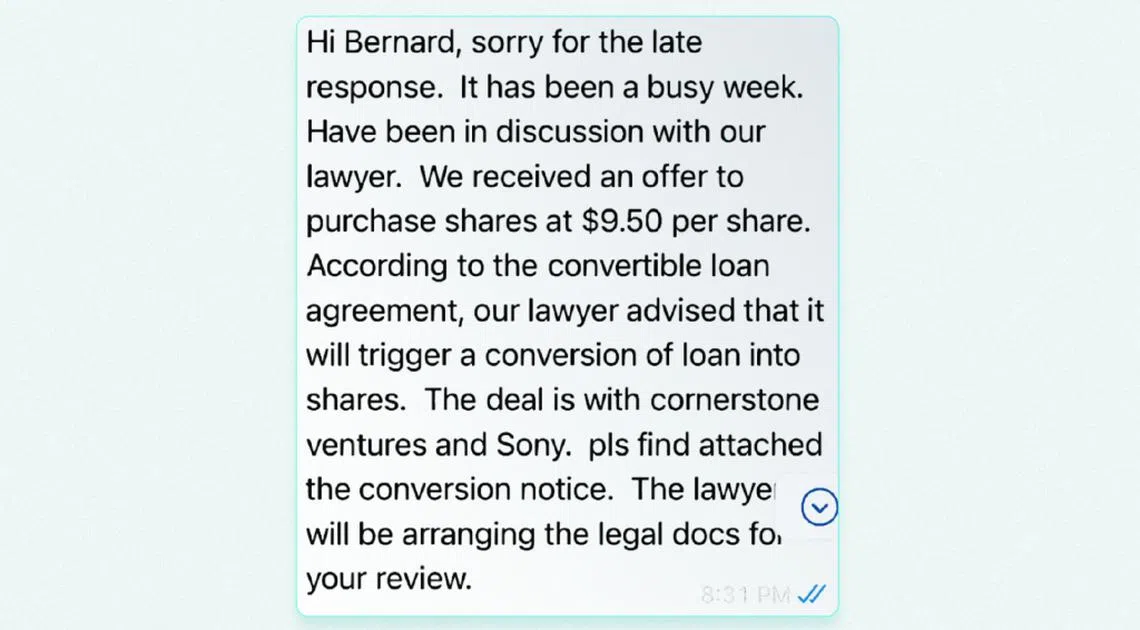
Kian Huat said the capital raise did not happen.
To justify a capital raise, Hearti Lab was required to amass a total of S$4 million in funds as stated in its Convertible Loan Agreement clause. But by June 2020, it had secured only half the sum and was reliant upon the new raise from both venture funds to qualify.
Hearti Lab had only received an email of consideration from Sony and a term sheet from Cornerstone, which do not guarantee an investment. Term sheets are commonly understood to be non-binding agreements. In the end, both funds pulled out after doing due diligence.
Lim told Tech in Asia that Hearti Lab’s lawyer had advised that the term sheet constituted a capital raise.
The conversion notice came in 2020, at a time when Hearti Lab was slashing and freezing salaries as well as facing payment delays from its customers. Its revenue that year of S$842,000 was a far cry from a projected S$3 million plus.
Kian Huat eventually withdrew his suit due to Hearti Lab’s liquidation.
BLAME GAME
During Hearti Lab’s April 2021 annual general meeting (AGM), Lim told shareholders that the refusal of Kian Huat and another angel investor called Karen Lim to convert their convertible loans into shares contributed to the company’s collapse.
Hearti Lab also had to give up on expanding into India since the new funding from Cornerstone and Sony would have been used to pay off Kian Huat and Karen first, leaving the startup with little or nothing for the expansion, Lim told Tech in Asia.
Cornerstone and Sony, however, said they pulled out of the deal after a due diligence on Hearti Lab.
On further reflection, Lim told Tech in Asia that he had failed to align the interests of Hearti Lab and its investors.
He also conceded that he could have acted more “decisively to cut jobs and costs,” given the uncertainties brought about by the Covid-19 pandemic and how the company eventually ran out of cash.
DISCLOSURE LAPSES
Even as he was grappling with unhappy shareholders, Lim was also fighting a war on the disclosure front.
Karen Lim and another investor said that when they were considering funding Hearti Lab between 2019 and 2020, Lim did not disclose the actual financial statements of the company, which had been in the red since at least 2018 and failed to meet projections.
The two investors and another venture fund also didn’t know that Hearti Lab was already involved in court cases with other creditors nor that it was being hauled to court by CPF Board.
Karen had issued a S$500,000 convertible loan to Hearti Lab in 2019. But a year later, when she asked for the money back, Lim said he could not do so, citing “insufficient funds.” She claimed in her affidavit against the company that she was “induced” by Lim “to believe that [Hearti] was operating profitably and had the ability and the capacity to repay the loans.”
In response, Lim stated in his affidavit that he did not give Karen that impression. He said Karen had “business knowledge and a sound mind to make her own decisions.”
He told Tech in Asia that “it is common for businesses to have creditors,” adding that “If anyone has evidence of fraud, they should contact the relevant authorities with the evidence.”
When Tech in Asia pressed Lim for proof that he gave potential investors a fair picture of Hearti Lab’s financials, he said it was all lost after the liquidation.
OTHER CREDITORS
Kieran (not his real name), was among Hearti Lab’s trade creditors.
His company was owed over S$124,000,comprising Hearti’s salaries that it handled as part of its tech talent services. Lim had told Kieran that money and repayment would come in soon through investor funds and an Enterprise Singapore (ESG) development grant.
He would show Kieran investors’ interest in the form of WhatsApp texts and emails. However, Lim did not relay that he was being sued by creditors.
“I thought that the company was OK... I didn’t want to sue him as I thought the grant money was coming in,” says Kieran.
But when the money did come in, it was frozen by the bank due to a garnishee order, which happens when the court directs a third party – such as a debtor’s bank – to repay a creditor the money that the debtor owes.
Kieran panicked when he heard about the garnishee order. He then started legal proceedings against Hearti Lab and Lim, and the court ruled in Kieran’s favour. Till date, however, only one third of the S$124,000 debt has been repaid.
Creditors said Lim would give a myriad of reasons for failure to pay off the trade debts. In the end, most of Hearti Lab’s creditors never got back any monies.
AFTERMATH
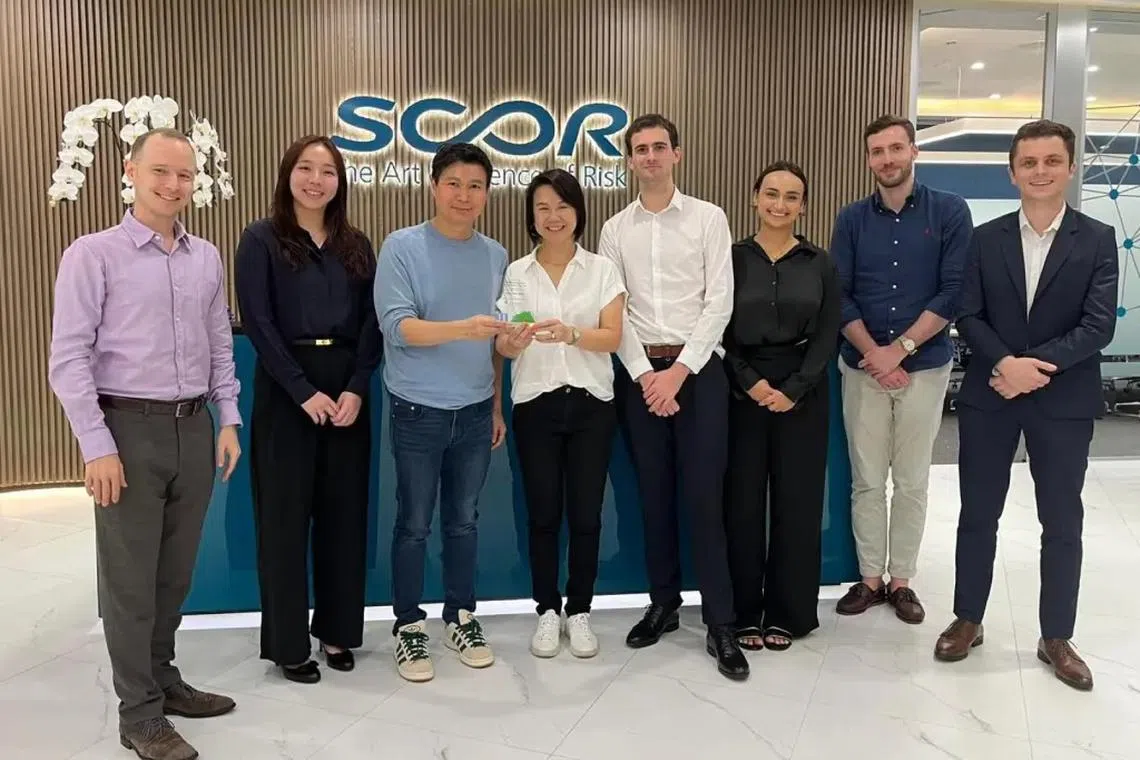
While the liquidation of Hearti Lab was still underway in 2022, Lim had started his new role as regional enterprise business director at insurance consultancy ReMark, a unit of France-based SCOR Group, and as an adviser at On-us, a Hong Kong-based fintech company.
These roles were listed in Lim’s LinkedIn profile, which was unavailable when Tech in Asia checked on May 17. Also, his title on the On-Us website is general manager of South-east Asia, not adviser.
The two positions gave him an income of S$28,000 a month, according to Lim’s affidavit.
Before his LinkedIn page became inaccessible, he also listed himself as the founder of Benefit.X, a product developed at Hearti Lab but is now being used to create a patent.
He has tried to avoid bankruptcy by appealing to two creditors and sought approval from the Singapore High Court to repay Peter outside of legal orders, saying that going bankrupt would affect his employment and income.
His request for a voluntary arrangement with Peter was dismissed by the court and the bankruptcy actions are ongoing.
Hearti Lab’s liquidators told creditors that the estimated realisable value of the company’s assets was only S$100 at the time of the liquidation, after Surety.AI had been sold. OneConnect Financial Technology bought Surety.AI in 2021, taking over its intellectual property licence and workforce. Lim declined to reveal the sale value.
Remaining creditors are not optimistic that they will get their money back, attributing their lack of faith to Lim’s unfulfilled commitments and repeated delays on repayment.
When asked about Hearti Lab’s unpaid debts, Lim said he considers S$2.5 million – the amount owed to investors – to be low compared to the sums owed by other startups at Hearti Lab’s stage of development.
When Tech in Asia asked the company’s creditors – many of whom invest in other startups and have witnessed their fair share of business closures – if their experience with Hearti Lab is typical, their reply was “no.”
Lim told Tech in Asia that with the liquidation completed, the claims and complaints from “disgruntled” creditors are now a distraction for him.
“I had to make the decision to use the remaining cash to pay creditors or employee salaries. I chose the latter,” he said. TECH IN ASIA






