Battery swapping faces uphill climb in Singapore’s EV market
SINGAPORE is years away from its goal of fully electrifying all vehicles by 2040, but it has hit a speed bump around the use of swappable batteries.
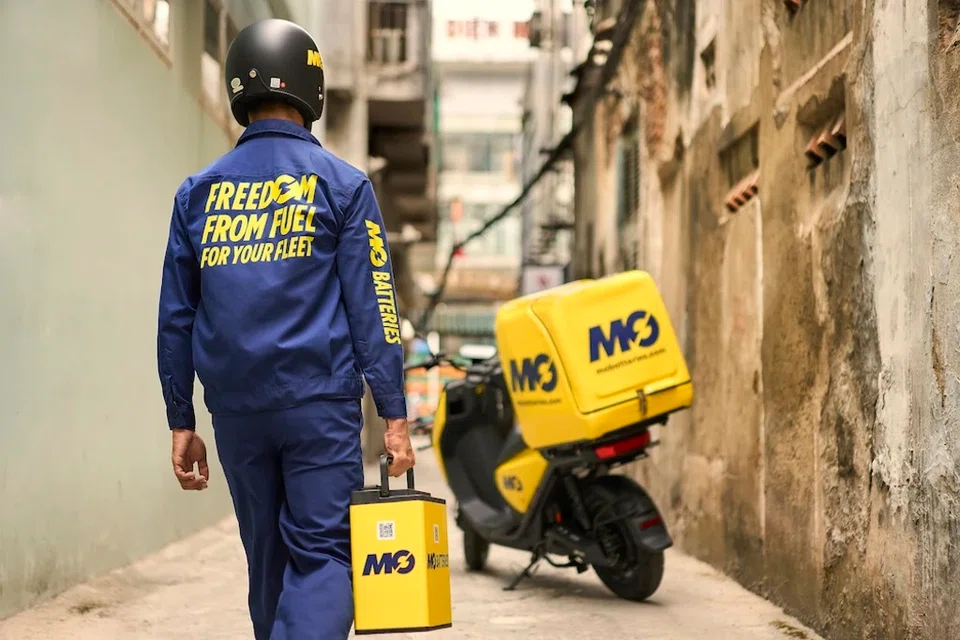
In April, Singapore-based Mo Batteries bowed out of the electric vehicle (EV) race in the city-state, just a year into a trial of its battery-swapping solution. The company cited high costs and the complexity of commercialising its solution in the city-state for the move.
With this exit, only one operator remains in the pilot: Taiwan-headquartered Gogoro.
Mo Batteries’ withdrawal raises questions about whether swappable batteries are still viable in Singapore in light of other EV charging solutions, which are springing up across the country.
Lower costs, higher adoption
EVs with swappable batteries are but one option for drivers in Singapore looking to make the switch from internal combustion engine (ICE) vehicles. Others have fixed batteries that require charging.
As batteries can account for between 30 to 40 per cent of an EV’s price tag, taking out this component can slash the upfront costs of an EV.
In China, consumers can purchase Nio’s ET5 – an electric sedan – for 298,000 yuan (S$55,842) if it comes with a battery and pay 228,000 yuan for one without. Those opting for the latter pay less upfront, but they fork out a monthly fee of at least 980 yuan for a battery lease.
Rather than recharging batteries when they run low, drivers of EVs with swappable batteries either pay a fee each time they require a new battery or take a monthly subscription based on their level of use.
In a typical set-up, EVs make stops at battery-swapping stations – a garage-like structure – scattered around a city. At some of these stations, drivers can manually do the swap, while in others, robot arms switch out spent batteries for fully charged ones.
The process is commonplace in China, where players such as Nio operate more than 3,500 battery-swapping stations. It also takes around five minutes, putting it on par with a fuel stop at a petrol station.
In contrast, using EV chargers can take up to eight hours at a standard charging point in Singapore.
Swapping operators, however, bear the cost of the batteries, which is expensive. Building out a network, which involves swapping stations and a surplus of batteries, is also highly capital intensive.
Mo Batteries, which works with fleet operators looking to make the transition into EVs, sought to design an efficient solution that reduces the amount of charging infrastructure – such as battery inventory – a fleet operator needs.
The company’s software and proprietary algorithms predict driving behaviour based on a person’s usage patterns, enabling fleet operators to meet charging demand with the least number of batteries – in turn, lowering their operating costs.
Not a fit
Speaking to Tech in Asia, Mo Batteries co-founder Tom Strietberg says the trial had gone “very well” and that the firm had achieved its goals of understanding the demand for e-motorbikes and costs of operating charging infrastructure in Singapore.
The company had chosen Singapore as a testbed because of its relatively high spending power and the population’s general willingness to adopt EVs. The high cost of petrol in the country was also a factor, as it raises the cost of owning an ICE vehicle.
But what threw a spanner in the works, Strietberg says, was a slew of regulations governing safety standards around EV charging in Singapore that were released by the Land Transport Authority (LTA) in December 2023.
Under the LTA rules, all charger systems have to comply with a national standard, and all EV charger models to be type-approved and certified by the agency. This would have required making modifications and seeking approval for existing equipment such as battery chargers and docking stations as off-the-shelf equipment could not be used, entailing additional cost for Mo Batteries.
Operators of charging equipment and EVs also had to obtain the necessary licenses, while a “record-keeping requirement” added “another layer of complexity”, Strietberg explains.
While Singapore’s regulations are “very high on safety” and “robust”, he says that when added to the costs of running the business, this “didn’t fit together” with Mo Batteries’ business model.
Mo Batteries, which is now looking to offer its fleet management software in markets such as Indonesia, Malaysia, and Vietnam, is not the first battery-swapping player in Singapore that had to take its solution abroad.
Singapore-headquartered Oyika, which develops battery charging and swapping infrastructure for EVs, also worked with local e-motorbike brands at one point. It has since expanded to Indonesia, Malaysia, Thailand, and Cambodia, but it does not appear to be offering its solution in Singapore at the moment. The company could not be reached for comment.
The Mo model
Unlike Gogoro, which is trialing its battery swapping solution on its own SmartScooters in Singapore, Mo Batteries does not make EVs or batteries.
“Our business model was always not to manufacture any equipment,” Streitberg explains. “The margins available for manufactured vehicles are relatively thin, and the technology and capital investment required to build your own batteries is enormous.”
Instead, Mo Batteries’ fleet management software is designed to work with “any e-motorbike and battery”, he says. Fleet operators that work with the company are free to adopt suitable e-bike models on the market.
However, focusing on software instead of hardware likely posed challenges for Mo Batteries, according to one industry observer.
Without a standard set of vehicles and batteries, the firm could not ensure that riders’ experiences were uniform across trials, notes Akshay Prasad, senior engagement manager at management consultancy Arthur D Little in South-east Asia.
Aspects of product performance such as acceleration and thrust can vary widely depending on the vehicle mix, but by prioritising software, Mo Batteries “didn’t pay so much attention” to these areas, Prasad says.
“From a strategy perspective, I think they got that wrong,” he adds.
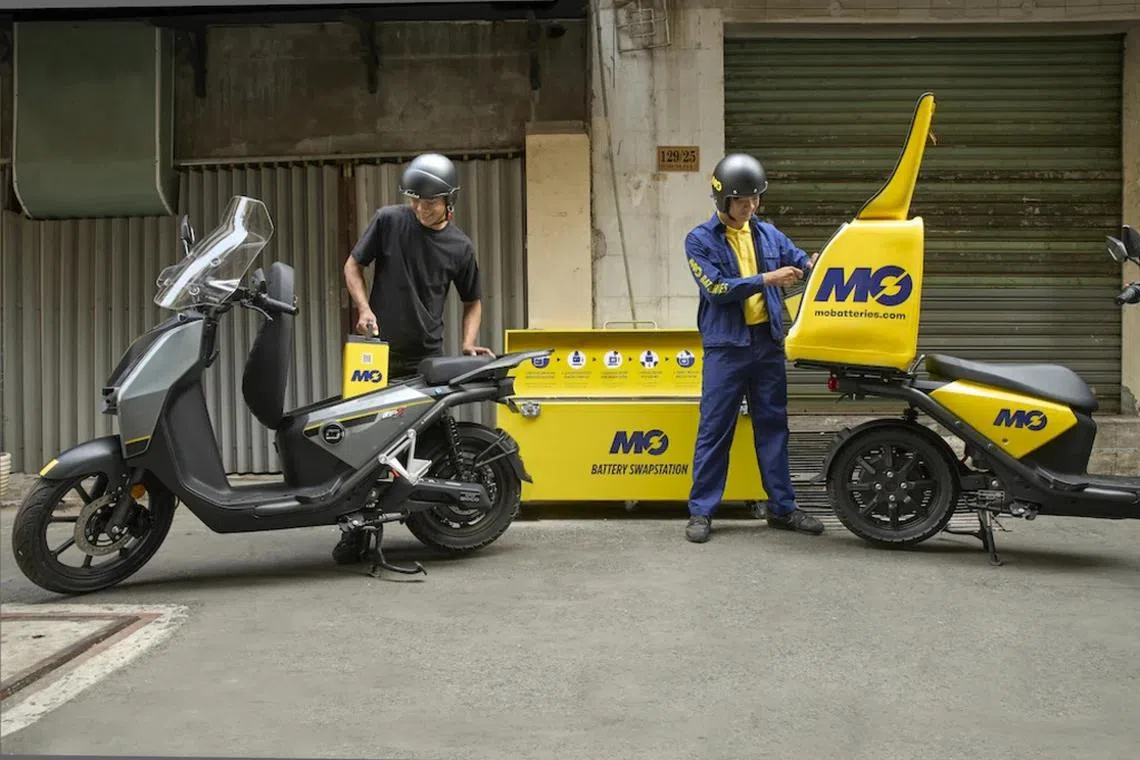
During the trial, Mo Batteries did not operate battery-swapping stations where riders returned empty batteries. Instead, the batteries were returned to a central location to be charged.
The firm’s co-founder Streitberg pointed out how this approach is cheaper than building a network of charging stations.
Mo Batteries’ eventual plan, he shares, would have been a “multimodal” approach that combines providing centralised charging with a battery delivery service to workplaces and other locations, and running several battery-swapping stations.
But Prasad contends that centralised charging and delivery would have entailed added delivery costs while preventing Mo Batteries from enjoying cost savings that come with operating charging stations.
Operators that run charging cabinets, he explains, get a price arbitrage when batteries are programmed to charge in the night or at off-peak periods – times when utility firms charge less for power consumption. “I think that is something which [Mo Batteries] was not able to capitalise,” Prasad says.
Could the trial have gone differently had Mo Batteries worked with other partners? Streightberg stresses that its trials with postal carrier Singapore Post and security solutions provider Certis, the “two largest e-motorbike fleet operators in Singapore,” were “all successful”.
Swap or no swap?
By many accounts, Singapore is ready for an EV transition. Its high gross domestic product per capita, commitment to expand public charging infrastructure, and subsidies on the purchase of EVs make it among the most market-ready places in the world, following Norway and China.
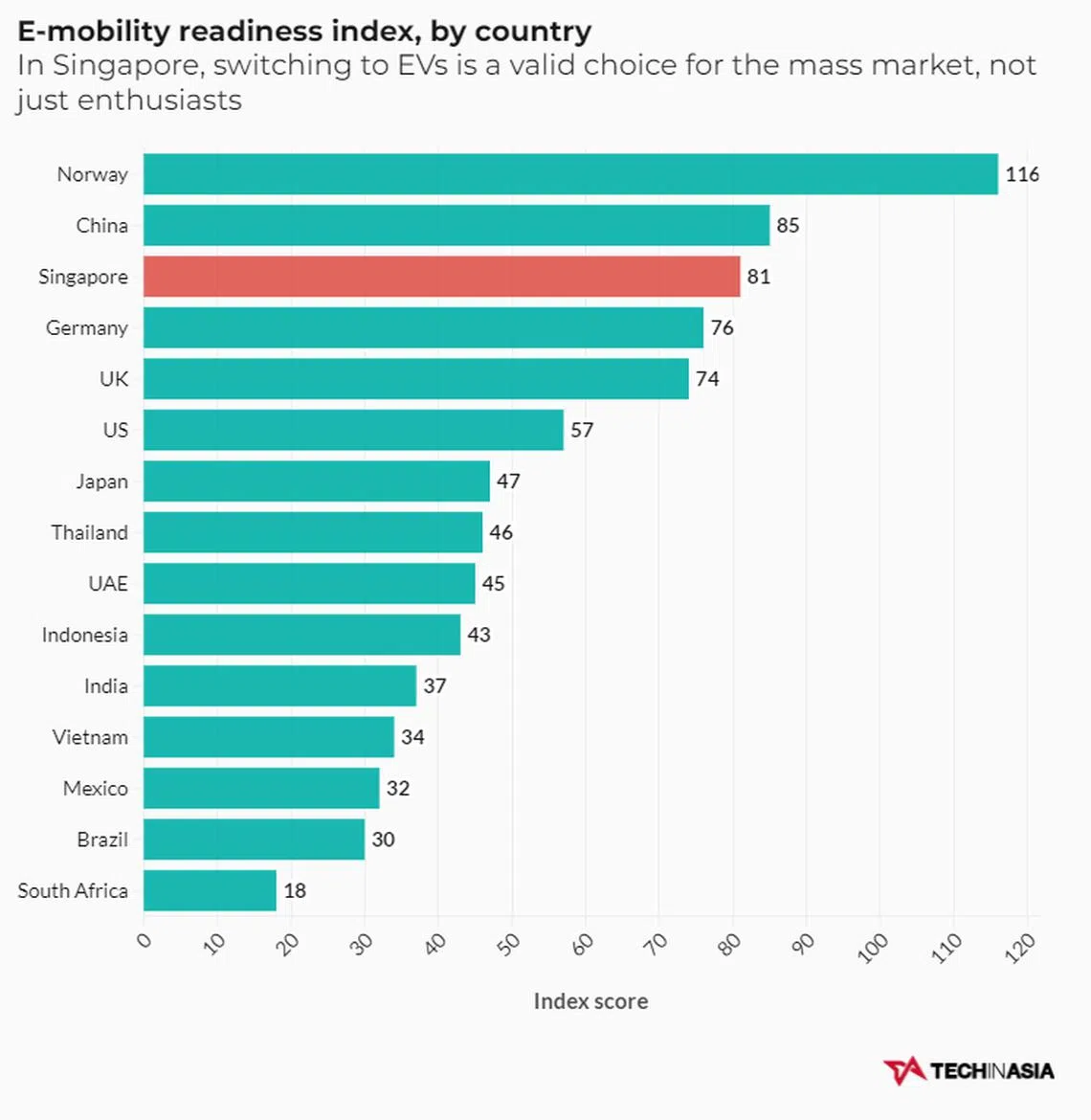
But while some observers are confident of Singapore’s electrification targets, they do not see battery swapping as the solution.
“If you ask me whether [battery] swapping as a concept will work in Singapore, I would say no, it will not,” says Prasad of Arthur D Little.
“Whenever you are talking about electrification targets of any country, you need to look at the vehicle or mix and decide whether swapping or charging makes sense,” he adds.
A feasibility study by Arthur D Little in 2023 found battery swapping to be the most viable for two-wheeled and three-wheeled vehicles, and particularly when used by businesses, because of their higher average daily distance travelled rates.
B2B fleet operators such as ride-hailing or food delivery companies, which depend heavily on two-wheelers, are strongly motivated to cut costs. The study also found that battery swapping can save close to 26 per cent compared to ICE vehicles or 19 per cent compared to EVs with fixed batteries.
Battery swapping also decreases downtime for drivers compared to a charging alternative. In turn, this can be more productively spent on work, improving a company’s top line.
Singapore, however, has a small population of two-wheeled vehicles to begin with. In 2023, there were just over 140,000 motorcycles and scooters on the roads – less than 15 per cent of the overall vehicle population.
“You need scale, which the Singapore market does not offer you,” Prasad stresses.
Fully electric by 2040?
That’s not to say battery swapping is entirely out of the question in Singapore.
A Gogoro spokesperson tells Tech in Asia that its pilot in the country is “going well”. Gogoro has also received “overwhelming positive feedback” from its partners, automotive group Jardine Cycle & Carriage and food delivery platform Foodpanda plus its riders.
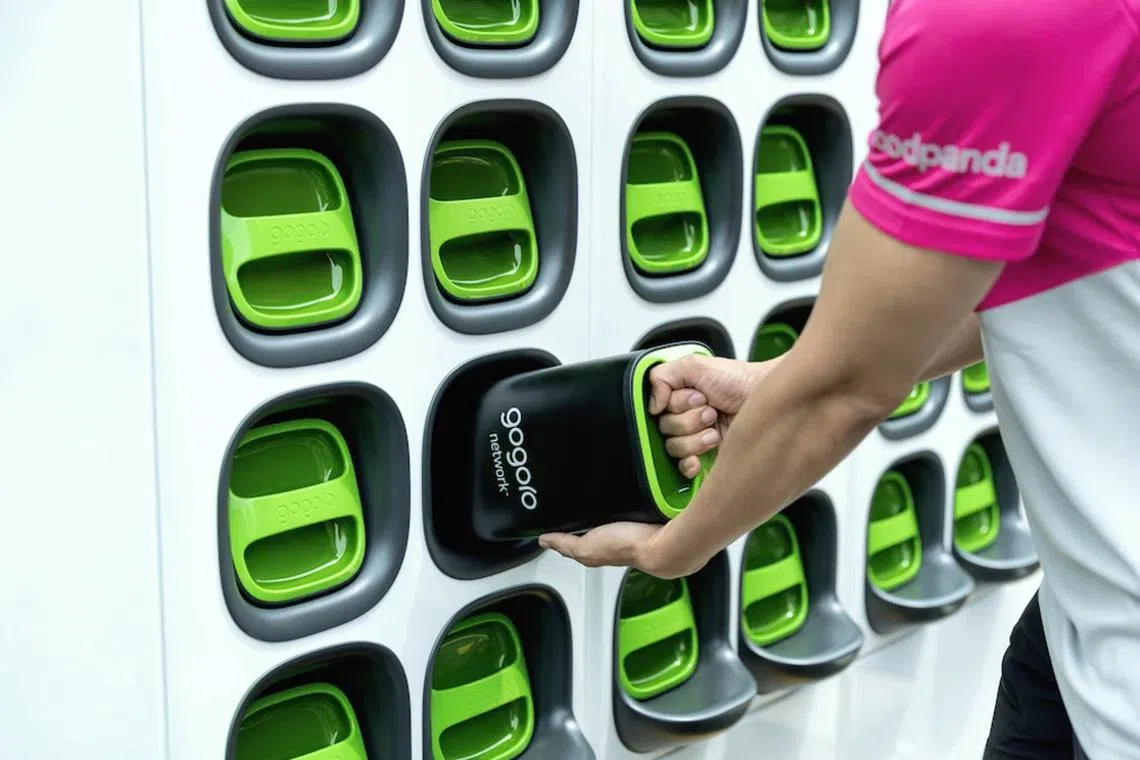
The spokesperson adds that Gogoro is in the final stages of its application process with the LTA on the nationwide charging standard, before moving towards a commercial deployment with existing partners. Gogoro’s test period is expected to conclude in September 2024.
One firm’s setback in battery swapping is unlikely to derail Singapore’s 2040 targets, which include plans to build 60,000 charging points with over a third underway.
Singapore’s charging infrastructure is far from where it needs to be, but the LTA has ramped up efforts to expand it and increasing that coverage is “a function of time”, Prasad says.
As things stand, potential battery-swapping players could be deterred by the apparent policy focus towards EV charging, which could result in worries over “whether the government will promote [their] services or not,” Prasad points out.
“I think that deters a lot of the major swapping players from entering the market,” he notes.
With “clear sustainability goals for four-wheel vehicles” laid out in Singapore’s Green Plan 2030, Gogoro says it looks forward to similar targets being rolled out for two-wheeled vehicles as well.
Despite the setback, Mo Batteries’ Streitberg agrees that EV adoption is just a matter of time as EV costs go down, existing ICE vehicles fully depreciate, and people “get used to seeing charging points around.”
When this happens, “I think the change will be very rapid,” he says. TECH IN ASIA