

Flash Coffee taps ex-Foodpanda CEO in turnaround bid
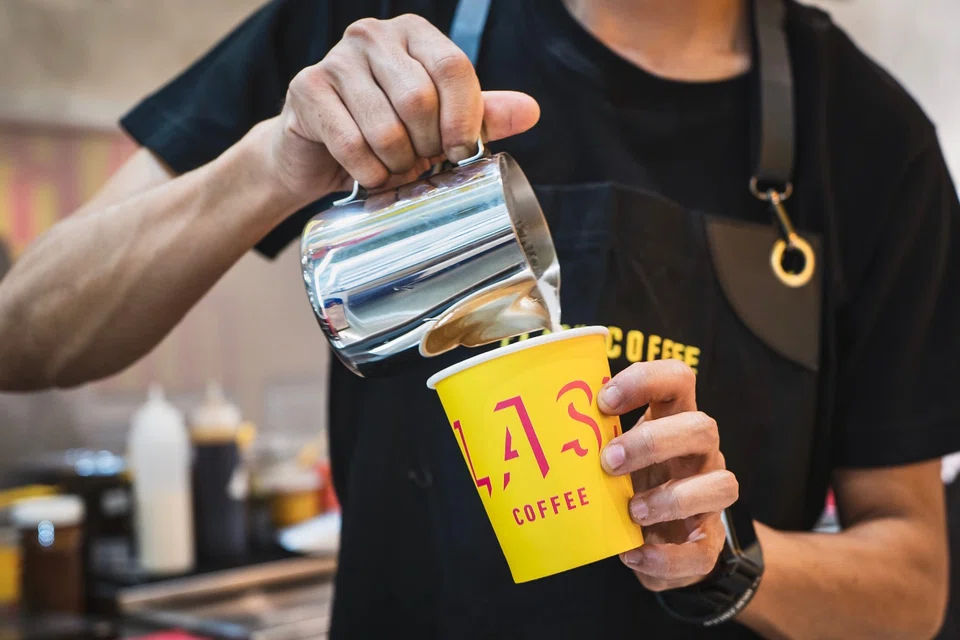
AFTER a rough couple of years, tech-enabled coffee chain Flash Coffee has hired former Foodpanda CEO Jakob Angele as its executive chairman in a bid to hit profitability.
The firm, still headquartered in Singapore, liquidated its operations in the city-state last October, while it sold its Thai business the following month. The chain has also left Hong Kong, Taiwan, and South Korea.
Having previously expanded to more than 200 stores across Asia Pacific, the exits leave Flash Coffee with just 67 outlets – all of them in Indonesia. But the firm is going all in on its remaining market, where Angele says the vast majority of its stores are Ebitda-positive.
Still, Indonesia remains a highly competitive battleground for coffee chains. Other than fellow venture-backed brands like Kopi Kenangan and Fore Coffee, Flash Coffee would have to face newer upstarts as well as foreign chains like Cotti Coffee, which was founded by former Luckin Coffee executives Lu Zhengyao and Qian Zhiya.
Pruning stores
In his latest interview with Tech in Asia, Angele says that Flash Coffee increased its revenue per store figure by more than 50 per cent from February 2024 to June 2024. At the store level, the business was operationally profitable after marketing expenses.
“We currently don’t provide a timeline on group-level Ebitda, but with the strong results from H1, new menus, new stores, and strong operational focus, we are confident we will reach profitability soon,” he adds.
Store closures were part of the reason behind the revenue increase. As of November last year, Flash Coffee had 93 stores in Indonesia, but the figure now stands at 67.
Many of the closed stores were profitable during the Covid-19 pandemic but could not maintain it once the period subsided. Of the remaining stores, Angele says 95 per cent of them are profitable on an Ebitda basis.
“At the end of 2023, the team did a lot of hard work in rationalizing the footprint based on the new global funding environment,” he explains, adding that this year has been about fine-tuning the cost structure and focusing on growth again after a period of belt-tightening.
This strategy is not unheard of. Fore Coffee, for instance, found its expansion plans halted by the pandemic and had since recalibrated its way to profits. The same can be said for Kopi Kenangan.
Like any consumer brand, though, part of Flash Coffee’s focus on growth involved reassessing its offerings to better suit what Indonesian customers want as opposed to a more global menu. The company also has to find gaps in the market where the firm could stand out, Angele notes.
“We basically replaced 63 per cent of our drinks on the menu,” he says, making way for items like the whipped strawberry matcha, which its competitors don’t currently offer, while also adding drinks with “different textures, like foams or boba bubbles or a different colouring.”
“Indonesian customers want to try out new things,” he adds.
Flash Coffee also made efforts to make seating options at its outlets more plentiful and more comfortable, which Angele says gave a boost to those stores’ offline business. Fore Coffee made a similar move as part of its turnaround.
Brewing a comeback
Among Flash Coffee’s investors is Delivery Hero, Foodpanda’s parent company. But that is not the only connection between the coffee chain and Angele: he is also a venture partner at VC firm White Star Capital, which led Flash Coffee’s US$50 million series B round in May last year.
Before Flash Coffee, Angele spent nine years at Foodpanda, six of which he served as its CEO.
Joining Flash Coffee would reunite Angele with its founder and CEO, David Brunier, who was CMO for Asia Pacific at Foodpanda prior to founding the coffee chain. “I’m in a role between operational management and the shareholders. So I work quite hands-on together with the founders and the team,” Angele says.
Firms like Kopi Kenangan and Fore Coffee have enjoyed venture-funded rapid growth in recent years, with the former recently launching a new mass market brand. In recent times, new coffee startups like Jago and Tomoro Coffee have started to crop up, while Chinese chains like Luckin Coffee and Cotti Coffee have increased their presence in the region.
Flash Coffee’s choice to focus solely on Indonesia is also a contrast to both Kopi Kenangan and Fore Coffee, which have expanded beyond their home turf in recent years. Fore Coffee opened its first overseas outlet in Singapore last year, while Kopi Kenangan is also available in Malaysia and Singapore.
Angele, however, says he is confident that Flash Coffee has found its own niche in the market: quality at an affordable price.
“Flash Coffee is quite well-positioned in terms of price point. We are at a medium to slightly high price point, while Kopi Kenangan, for example, plays on a much lower price point, and there I think the margin pressure is higher,” he explains, adding that Flash Coffee’s customers average between one and two transactions per week with the brand.
This confidence in its market positioning is perhaps why the firm hopes to open five to 10 new stores in Indonesia this year. It also has no immediate plans to expand overseas again.
Of course, “Indonesia is a huge market,” Angele points out. The Janji Jiwa chain, for one, has over 1,000 outlets – even more than Kopi Kenangan, which has 868 branches, and Fore Coffee, which is targeting 240 locations by the end of 2024.
He remains confident that “Flash Coffee could easily have 300 or 400 outlets only in Indonesia and run a very profitable business.” TECH IN ASIA






