

Singapore’s deeptech blueprint takes shape, but hurdles dent ambitions

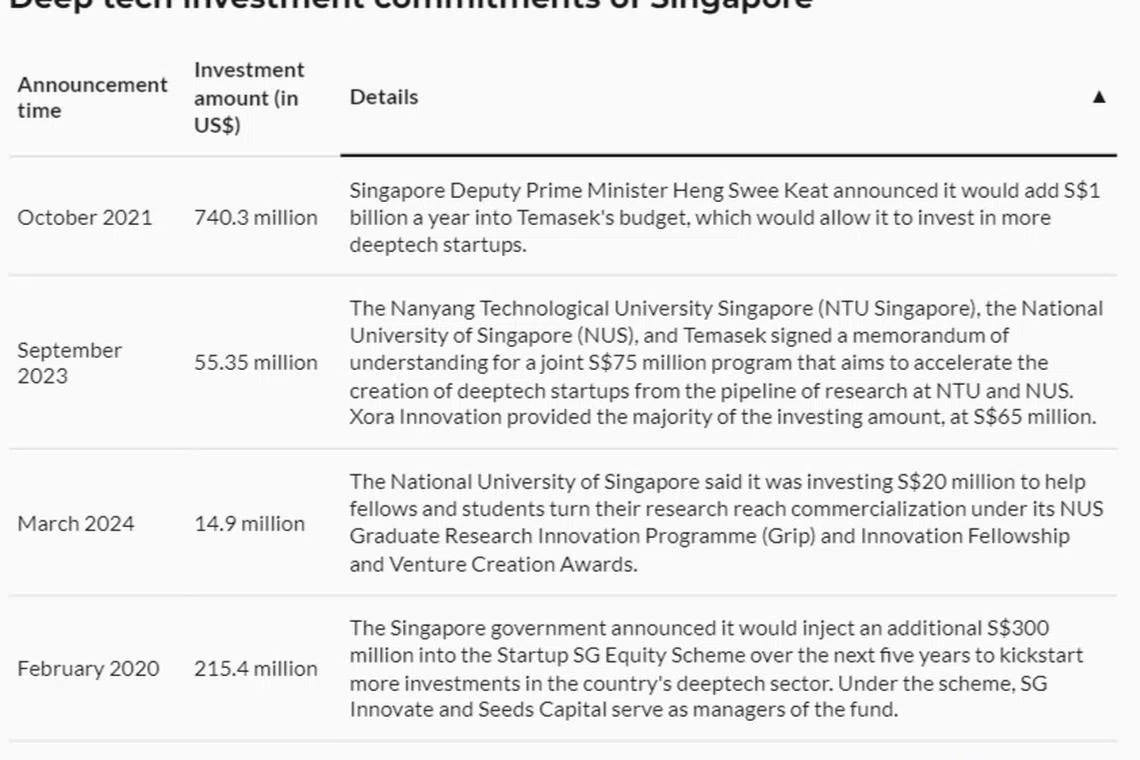
IN 2020, Singapore committed S$300 million (US$215.4 million) for deeptech development in the city-state.
Under the Startup SG Equity Scheme, the government planned to co-invest with eligible investors in promising startups focused on biotech, agritech, and advanced manufacturing, among other sectors.
“These startups need larger investments, longer gestation periods and face higher risks,” Deputy Prime Minister and Finance Minister Heng Swee Keat said when he announced the scheme in 2020.
But four years later, after investing nearly US$1 billion in deeptech, Singapore is faced with headwinds in executing its plan.
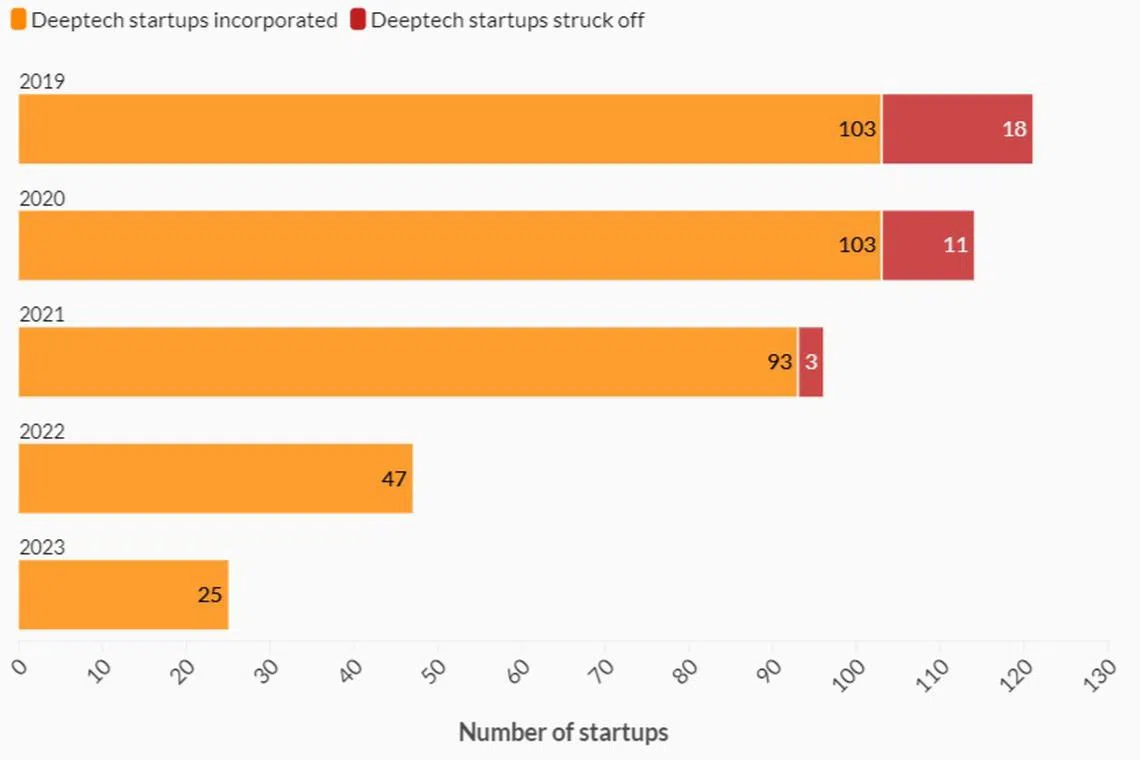
About a tenth of companies incorporated between 2019 and 2023 have shut down, according to data from SGInnovate, a government-owned investment firm focused on deeptech startups. Some sectors like biotech also saw many of its startups leaving the city-state, which Tech in Asia had previously reported.
A spokesperson for EDBI, the corporate VC arm of the Singapore Economic Development Board, tells Tech in Asia that building a base of deeptech investors is crucial for the government’s plans.
“Even if some companies fail, the ecosystem will still benefit from the expertise and global networks of these venture funds, allowing the talent and capabilities to be recycled back into the system,” the spokesperson says.
It doesn’t help that the investing environment now is “horrible,” says Cyril Ebersweiler, general partner at deeptech-focused VC firm SOSV.
“When money is scarce, and the interest rates are high, do you really want to invest in a deeptech startup?” he tells Tech in Asia.
Investors and deeptech founders agree the challenge the sector faces may be bigger than what the Singapore government alone can handle. For one, deeptech startups take years before they go to market, which investors in Southeast Asia may not always have the patience for.
“The issue about deeptech at the moment is its business model doesn’t work with the VC model perfectly,” Ebersweiler says. Valuations are unlikely to grow at the speed of, say, SaaS companies, which VCs in the region are used to, he adds.
Almost every sector in the city-state is challenged by the lack of talent in the country, but it is more pronounced for deeptech startups, which may require scientists and researchers with specialized skills.
As such, the local founders who eventually establish startups out of their research and scientific findings in school usually compete for the small talent pool in the country.
When Entrepreneur First, an established deeptech startup venture builder, left Singapore in 2022, it was reportedly due to this very challenge.
And then there are founders who face the “valley of death” and fail to launch even before fundraising. It’s an observation of many seed-stage investors in Singapore.
“Most deeptech startups that die in the first two to three years is because they cannot translate the research into a working product, either from a scientific research perspective, or lack of capital,” Clara Chen, co-founder of venture builder Singapore Deep Tech Alliance (SDTA), tells Tech in Asia.
Then what is the solution to Singapore’s deeptech ambitions?
Customers are key to sustainability
That lack of cash to burn to do more research in order to help products reach product-market fit has been a perennial problem of deeptech startups. So for Chen, the Singapore government’s model of “risk sharing” with investors like SDTA through co-investing is an attractive proposition.
The venture builder entered Singapore in 2022 and launched an annual nine-month program that allows participants to build viable business models out of scientific research made in Singapore. Scientists, researchers, and executives who wish to lead startups can participate in the program.
Chen says SDTA has a committee that verifies if the scientific research may be “commercialized.” The firm then approaches potential customers to ensure that startups built by its cohort develop products that have market viability.
To be fair, the program doesn’t always get it right. Chen says 70 per cent of founders who join the nine-month program drop out due to commitment issues or failure to reach necessary milestones.
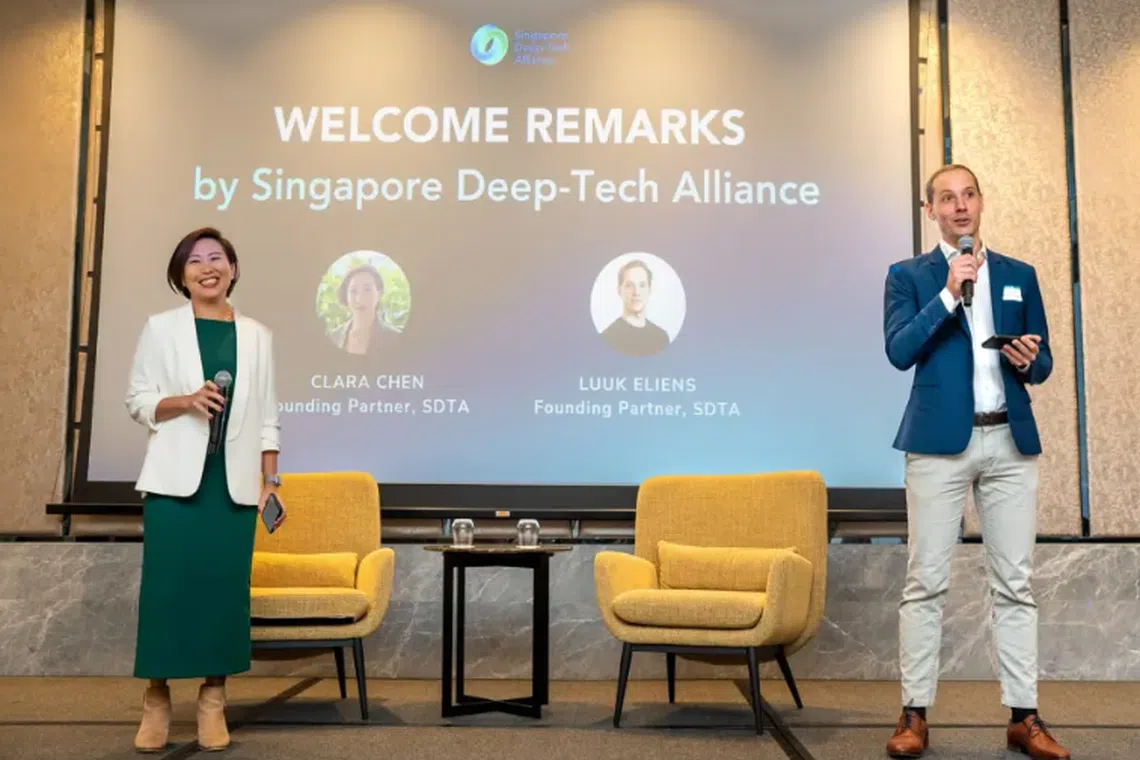
As SDTA does a lot of initial research, training, and legwork for the startups’ market viability, the venture builder usually takes about a 10 per cent to 15 per cent equity stake firsthand in each startup. By the time a startup starts fundraising, SDTA will have already done 18 months of work behind the scenes.
“For an independent investor, that may be too long of a time. But that’s our proposition: We make sure our startups are investible,” she says.
Singapore-based Elev8.vc, founded in 2018, takes a similar approach, albeit less capital-intensive. Remi Choong, the principal of the VC tells Tech in Asia that Elev8.vc starts securing possible customers of deeptech startups before the VC firm makes an investment.
“We realized the biggest problem of any deeptech startup is unlocking the first sale,” he says. The investor wouldn’t share the specific startups, but says that most of the firms the VC invested in for its second fund have now reached US$1 million or more in revenue – thanks to this change in strategy.
Be ready to venture out of Singapore
Out of the hundreds of VCs based in Singapore, only a handful are focused on deeptech investing.
Emily Liew, assistant managing director of government agency Enterprise Singapore, admits that Singapore is yet to reach the sophistication of deeptech ecosystems found in Boston and Silicon Valley, where talent and investors are in abundance.
So when she sees Singapore-founded deeptech startups go elsewhere, she isn’t so concerned as companies would naturally flock where opportunities are plenty.
“We are cognizant that Singapore is a very small market so we do need the startups that are founded here to grow beyond Singapore’s borders,” Liew says.
EnterpriseSG has a programme which helps startups connect with potential partners and market opportunities in 21 cities globally.
Jeremy Lim, founder of Amili Asia, a biotech startup focused on microbiome research, echoes the sentiment. He finds Singapore-based startups, in almost any vertical, would have to be prepared to get out of the country on day one due to the country’s market size.
The government itself has also built the necessary infrastructure to allow startups to expand outside the country easier than in any country in Southeast Asia. However, the strategy does present a dilemma for the ecosystem as a whole.
“From a company’s perspective, it would be the right thing to do to domicile outside of the country for growth. But in our ecosystem’s perspective, it means we are stuck in a perpetual loop of incomplete maturation, as our talents go elsewhere,” Lim says.
The price of attracting global talent
The startups that do choose to stay in Singapore, however, are faced with a constant search for talent. Recruiting them means competing for pay with companies who may have bigger war chests.
Lim of Amili, for example, has shared that since scientists specializing in gut research are few in the world, competition with pharma companies is “very real” for the startup.
Not to mention, convincing migrants to stay in Singapore – one of the most expensive countries to live in – may squeeze the pockets of deeptech startups even further.
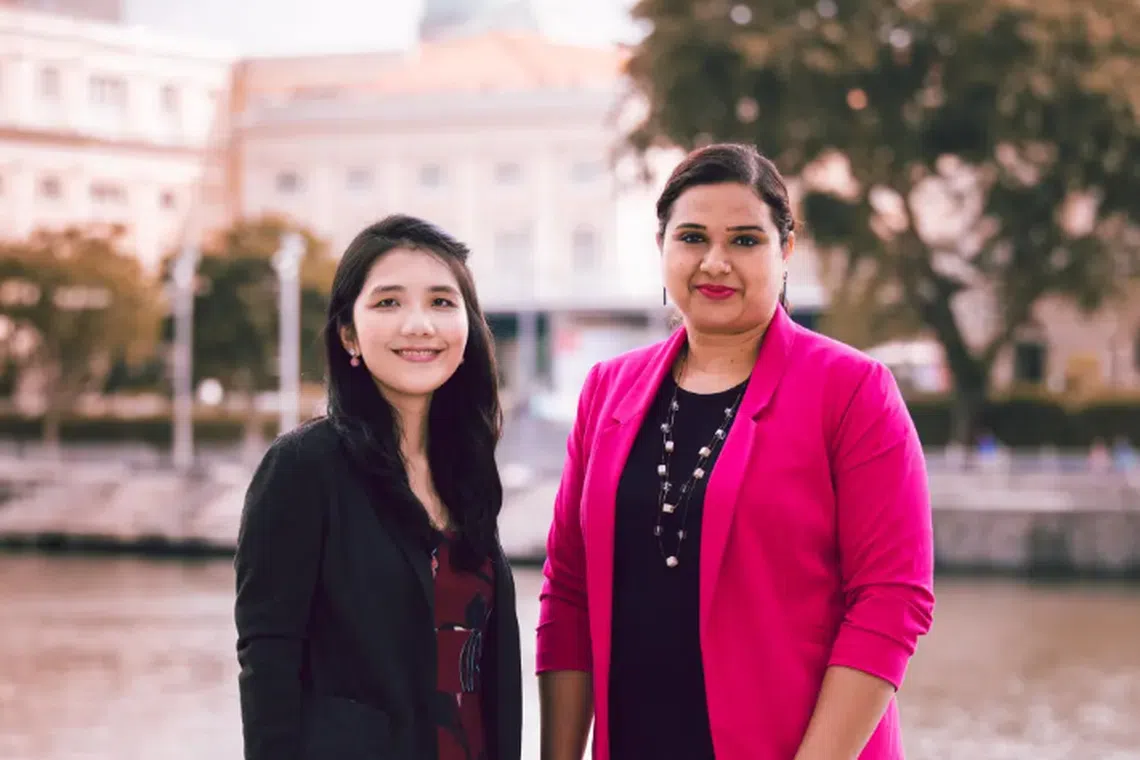
Sandhya Sriram, founder and former CEO of alt-meat maker Shiok Meats, tells Tech in Asia that during her tenure, it was “impossible” to find all the talents the startup needed within Singapore. “The work visa regulations were made tighter every year.”
In 2022, for example, the minimum salary requirement for those holding the common work visa for professionals was bumped to S$5,600 (US$4,119) from S$5,000 (US$3,678) a month – but this is due to take effect in 2025.
But these talents are “necessary” for a higher success rate of deeptech startups in Singapore, says Phil Inagaki, managing partner at Temasek-backed Xora Innovation.
“If the investors have never been part of supporting a deeptech unicorn and entrepreneurs have never even been part of such a company, then the chances of success start getting lower really quickly,” he adds.
Can Singapore birth its own Nvidia?
With the many challenges the ecosystem is facing, Liew of Enterprise Singapore thinks the city-state is still at a nascent stage in deeptech investing. This is despite the country seeing the likes of deeptech startup Nanofilm going public in 2020.
“There is no one-size-fits-all strategy here. There may be some deeptech companies that would have to go elsewhere, but certainly, there are those which would want to stay and take advantage of being close to Southeast Asia,” she adds.
For Choong of Elev8.vc, as a longtime investor in the space, the fact that the Singapore government is taking a multidecade and multifaceted approach to its deeptech ambitions is something to be “thankful” for.
“Because if we are forced to do it in the short term, it’s never gonna work,” he says. “If we look around the world, deeptech ecosystems take around 30 years of R&D investments to seed. We have done this seeding phase successfully but it’s overly ambitious to expect a home-grown Intel-like company overnight.”
Building interest in Singapore-founded deeptech startups would be the strategy that makes the most sense, for now, both as a lure for investors and talents alike, he adds.
Eventually, he expects the city-state to attract M&A deals that are alike to those seen in Silicon Valley.
“Right now, Singapore’s deeptech startups are quite obscured from major acquirers not based in this part of the world, but this is also a huge opportunity for local investors. At the end of the day, the goal is to create our own global champions. It would just take a calculated approach to get there,” he says. TECH IN ASIA
TRENDING NOW

Good Class Bungalow market activity picks up pace on ‘realistic’ pricing

Indonesia imposes US$116 million in fines over manipulation of Sinar Mas, Prajogo-linked stocks

Singapore identifies 7 firms responsible for haze fires, notices issued urging action: Grace Fu

Once staunchly pro-China, Malaysian Chinese businesses are now distancing themselves from Beijing

