VCs on the ropes in South-east Asia. Here’s how they can bounce back

THE global venture capital industry is at a crossroads. Data from Pitchbook shows that fundraising this year is expected to be down 48 per cent from the levels seen in 2021.
The picture in Southeast Asia is different but no less troubling. While funds in the region have raised more than US$14 billion this year so far compared to US$14.8 billion for all of 2023, the VC sector is still struggling to provide returns to investors.
As another Pitchbook report noted, “nearly 87 per cent of the exit value since 2015 has been generated by six exits of over US$1 billion” and cash returns for investors remain “elusive.”
What needs to change for venture capital to thrive in Southeast Asia? To find out, Tech in Asia sought opinions from a traditional VC firm and a venture studio – both of them back startups, but they go about it differently.
Skinning the investment cat
Traditionally, VCs invest in companies with a founding team and business model already in place as well as provide financial support and strategic advice. But when it comes to operations, VCs are hands off.
In contrast, venture studios – also known as venture builders – are more involved in the startup creation process. They devise the business model then seek out the founding team. They also typically provide a lot of hands-on support, from sharing their network to guiding the startup’s operations.
The case for venture studios
Building a startup is a more complex undertaking in Southeast Asia than in Silicon Valley. As such, it cannot be approached in the same manner.
For starters, Southeast Asia is diverse not just culturally but also economically, with an average purchasing power that is much lower than the West. A large chunk of the region lacks basic infrastructure as well, making it more expensive for companies to acquire customers.
Great founders are also harder to find in Southeast Asia than in the West. In Silicon Valley, investors give truckloads of money to experienced founders who can scale out a product to one affluent, largely uniform customer base. But the customer base in Southeast Asia is too diverse for this strategy to be as effective. We feel that when done right, the venture studio approach can be better suited to tackle the region’s complexities.
Same folks, different strokes - Wright Partners’ take
Venture studios typically take a systematic approach to building a startup, beginning with a strong problem statement across a value chain.
Some studios use business models that work well in the West and simply adjust them for a different market. But others including Wright Partners believe that establishing first principles, understanding the value chain, and spotting real pain points are crucial.
Once an early business concept is identified to address the pain points, venture studios then de-risk the business by validating key hypotheses. Many studios are content with obtaining positive market signals through customer interviews and financial modelling.
However, some go further by designing and executing real-world, paid pilots that prove or disprove fundamental assumptions, especially the customer’s willingness to pay.
If these assumptions are validated and traction is generated, the next step is to recruit an excellent founder to continue the momentum.
Venture studios usually adopt a more hands-off approach after a startup’s series A fundraise but will continue to assist founders as long as it is useful. After all, a studio’s equity should incentivize it to follow through as the model is akin to taking large bets across a small portfolio relative to most VCs.
Better together
Venture studios and VC firms have not historically worked well together. VCs are often unfamiliar with the de-risking process, so they may find it hard to fully trust the conclusions studios make.
The reduced founder equity usually found in studio-built startups is generally viewed as a disadvantage, making VCs less open to backing them. For the few that do, however, VCs frequently prefer to remove the venture builder’s influence soon after investing.
Many venture studios have also made it hard for VCs to invest in their startups. However, collaboration is vital to mutual success, especially in an environment where VCs need better companies to invest in.
A venture studio will struggle to keep on building investment-worthy companies on its own, so it needs to develop close partnerships with leading regional VCs.
By understanding what VCs are looking for, studios can focus on de-risking the most important parts of a startup to set it up for success. VCs also benefit from access to investment opportunities that have a high chance of aligning with their investment criteria.
For Wright Partners, such partnerships have proven successful enough that we’ve begun teaming up with VCs to build startups that fill gaps in their portfolios and provide support to their existing investees.
This shows that good venture building complements and does not compete with traditional VC. Both bring different skill sets that should be combined to support founders.
VCs are geared towards investing and understanding how to support a startup’s financial journey towards the next step. Venture studios focus on identifying problems, solving them, and then creating early systems to ensure the startup’s success.
We believe VCs should refrain from venture building, while venture studios should avoid managing large funds. Crossing these streams creates too high a risk of moral hazard and lead to poor results.
Instead, venture studios and VC firms should keep each other accountable and create the best outcomes for regional startups.
Why VCs need to adapt - Saisons Capital’s view
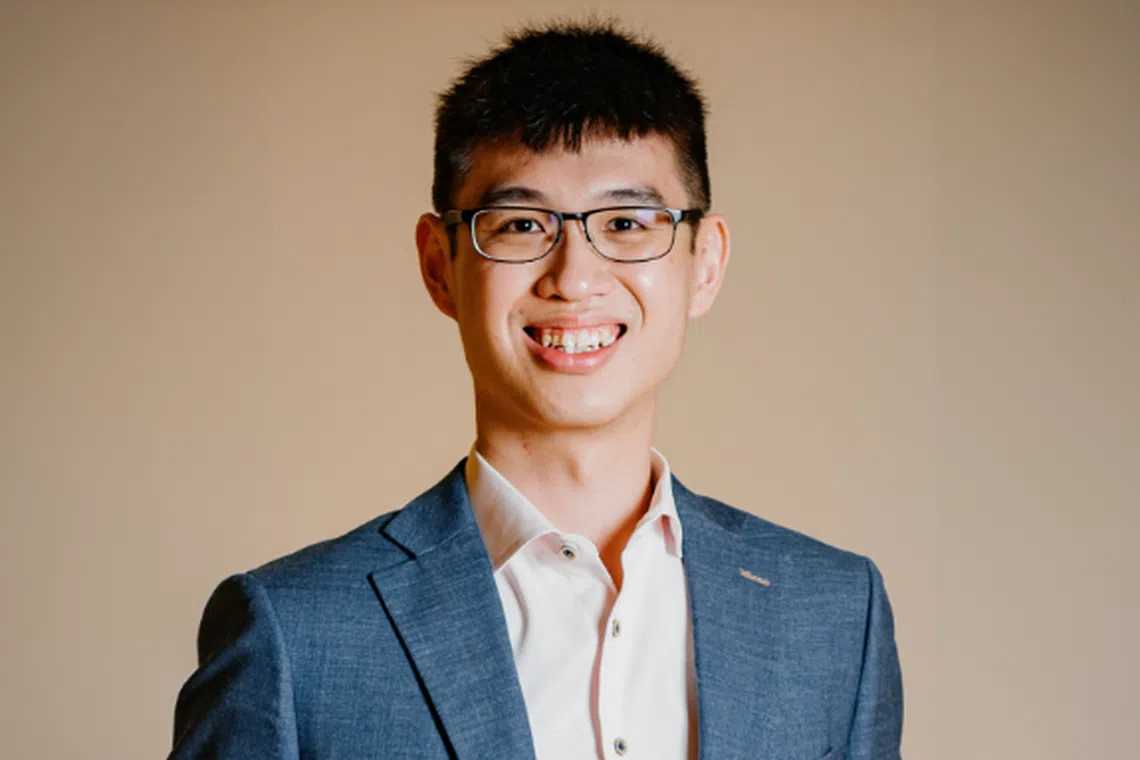
Southeast Asia is still rapidly growing, but venture capital has outgrown the pace of the market. With a population of 696 million and a gross domestic product (GDP) of US$3.67 trillion as of 2022, the region has more than 45 funds with assets under management (AUM) of over US$100 million, according to Saison Capital data.
Our data shows Latin America has a similar population and twice the GDP (US$6.3 trillion). However, it has only 12 funds with AUM exceeding US$100 million.
Having many large venture funds seems like a positive for Southeast Asia, but there are downsides. The main challenge is that the ecosystem may be unable to support the returns that limited partners (LPs) – investors of these funds – expect.
Lacklustre returns drive LPs to scale back commitment as they reallocate capital to investments with more attractive risk-return profiles. This puts pressure on venture funds to raise capital, which then trickles down to startups.
The implications for VCs are clear: Size down, go slow, and don’t be afraid to raise smaller funds.
Usually, smaller funds face less pressure to quickly invest what they have raised and have less inflated valuations for their portfolio companies. Just as VCs tell founders to tighten their belts, cut spending, and slow down “growth at all costs,” fund managers should follow their own advice.
This can be a bitter pill to swallow, as smaller funds also mean lower management fees. But this situation has been playing out naturally as venture funds find it harder to raise sizable successor funds.
Out of the box
LPs have less appetite for risk because of the challenging environment, so fund managers should get creative and be flexible in how they invest. Most venture investments centre around equity, but it might be time to consider alternatives.
For example, Credit Saison – the sole LP of Saison Capital – has started to co-invest across equity and debt. Equity investments are for the long term, whereas debt can generate liquid returns more frequently and consistently.
We have adopted this model in Indonesia in partnership with fintech firms. While waiting for the macroeconomic environment to improve and long-term equity investments to pay off, our firm’s debt investments are already delivering consistent returns.
Build relationships and ecosystems
With VC funds struggling to provide returns to their LPs, VCs must actively seek liquidity opportunities. In the past, early-stage venture funds could “outsource” this responsibility to growth-stage funds.
Since the strategic development and portfolio management teams at growth-stage funds typically played this role, early-stage venture funds did not have to concern themselves with finding liquidity.
But as many growth-stage funds, especially those headquartered abroad, have withdrawn or reduced exposure to Southeast Asia, VC fund managers must step up.
Traditionally, startups provide returns for investors via public listings or mergers and acquisitions. In Southeast Asia, IPOs can be a tricky route, but the M&A road can be worked on via partnerships between VC funds and portfolio founders.
Founders can focus on building their companies while their VCs can think ahead and deepen relationships with potential acquirers. By building alliances “on behalf of” their portfolio, venture funds can set investees up for success in the medium to long term. TECH IN ASIA