

SEA unicorn list: Singapore’s Tyme Group joins US$1 billion club

OVER 10 years ago, Aileen Lee, a venture capitalist at Cowboy Ventures, came up with the term “unicorn” to describe a startup with a valuation of US$1 billion or more. Like the mythical creature, startups with the ability to achieve this have become more elusive.
While a record number of 21 startups in South-east Asia broke into this elite club in 2021, only a handful have been able to reach this valuation since then. Only eight startups achieved such status in 2022 and Indonesia-based eFishery was the only newcomer to the billion-dollar club last year.
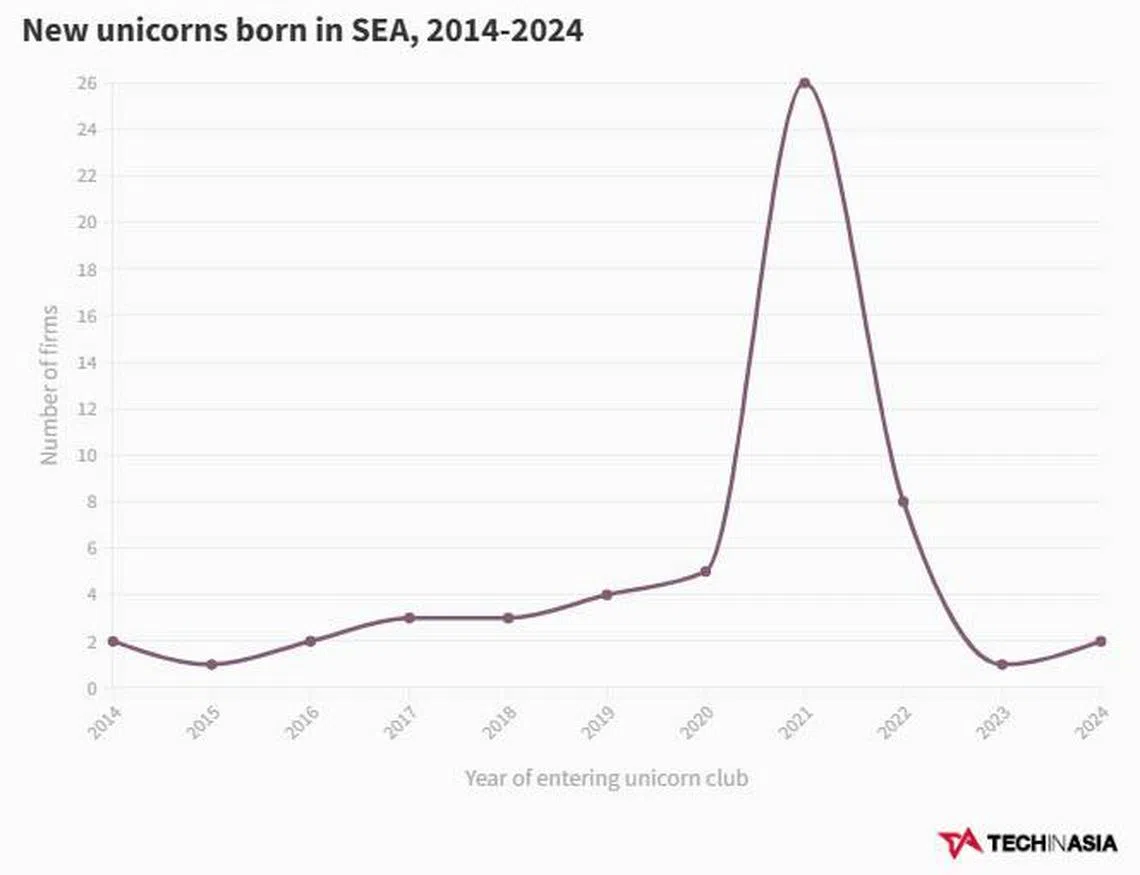
Tyme Group, a digital bank headquartered in Singapore, is the latest startup to hit unicorn status as at December 2024. It is the second startup in the region to break into the one billion club this year following semiconductor firm Silicon Box.
To be fair, the economic climate of 2021 was considerably different from the two years that followed. Funding has been drastically reduced to a trickle for startups.
Investment towards tech startups in South-east Asia fell by over 65 per cent in 2023 from a year earlier, according to Tracxn data.
The number of unicorns in the region has dwindled since we began our coverage: from 51 firms (which also included several decacorns – startups valued at U$10 billion or more), to now 38 firms, according to Tech in Asia’s analysis.
Several startups, including crypto exchange Bitkub and game developer Sky Mavis, have had their valuations trimmed. Last year, Chinese ecommerce major JD.com shut its Indonesia business, which was once considered a unicorn.
That said, some unicorns found better exit options for their investors by listing on bourses or via acquisitions. Grab, GoTo, Bukalapak, and J&T Express were among the seven startups that went public, while Ovo and Bigo Live were acquired within the last five years.
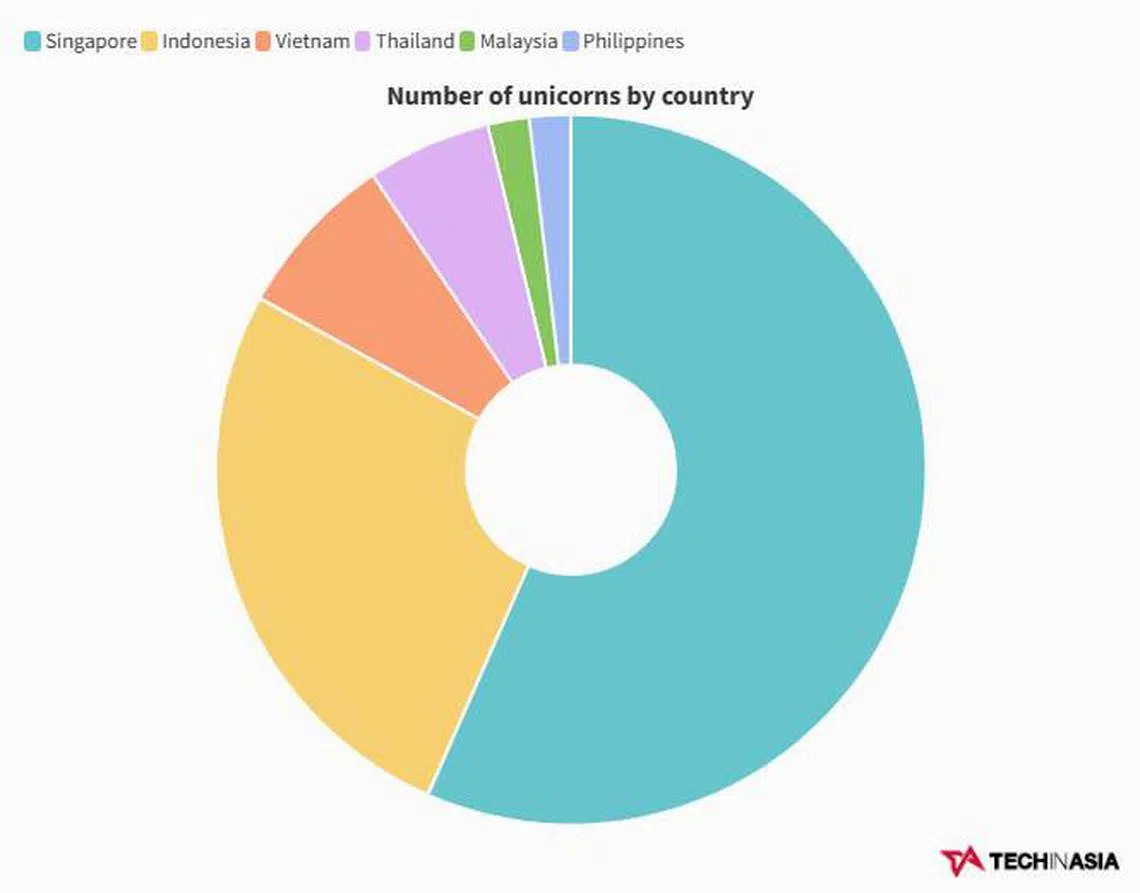
Geographically, a majority of South-east Asian unicorns are based in Singapore, followed by Indonesia, and Vietnam.
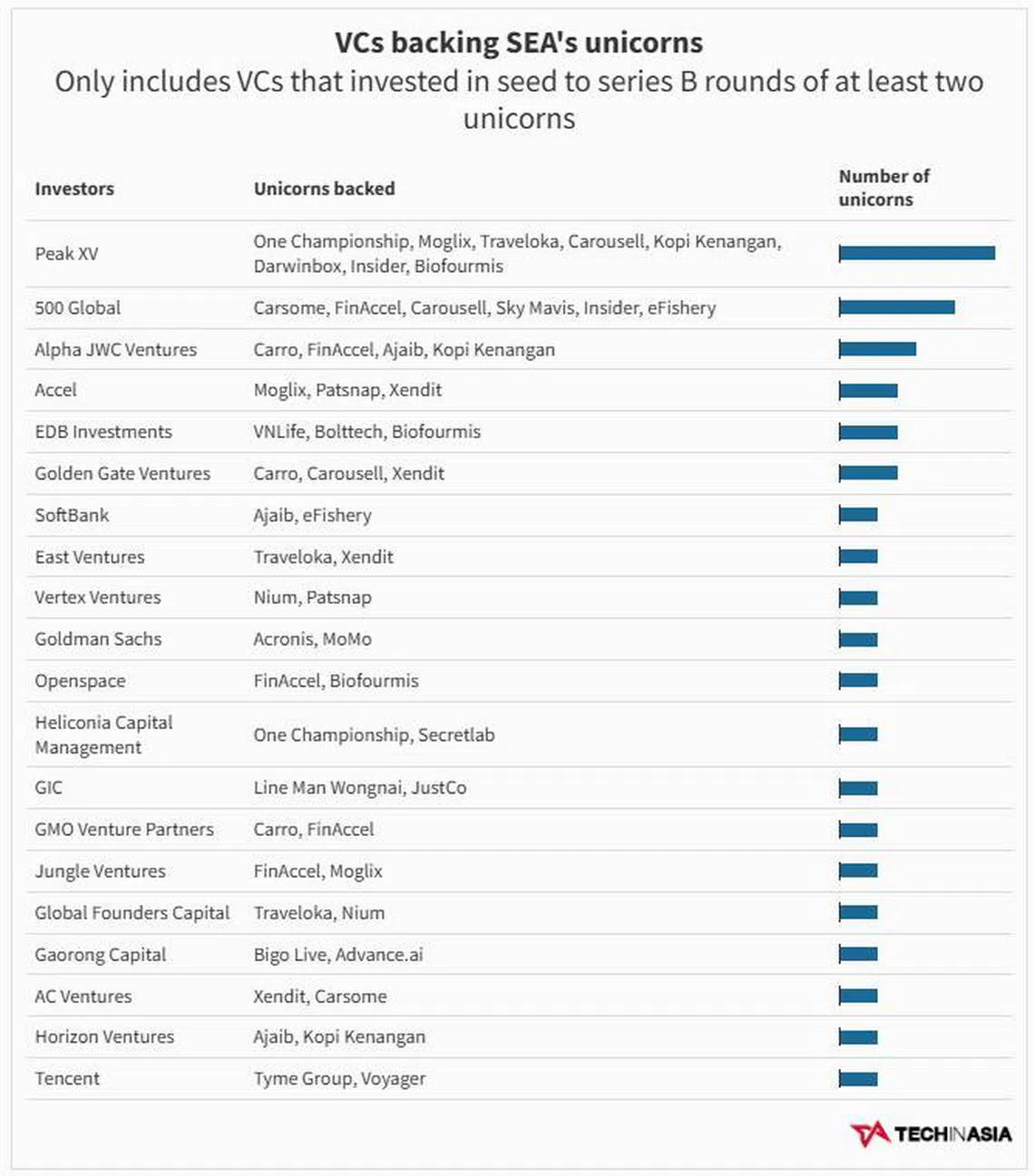
Among the investors, Peak XV and 500 Global have backed the largest number of unicorns from South-east Asia. Following closely behind are Alpha JWC Ventures, Accel, EDB Investments, and Golden Gate Ventures.
Here are some caveats about the data:
- Publicly listed companies, decacorns, and acquired firms have been excluded from this list.
- Valuations of startups are based on data from Alternatives.pe and other publicly available sources as per the startups’ latest funding rounds.
We hope that as we constantly update our database, this will be a useful reference for anyone who’s interested in South-east Asia’s unicorns.
We acknowledge that we are missing some data, so do reach out to lokesh.choudhary@techinasia.com to help us fill in the gaps. TECH IN ASIA
TRENDING NOW

Genting Singapore trails MBS, but helps anchor Malaysian parent group’s finances

Siti Hasmah Mohamad Ali, wife of former Malaysian PM Mahathir Mohamad, dies aged 100

He built the Vingroup empire. Now South-east Asia’s richest man is handing some key roles to his sons

Why US midterm elections could power the next stock market rally

