

Singapore-based Stryv acquires water purifier brand Sterra
Roy Ang believes both companies can hit their goal of achieving an overall nine-figure revenue in 2027
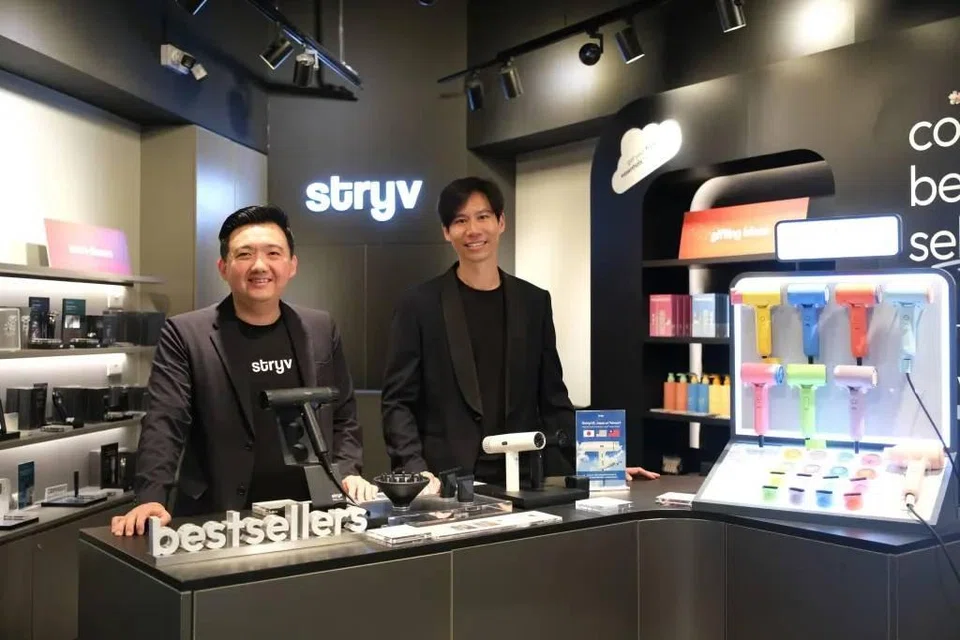
[SINGAPORE] Singapore-based consumer electronics startup Stryv has fully acquired home appliance brand Sterra for an undisclosed amount.
This is the latest in a growing trend of Asian direct-to-consumer (D2C) brands and consumer goods firms rushing to scoop up competitors, with mergers and acquisitions happening in Singapore and India.
Under the deal, Sterra will continue operating as a standalone brand with its CEO, Chris Lim, taking on an advisory role, Stryv CEO Roy Ang told Tech in Asia.
Together, the firms will be part of D2C brand builder Evo Commerce, Stryv’s parent company. Formerly known as Evolut Holdings, it specialises in wellness and personal care products.
Evo Commerce won top honours at the 2025 Emerging Enterprise Awards jointly organised by The Business Times and OCBC.
Its portfolio includes supplement brand bback and shampoo line Mantou. Evo Commerce’s backers include East Ventures, IJK Capital Partners, and Bonjour Holdings.
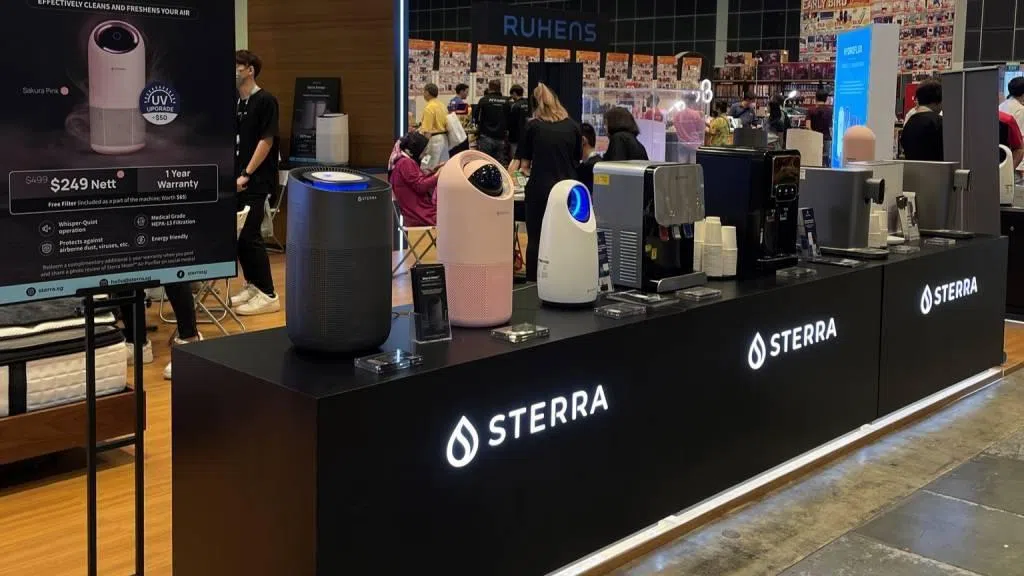
Stryv primarily sells personal care devices such as hairdryers and men’s shavers, which go for between US$149 and US$189. Meanwhile, Sterra’s main products are water and air purifiers priced from US$189 to US$1,999.
Sterra said in 2023 that, at the time, it was earning eight figures in revenue and making a net profit while being entirely bootstrapped.
Unaudited financial numbers for Sterra Tech, the firm’s entity in Singapore, show that it recorded S$16.6 million in revenue in the fiscal year ended Jun 30, 2025, with a net loss of S$2.3 million.
Following the acquisition, Sterra’s workforce, including its customer service, technical support, finance, HR, sales and marketing teams, will join Stryv.
All existing customers of the brand will have a continued warranty on products they have already purchased.
Road to “multibillion-dollar enterprise”
The acquisition marks Stryv’s entry into the home-care space and is a step towards becoming a “multibillion-dollar enterprise”, said Ang, who is also Evo Commerce’s co-founder and CEO.
“The goal in the next five years is to build Stryv as a key player in the home appliances product category,” he added.
Ang, who formerly headed regional commercial and operations for GrabPay, said Evo Commerce considered other options for its expansion into home care, but it felt that taking the M&A route was the right move.
“If we build our own home-care brand, it will take a couple of years to get substantial data about our customers. If we partner, we are essentially just distributors of the product. Buying was the most viable option,” Ang explained.
Stryv sells its products through its own website, ecommerce platforms, and in over 2,000 storefronts, including 30 retail stores across Singapore, Malaysia, and Hong Kong. Its products can also be found in 2,000 third-party electronics retailers and pharmacies.
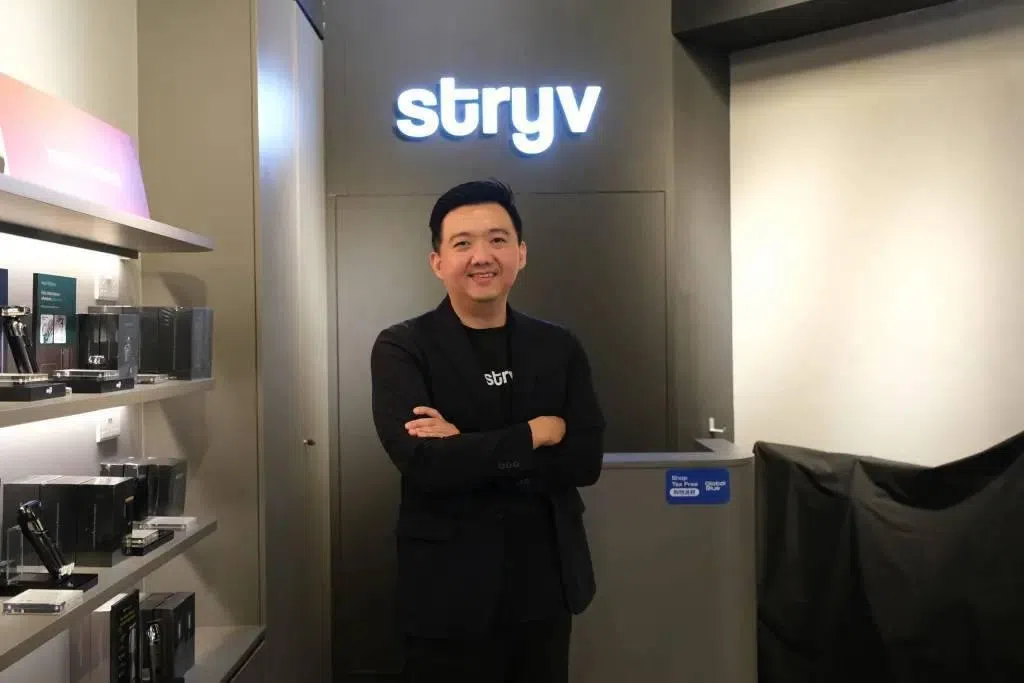
The brand is funding the acquisition using its own balance sheet, without additional financing from investors. Ang said Stryv closed 2025 with a net profit, as well as with revenue hitting eight figures, though he did not share specifics.
While a typical consumer electronics brand spends about 40 to 50 per cent of its revenue on marketing expenses, Stryv is spending a low double-digit percentage, Ang said.
“We have become more disciplined than the previous generation of brands. We don’t let growth at all costs be our mantra,” he added.
So far, Evo Commerce has raised US$4.8 million in funding.
Strong customer base and network
Ang and Lim go way back, as the latter advised Stryv on an informal basis in its early years.
Ang said his friendship with the Sterra founder made the acquisition more straightforward as both were already familiar with each other’s brands.
The main hook for Stryv, however, was Sterra’s customer and supplier relationships.
Ang said Sterra’s products can be found in some 200,000 homes in Singapore. Access to feedback from its existing customers can inform Stryv’s future product development.
Sterra’s customer service team also made the deal attractive. Ang noted that the company’s team of technicians is “pretty robust”, with most having been with the brand for the last four years.
In addition, Sterra has access to suppliers for Tier 1 factories in China and South Korea. In contrast, Stryv has mostly tapped suppliers in China.
To be sure, Sterra had its own run of challenges in its operations.
In 2024, the Competition and Consumer Commission of Singapore initiated an investigation into Sterra after it was found to be making false claims on its website that Singapore’s tap water was unsafe for direct consumption. The brand has since apologised for the blunder.
A spokesperson for Stryv said that while the company is aware of the issue, it was assessed as part of its due diligence process before the acquisition.
The spokesperson added that the issue “was taken seriously, but it was not a blocker to the transaction”.
Ang believes Stryv and Sterra can hit their goal of achieving an overall nine-figure revenue in 2027. He added that Stryv plans to continue focusing on Singapore, Malaysia and Hong Kong.
While the market for personal care devices and consumer appliances is expected to grow further in the next four years, Stryv will face heated competition.
According to Euromonitor, retail volume sales of Singapore’s consumer appliance market reached 4.9 million units in 2025. That’s projected to jump to 5.4 million units by 2030.
Dutch brand Philips takes the most market share in Singapore’s personal care appliances and consumer appliance categories. German company Braun is in second place for the former category, while Japanese firm Panasonic is the runner-up in the latter. TECH IN ASIA
TRENDING NOW

DBS, OCBC, UOB rout lops billions off STI as inflation, rate concerns spook investors

Grab CEO’s wife Chloe Tong on life with Anthony Tan and finding her purpose

OCBC sheds S$8 billion in value as shares close nearly 6% down; analysts cautious on banks

Deal between tycoon friends sparks scrutiny of Philippine power sector

