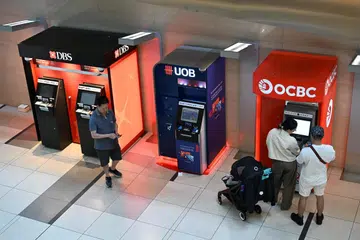
Who’s really solving AI’s data centre energy crisis in Asia?
Currently, Red Dot Analytics’ tech can be found in around 15 facilities across Singapore, Malaysia, Hong Kong, and Germany
EACH new chatbot response or artificial intelligence (AI)-generated video comes with a hidden cost: the massive power needed to run the servers behind them. Data centres now consume so much electricity that they are straining grids in US cities and raising questions about sustainability in Asia, where many facilities still run on fossil-heavy energy mixes.
But the next breakthrough in managing AI’s energy crunch in Asia may not come from Big Tech. Instead, the brunt may fall to colocation providers, the companies that operate these massive facilities.
In the US, hyperscalers such as AWS or Google Cloud often build and run their own sites. But in Asia, they rely heavily on third parties, renting facilities from colocation providers such as AirTrunk and Iron Mountain. According to S&P Global, this helps them distribute the upfront costs while still providing services to end-users.
S&P notes that Asia-Pacific now leads the world in leased data centre capacity.
This dependency is opening doors for startups such as Singapore’s Red Dot Analytics, UK’s EkkoSense, and US-based Phaidra to work their tech into the AI goldrush without actually selling to the hyperscalers.
Collectively, these firms are chasing a market that’s worth more than US$3.2 billion and is projected to more than double by 2030 as operators look for ways to cut ballooning power bills and meet climate commitments.

The spiky load problem
By 2030, the demand for global data centre capacity is expected to reach 219 gigawatts, up from 82 gigawatts in 2025, according to an estimate by McKinsey. Of this, 156 gigawatts, or about 71 per cent of the total, would come from AI workloads.
To put that into context: If AI data centres run at full load all year, 156 gigawatts of capacity would require approximately 1,366 terawatt-hours of power annually.
Of course, data centres never run at 100 per cent load all the time, but even at 50 per cent, the figure would still be over 12x higher than Singapore’s total electricity consumption in 2023 (55 terawatt-hours).



While training AI models is energy intensive, the computing load is relatively predictable and easy to optimise. On the other hand, inference workloads – which refers to the processing required for AI models to generate a response – are more volatile.
McKinsey expects that inference will become the dominant AI workload by 2030.
But despite the continued work of AI giants such as OpenAI in optimising and reducing the computational power required by their models, the variety of ways in which people are using AI means optimisation can’t just stop at model design or new chips.
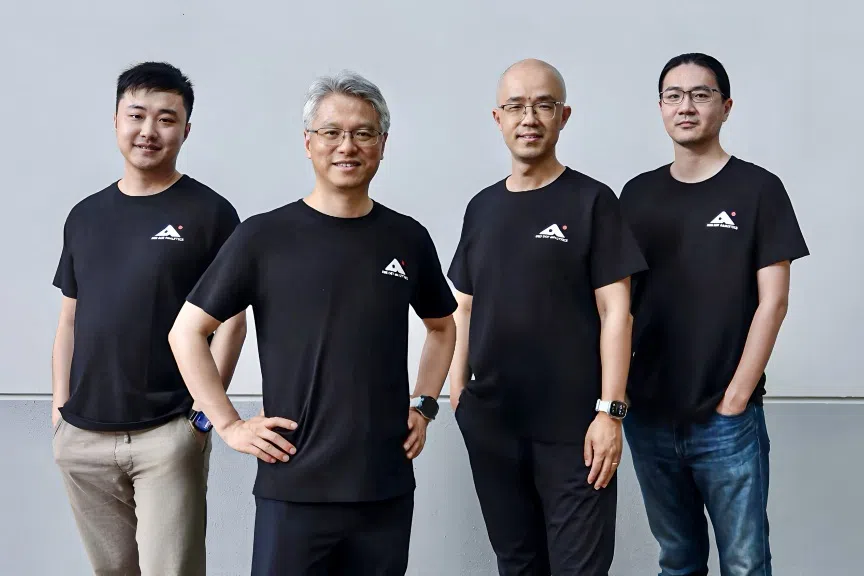
Some of the workload still runs inside colocation sites on older hardware, often without dedicated engineering teams to optimise their facilities, Red Dot Analytics CEO Jimin Jia noted.
Founded in 2016 as a spinoff from Nanyang Technological University, Red Dot Analytics combines digital twin technology with AI to manage risks and cooling systems. The startup raised several million dollars in a pre-series A round led by Granite Asia in August.
The opportunity for Red Dot Analytics is huge. According to data centre market intelligence firm DC Byte, there are currently 605 operational data centres in Singapore, Malaysia, Indonesia, Thailand, Vietnam, and the Philippines, with nearly 80 per cent of them being colocation sites.
DC Byte analysts Vivian Wong and Nicole Seah note that hyperscalers often prefer to act as the “sole tenant” within third-party colocation facilities in South-east Asia, as it gives them “greater control” and “operational security.”
However, hyperscalers typically set specific design standards and operational requirements, which fall to the third-party operators to implement.
While this means they will need to spend to meet these standards, S&P notes in its report that data centres with hyperscalers as anchor clients tend to command higher premiums than those without. Having Big Tech on the tenant list signals stability: investors assume the rent will be paid and the facility will not sit empty.
Making AI run efficiently with AI
In data centres, digital twin technology is increasingly used to monitor and simulate energy performance. This includes calculating power consumption across individual devices and the facility as a whole, which simplifies the calculation of the site’s energy efficiency.
But accuracy is far from guaranteed. Red Dot Analytics’ Jia said that many operators do not even have reliable numbers since the data they collect is often incomplete or poor in quality.
To address that, Red Dot Analytics builds a digital twin of the data centre that simulates how heat and power should flow inside. The system then incorporates whatever sensor data is available and uses AI to flag where the readings do not match the digital model.
This helps fill in missing information and gives operators a clearer picture of how efficiently their facility is running, along with concrete suggestions on how to improve it.
In general, the startup promises up to 5 per cent of total energy savings per month, which could translate into about S$500,000 of cost savings per year for a typical site with five megawatts of capacity. However, Jia notes that the figure can vary depending on the type of workload each facility handles.
Currently, Red Dot Analytics’ tech can be found in around 15 facilities across Singapore, Malaysia, Hong Kong, and Germany.
US-based Iron Mountain, which first deployed the digital twin tech at its Singapore facility in 2023, reported an over 200,000 kilowatt-hour energy reduction per month on average. That’s equivalent to monthly savings of around S$71,000.
Tech in Asia reached out to Iron Mountain for comment, but the company did not get back in time for publication.
Red Dot Analytics’ other customers include Singapore-headquartered Bridge Data Centres and BDx Data Centers. Still, homegrown solutions aren’t always the preferred option for companies in the city-state.
One example is ST Telemedia Global Data Centres (STT GDC), which chose to work with US-based Phaidra instead.
The Singapore-headquartered data centre provider is testing Phaidra’s AI agents to optimise cooling systems at select facilities, combining both air-cooling and liquid-cooling. STT GDC anticipates 10 per cent in energy savings but says this can increase to as high as 30 per cent as the AI model is trained with more operational data.
Founded in 2019 by Jim Gao, a former team leader at DeepMind’s energy division, Phaidra has raised US$60.5 million in total funding. The startup did not respond to Tech in Asia’s request for comment.
Meanwhile, UK-based EkkoSense takes a different tack. Rather than using physics models of heat and airflow as Red Dot Analytics does, it leans heavily on machine learning and real-time sensor data to highlight inefficiencies as they happen.
The firm equips operators with 3D visualisations that pinpoint thermal hotspots and cooling imbalances inside facilities. Patricia Alvina, who leads the company’s business development in Asean, said EkkoSense’s solutions typically deliver 10 to 15 per cent energy savings and promises a return on investment in under 12 months.
EkkoSense, which raised US$50.9 million in total funding according to Tracxn, has clients in Japan and Hong Kong and is now in talks with potential customers in Indonesia and Malaysia. But the firm does not only sell its software to colocation providers – it also deals directly with facility tenants, including banks and other enterprises.
Keeping costs down is just the start
For those building new data centre facilities, companies such as US-based Cadence Design Systems offer digital-twin tools that let clients model and optimise key building blocks of data centres from the start. The company said that it now has hundreds of digital twins in production or nearing deployment globally.
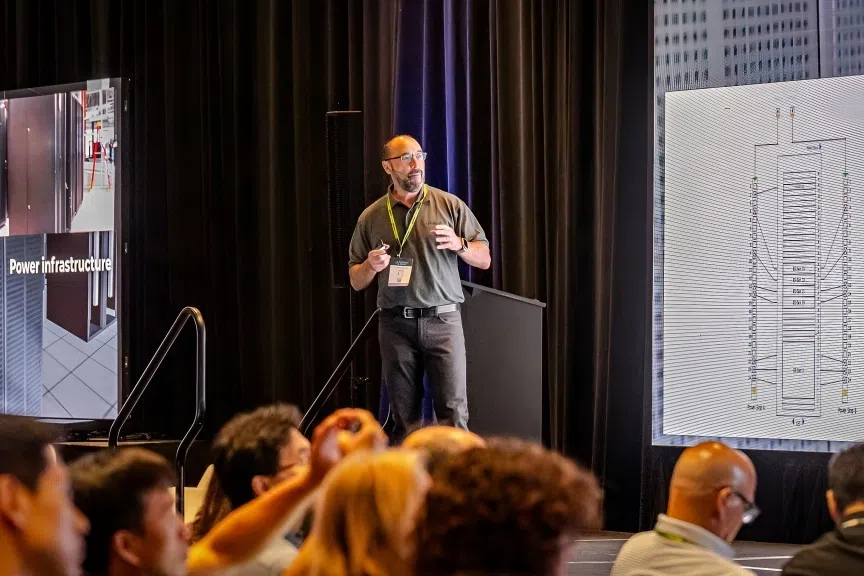
Cadence group director Sherman Ikemoto said the goal is to push facility utilisation above 90 per cent, versus today’s average of 65 per cent, or 88 per cent for hyperscalers. That extra headroom, he notes, can unlock “millions per megawatt” in value.
Training AI models eats up capacity without bringing in revenue, Ikemoto explained, whereas inference drives customer-facing services. Therefore, making inference more efficient can generate bigger financial returns than simply cutting electricity costs. TECH IN ASIA
Decoding Asia newsletter: your guide to navigating Asia in a new global order. Sign up here to get Decoding Asia newsletter. Delivered to your inbox. Free.
Share with us your feedback on BT's products and services