

Temasek-backed Xora Innovation views commercial success as key for its portfolio of deep tech startups
The VC aims to grow Singapore-born ventures to the point where they have large revenues with good unit economics, and headroom to expand

TEMASEK-BACKED venture capital (VC) fund Xora Innovation does not consider valuation to be the key indicator of success for its portfolio of deep tech startups.
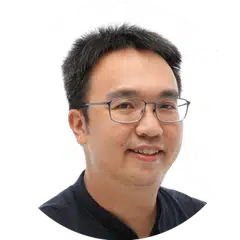
Instead, it is about the startup gaining traction with customers and achieving commercial success, said Phil Inagaki, chief investment officer of Xora.
To be specific, the VC aims to grow Singapore-born deep tech startups to the point where they have large revenues with good unit economics, and headroom to expand.
“When we get there, then I think we can actually say ‘mission accomplished’,” Inagaki told The Business Times.
There are already some signs Xora is heading there.
Amperesand, a grid infrastructure solutions provider that Xora incubated, on Monday (Oct 21) announced a memorandum of understanding with PSA unboXed, the corporate venture and innovation arm of PSA International.
The startup will deploy its solid state transformer technology, which is more efficient and smaller than traditional transformers, at Singapore’s port to aid in decarbonisation.
Xora was founded in 2019 as a joint venture between Temasek and the National Research Foundation (NRF) with the aim to catalyse venture building for deep tech startups in the Republic.
After spending the first two years mapping and understanding the deep tech ecosystem, the VC made its first investment in 2021. Temasek bought out NRF’s stake in 2022.
Xora starts with a thesis where there is a real problem and an opportunity to solve it, and if it gets it right, it can get the business to scale, said Alan Thompson, chief executive officer of the VC.
Xora can either look for a company that matches its thesis to back, or the it can build the venture itself if the conviction is strong.
“That really is the difference in the industry... People are willing to build deep tech companies from scratch when they think it’s worth the experience,” said Thompson.
The VC has existing partnerships with Nanyang Technological University, the National University of Singapore, and Temasek to accelerate the spinout of more deep tech startups in Singapore’s research ecosystem. On Monday, the Agency for Science, Technology and Research became a collaborator as well.
Deep tech in Singapore has experienced some setbacks in recent years, with Entrepreneur First, a deep tech incubator that matches aspiring entrepreneurs, pulling out of the city-state in 2022. It cited the small local talent pool as a reason for leaving.
Inagaki noted that building deep tech startups is more suited for experienced entrepreneurs with a thorough understanding of what works and what does not. Xora’s model is also different from that of other VCs as well, as it leverages its teams’ experience in recruiting leaders who have built out their own deep tech ventures.
“It’s easy to found a company; it’s hard to build a company,” he said.
Recruiting these entrepreneurs is not easy, as they can be extremely picky about the kind of companies they want to commit their energies to. Until there is more experience in the ecosystem, it is a numbers game where VCs keep handing small cheques to bright young people who may have been top PhD candidates in their universities.
“But in our world, a PhD from Stanford is a dime a dozen. It takes so much more to build a deep tech company,” said Inagaki.
Xora is trying to solve that problem as well, and success does beget success, said Thompson, noting that getting it right once makes it easier to recruit talent. For instance, one could make the argument that people could sign up as C-level executives in a startup Xora is incubating.
Even within the VC’s investment teams, each member has been involved in a startup in some form, usually in the C-suite.
“So they know what it takes – so they can operate a company,” said Thompson.
The trick is getting a venture to the point where it becomes attractive to others – including investors and talent with the right experience – and Xora’s teams can do that, said the CEO.
“We’re not talking to someone and saying: ‘This kind of company, we think we can take it to US$50 million or US$100 million in valuation.’ We’re trying to sell and build big stories.”
Xora is looking for exceptional entrepreneurs who not only have proven track records in building companies, but also have the ability to attract any talent in the world as a CEO. These entrepreneurs are greedy for talent and excel at getting people to join their team, said Inagaki.
For now, the VC is concentrating on three areas: computing and communications, climate and energy, and the application of artificial intelligence to physical industries. These sectors were earmarked as Xora believes they are undergoing secular growth.
The VC has so far invested more than S$200 million across 12 companies in the last 3.5 years, and also expanded its team in the last year. It intends to accelerate its volume of venture building in the next 12 months.
While deep tech is known for long gestation periods, Inagaki noted that some applications do not need such a long time to commercialise.
“In the next 12 months, we’re (going to see) early commercialisation start to happen in the portfolio. Some companies are going to hit some big milestones on that front, starting to generate revenue, launch products, and more (will get to the) advanced piloting stage.”






