
The big gig debate in Singapore: Where protections fall short
 Add BT as a preferred source
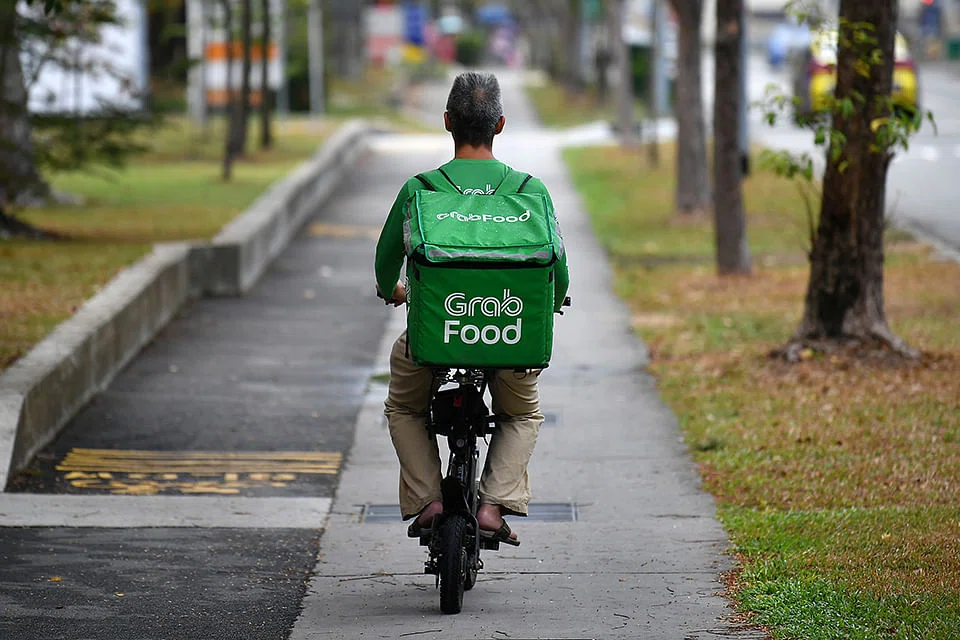
THE Ministry of Manpower (MOM) is studying how to address basic job protections for delivery workers who get their jobs via online platforms, said Prime Minister Lee Hsien Loong in Sunday's National Day Rally.
This comes as many have flagged the protection gaps that gig workers, especially on-demand delivery workers, face. The Business Times (BT) revisits the key issues.
1. Insurance coverage is patchy
Gig workers often lack access to comprehensive medical, accident, and earnings protection.
For instance, Grab, Gojek and Deliveroo have each come up with various initiatives to cover their drivers and riders, but these come tied to certain conditions and even performance tiers (see table).
Unlike employees, riders cannot claim for work injuries under the Work Injury Compensation Act.
Navigate Asia in
a new global order
Get the insights delivered to your inbox.
2. Employee classification a hot potato
A California judge recently ruled that Proposition 22 - a measure allowing the likes of Uber to classify gig workers as independent contractors rather than employees - is unconstitutional.
In Singapore, the main difference between gig workers and employees is that the former group is not covered under the Employment Act. This means they lack formal employment contracts and retirement safeguards like Central Provident Fund savings.
But gig-economy companies are resisting any reclassification.
"The proposition to remove flexibility which is the core essence of the gig economy may ultimately hurt what riders value, which is, more-than-fair compensation and work autonomy," a foodpanda spokesperson previously told BT.
3. Fears of venture money masking viability
Industry watchers have long been questioning what is driving the on-demand delivery boom more - real productivity gains or aggressive venture money.
The steep commissions that food delivery platforms levy came under particular scrutiny last year, with many questioning the business model's fundamentals.
Logistics veteran Paul Lim, founder and president of Supply Chain Asia, told BT in 2019 that he thinks the startups are paying their riders unsustainably.
"The industry is not professionalised yet. In a non-professionalised setting, whatever you make is not real, not sustainable. Very soon, it will be gone. Look at those people who earned S$8,000 in ride-hailing; they don't exist anymore," he said. "To me, this is like striking 4D (lottery)."
4. Growing urgency as gig pool expands
In 2020, the share of own-account workers - self-employed workers who are not employers - among working residents rose to 9.7 per cent, the highest in the last decade and up from 8.8 per cent in 2019, figures from MOM showed.
A survey by the international ADP Research Institute released in June found that the Covid-19 pandemic has increased interest in contract work, including in Singapore.
While demand for own-account workers such as delivery drivers may ebb as Covid-19 restrictions loosen, the trend will endure, National University of Singapore professor Sumit Agarwal previously told BT.
Decoding Asia newsletter: your guide to navigating Asia in a new global order. Sign up here to get Decoding Asia newsletter. Delivered to your inbox. Free.
Copyright SPH Media. All rights reserved.

