

Trans-cab purchase signals grab for drivers and maybe profits

Sharanya Pillai
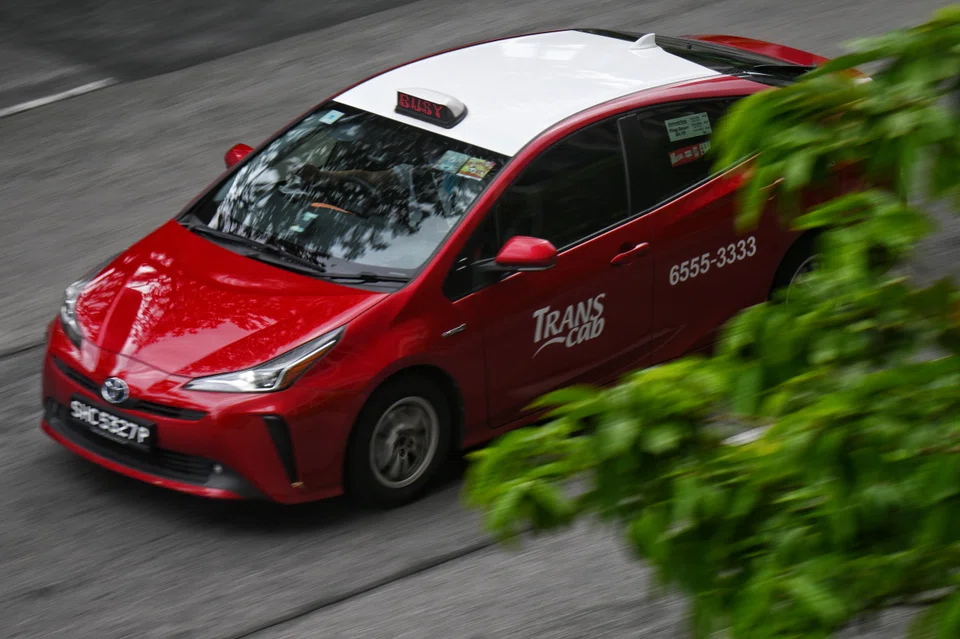
GRAB’S planned purchase of taxi operator Trans-cab could kick off more deals in South-east Asia’s point-to-point (P2P) transport market, as companies battle over a limited pool of drivers and contend with rising costs. For consumers, it raises concerns that fares might keep rising.
On Jul 20, Grab announced that its rentals unit is fully acquiring Trans-cab. The latter has a fleet of 2,200 taxis and 300 private-hire vehicles (PHVs), and owns a maintenance workshop and fuel pump operations.
Grab did not disclose the price tag, but The Straits Times reported it as being over S$100 million. The purchase, still subject to regulatory approval, is expected to close in the fourth quarter this year.
Conditions are ripe for such deals. Smaller taxi operators are profitable, but face stiff competition from ride hailing players such as Grab and Gojek.
The taxi population has fallen 3.5 per cent year on year to 13,861 as at June.
The number of private-hire cars, however, rose 11.3 per cent to 76,686 in the same period.
The likes of Grab and Gojek – the supposed disruptors of taxis – were growing because they could afford to. Funded by venture capital and private equity, they have not had profit priorities until recently. Dangling incentives allowed them to lure taxi drivers to their platforms.
“(Although) private-hire businesses like Grab, Gojek, and Tada have been rapidly growing their operations at the expense of the taxi industry, they have struggled to generate profits similar to those generated by the taxi companies,” said Shekhar Jaiswal, head of equity research at RHB Bank Singapore.
This is not the first time Grab is buying a taxi business. In August last year, the company acquired Philippine motorcycle taxi operator Move It.
Grab was also reportedly in talks in 2017 to buy SMRT’s taxi business, and in 2022 to acquire the taxi and PHV business of Prime. Neither deal panned out.
More taxi purchases by ride-hailing operators could be in the works. Bloomberg Intelligence’s Nathan Naidu thinks Grab might consolidate its market position in Malaysia and Indonesia, as it is doing in Singapore.
“In Indonesia, potential targets could be ones which operate motorcycle taxis, given the popularity of two-wheel transports,” said Naidu, an equity research analyst specialising in tech and gaming.
Mutual benefit
Grab seems to have a good deal in Trans-cab. Filings show Trans-cab posted revenue of S$81.1 million for the year ended December 2021, up 15.3 per cent from 2020. It posted a net profit of S$8.7 million, reversing a year-ago S$1 million pandemic-induced loss.
The reported S$100 million purchase price suggests Trans-cab is being valued at around 10 to 11 times its trailing earnings, which is a “fair” valuation, said RHB’s Jaiswal.
Bloomberg Intelligence’s Naidu said that assuming Trans-cab’s revenue expanded at the ride-hailing industry’s pace of 40 per cent to 50 per cent in 2022, and 30 per cent to 40 per cent growth this year, a S$100 million price tag would represent 0.6 times Trans-cab’s forward 2023 revenue.
Other pure-play taxi or ride-hailing app operators, such as Singapore’s ComfortDelGro Corp and Lyft in the United States, have enterprise values of 0.7 to 0.8 of forward sales, he said.
The deal may also be a good next step for Trans-cab, which has tried to pursue initial public offerings (IPOs) twice. Its first attempt in 2014 was botched by a letter questioning outstanding insurance payments it allegedly owed. The next try in January 2020 was aborted due to bad market conditions.
The taxi operator was reportedly seeking a S$200 million valuation in its second try for an IPO, which had already been halved from the 2014 target.
This suggests Trans-cab accepted a lower valuation with the latest deal, which is not surprising considering the tough market conditions that smaller P2P transport operators now face.
Competition for drivers has intensified, as pandemic conditions led some to exit the industry in search of full-time work. It is getting more expensive to attract drivers, and fuel as well as other operating costs are also rising.
With a cash-rich backer, Trans-cab might have the opportunity to expand. Grab, meanwhile, can lean on Trans-cab’s taxi licence for growth. “Taxi operators do not have to bid for a COE (certificate of entitlement) to register their taxis. This probably gives Grab an option to grow the Trans-cab taxi fleet in the near term, if needed, without worrying about elevated (COE) prices,” said Jaiswal.
A COE is required to own a vehicle in Singapore. Taxi operators, however, do not need to bid for them but instead pay a market-determined premium. To expand their fleets, they merely need to meet certain eligibility requirements related to taxi availability.
Walter Theseira, associate professor at the Singapore University of Social Sciences, said Grab’s entry could just be “about adding a large fleet of vehicles and drivers”.
Whither the consumer?
While consolidation in the P2P sector benefits the companies, its impact on the consumer has stirred concerns. Some are understandably worried about handing Grab too much pricing power when ride-hailing fares are already on the rise.
As one Business Times reader wrote in a letter to the editor: “Taxi service, by whichever name you call it, should still be considered a public good. The authorities must ensure this remains reasonably affordable and prevent the concentration of monopolistic pricing power.”
Consumers should never have expected the golden age of ultra-competitive pricing to last forever. In this new age of higher inflation though, those days are far behind.
TRENDING NOW

Two Singapore-listed palm oil firms named in Greenpeace report on Indonesian plantation fires
Singapore Airlines flight returns to San Francisco after ‘unruly’ passenger incident

Singapore looking into which companies responsible for haze-causing fires: PM Wong

Deluge IPO 3.86 times subscribed ahead of SGX debut

