Unitree plans 4.2 billion yuan Shanghai IPO, testing interest in humanoid robots
IPO is one of China’s biggest domestic tech listings in years
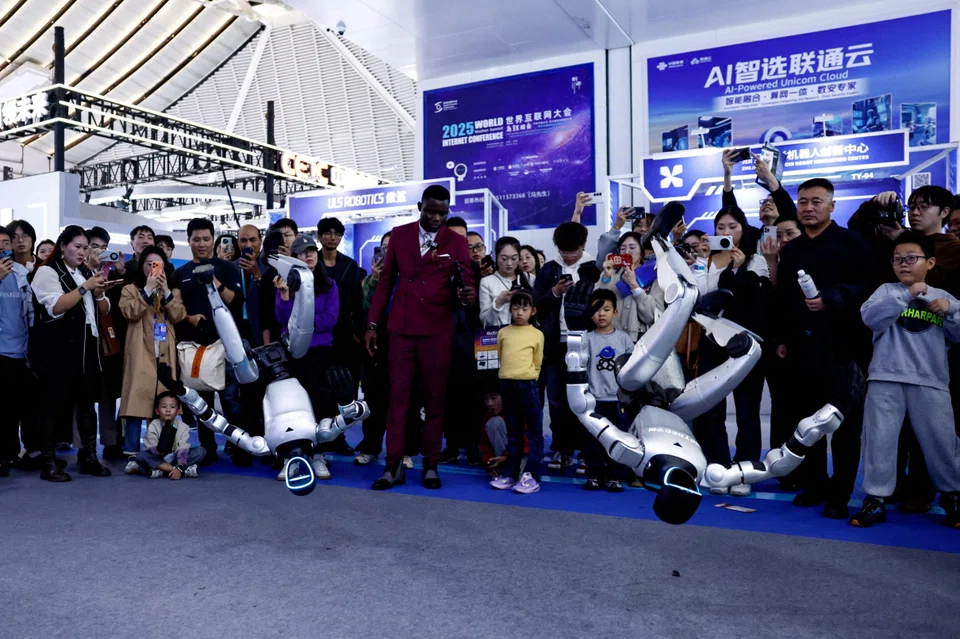
[BEIJING] Chinese startup Unitree Robotics on Friday (Mar 20) filed an initial public offering application to the Shanghai Stock Exchange, seeking to raise 4.2 billion yuan (S$778.6 million), according to the prospectus, in a test of investor interest in humanoid robots.
Unitree’s robots were the star of Chinese state media’s Spring Festival gala last month, which featured a technically ambitious martial arts sequence performed by over a dozen humanoid robots twirling swords and nunchucks alongside human dancers.
The robots’ complex choreography, complete with mid-air somersaults, displayed clear mechanical advances compared to their dance performance on the same TV programme last year.
Frontier industry
Unitree’s IPO would be one of China’s biggest onshore tech listings in years, and comes as Beijing steps up efforts to support its tech champions in tapping capital markets for their funding needs.
Unitree’s operating income grew 335 per cent year on year in 2025, reaching 1.708 billion yuan, its prospectus said, while its net profit soared by 674 per cent.
Humanoids have become the firm’s key growth engine as their share of main business revenue rose to 51.5 per cent in January-to-September 2025 from 27.6 per cent in 2024, even though the shift into the lower-priced G1 model trimmed gross margin, according to the document.
Humanoid robots represent a frontier industry that China is well-positioned to lead, thanks in part to its diverse and largely self-sufficient manufacturing supply chains.
China views embodied artificial intelligence as a key future strategic industry alongside quantum, 6G, nuclear fusion and brain-computer interfaces.
China plans to widen the deployment of humanoid robots and AI automation in production lines nationwide – part of an initiative to apply AI throughout society and raise economic productivity.
SEE ALSO




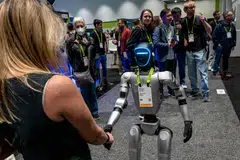
However, real-world factory deployment remains limited for now. Unitree’s prospectus said its humanoid industry-application revenue mainly came from enterprise reception and tour-guide use, intelligent manufacturing and intelligent inspection, with enterprise tour-guide use accounting for roughly 50 to 70 per cent.
Unitree shipped over 5,500 units last year, occupying 32.4 per cent of the global humanoid market, the document said.
Founded in 2016, Unitree leads the industry in both production and sales, becoming a go-to choice for Chinese universities researching robotics, as well as a common sight in entertainment and sporting events all over China. REUTERS
Decoding Asia newsletter: your guide to navigating Asia in a new global order. Sign up here to get Decoding Asia newsletter. Delivered to your inbox. Free.
Share with us your feedback on BT's products and services