

This wheel-bound unicorn is ready to sprout wings
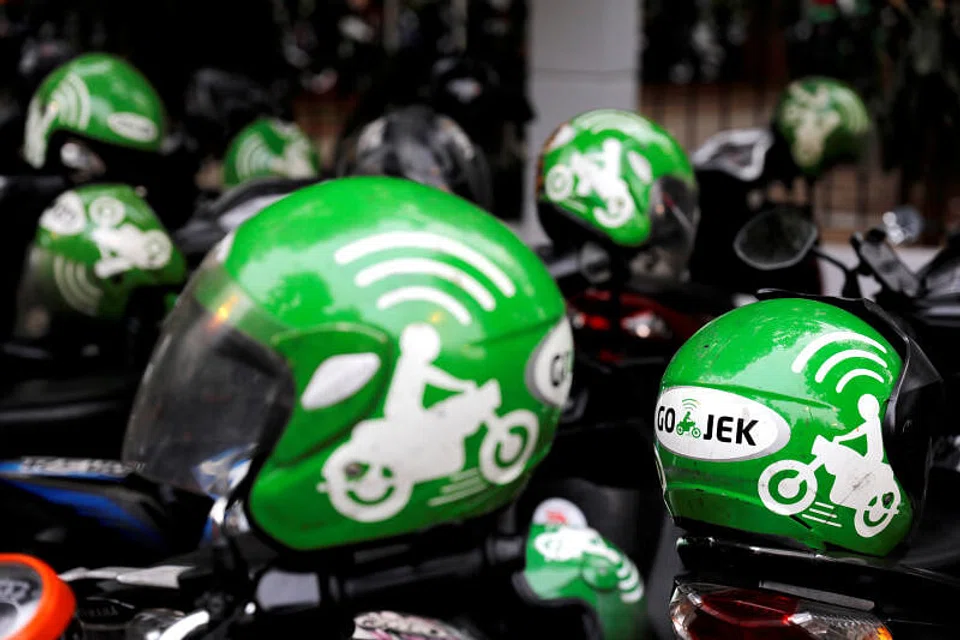
[TAIPEI] Gojek and Grab Holdings have been battling it out for years in the brutal business of ride hailing and food delivery. They've burned billions of dollars in venture-capital (VC) money (thanks, SoftBank!), and created hundreds of thousands of jobs throughout South-east Asia in the process.
Yet, talk to executives at either company and they'll tell you that the real future of their businesses isn't shuffling people, food and goods across the disparate lands of South-east Asia. The big opportunity - read, profit - will come from all the other services they can tack on such as payments, loans, ticket sales, supply-chain management and advertising.
Which makes me think that in some markets it will make sense to park the vehicles.
The role of taxis (and motorbikes) in this "ecosystem" paradigm is twofold: first, to use transport and food delivery as a door to the company's broader product offering; second, to provide a reason to open the app multiple times a day, building consumer habits and brand recognition.
One square centimetre of app logo on a smartphone screen is the most valuable piece of real estate in the modern world. It doesn't really matter whether you're selling taxi rides, a conversation with friends, or cheap goods. Tencent Holdings and Alibaba Group Holding built addiction to the latter two, and leveraged it to offer China's dominant payments platforms.
In South-east Asia, transport is the service that found most traction, thanks to VC-funded subsidies and a brutal pricing war that saw even Uber Technologies beat a retreat. For all the talk of a dual rivalry, only Singapore-based Grab can be considered a truly regional player. It offers taxis in Singapore, Malaysia, Thailand, Indonesia and elsewhere. Gojek, the hometown hero in Indonesia, has struggled to find traction elsewhere.
But that assessment is only true if you limit it to mobility - measured by their competing green logos on vehicle fleets across Asia's sprawling metropolises. If you think of the battle as being about the far more important metric of smartphone-screen real estate, then Gojek can still be a solid international player. Grab's non-transport businesses, such as payments, are nowhere near as established as its taxi services in most markets.
Recent investments by Facebook and PayPal Holdings hint at Gojek's direction. Facebook, which crucially also owns WhatsApp, put US$300 million into Gojek's latest funding round and now has a 2.4 per cent stake in the Jakarta-based company's payments business GoPay, The Ken reported last week, citing a venture-capital investor with knowledge of the deal. Alphabet Inc's Google and Tencent have the same stake while PayPal holds 0.6 per cent in GoPay, according to The Ken.
As my colleague Andy Mukherjee wrote recently, Facebook's interest in Asia extends beyond mere social networking. India, for example, is becoming a test bed for chief executive officer (CEO) Mark Zuckerberg's foray into payments and e-commerce. Its US$5.7 billion investment in Jio Platforms is less about getting a stake in Mukesh Ambani's new telco, and more about tapping India's vast potential for content and commerce.
Reliance Jio's dirt-cheap wireless connections serve the same role as Tencent's WeChat, Alibaba's Taobao, or Grab and Gojek's transport: They're on-boarding mechanisms for consumers and businesses to then buy a broader array of services.
This is why Facebook brings a lot more than just money to Gojek. The social media service is the top app in many parts of the region, WhatsApp is a key communication channel, and Instagram adds millions more users to the picture. If Gojek and GoPay can be combined with Facebook's products for commerce or payments, then the Indonesian startup suddenly expands its smartphone real estate.
PayPal is an important part of this strategy. The payments provider will be integrated into Gojek's services while GoPay users will be able to tap the US company's network of more than 25 million merchants globally, the two companies announced last week.
With global leaders in the fields of social networking, instant messaging, advertising, and payments all now buying into the Gojek vision, it's up to co-CEOs Andre Soelistyo and Kevin Aluwi to ride their Indonesian unicorn further afield. They can stay at home and battle over cheap rides and food, or ditch the taxis altogether and take on the rest of Asia.
BLOOMBERG
Decoding Asia newsletter: your guide to navigating Asia in a new global order. Sign up here to get Decoding Asia newsletter. Delivered to your inbox. Free.
Share with us your feedback on BT's products and services
TRENDING NOW
One-third of Singapore-listed firms at risk in severe AI downturn: MAS

‘Not done’: Keppel CEO Loh Chin Hua transformed the group, but says there’s ‘still a lot to do’

He built the Vingroup empire. Now South-east Asia’s richest man is handing some key roles to his sons

‘We don’t want to stay as we are’: CEO Patrick Ng builds a more resilient Huationg

