
Apple rolls out virtual fitness service, subscription bundle, catering to WFH
It also unveils a new Apple Watch Series 6 that monitors blood oxygen, which will cost US$399
 Add BT as a preferred source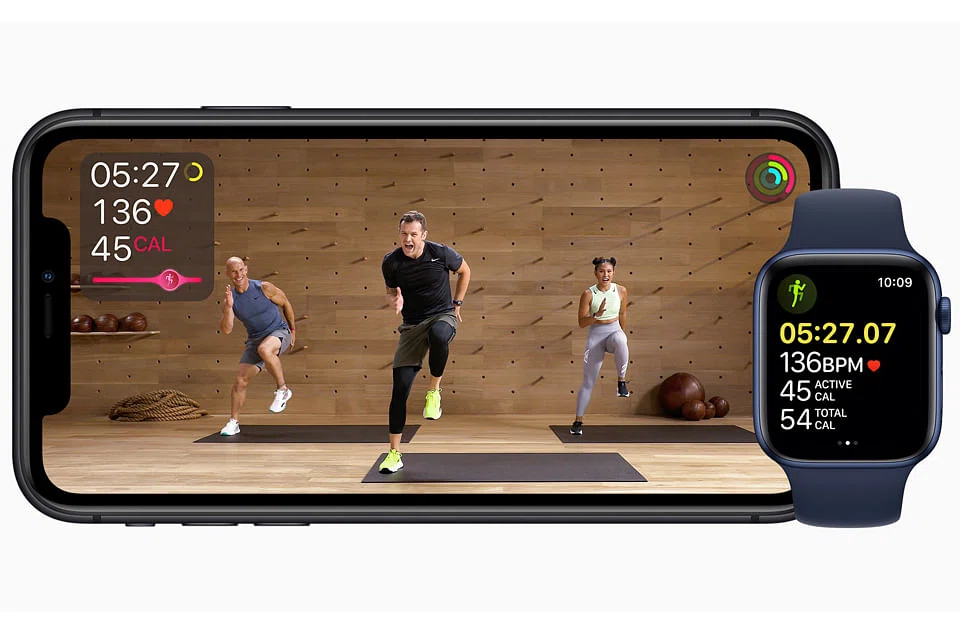
New York
APPLE Inc rolled out a new virtual fitness service and a bundle of all its subscriptions, Apple One, focusing a holiday-season product launch on services that are the backbone of Apple's growth strategy and that cater to customers working at home during the Covid-19 pandemic.
Apple also introduced a new Apple Watch Series 6 that monitors blood oxygen and will cost US$399 and a more basic Apple Watch SE for US$279.
But the bevy of incremental updates to existing hardware and subscription price tinkering disappointed investors, with Apple shares closing up 0.2 per cent.
The Apple One bundle will cost US$15 per month for an individual plan or US$20 per month for a family plan and include television, music and games. Apple is also offering a bundle for US$30 per month that adds news, the fitness service and more storage.
"It's a lot more aggressive pricing than I thought," said Ben Bajarin, principal analyst for consumer market intelligence at research firm Creative Strategies, adding that Apple customers already paying US$15 a month for family plans to some of the company's content servers would likely find the largest bundle a "no-brainer".
Navigate Asia in
a new global order
Get the insights delivered to your inbox.
Apple's top streaming music rival Spotify Technology criticised the bundle, saying Apple was abusing its dominant market position to favour Apple Music. Spotify, which is pursuing an antitrust case against Apple in the European Union and has spoken with US authorities probing the iPhone maker, charges US$10 a month for its streaming service that competes with Apple but will not be eligible for Apple's bundle.
In a statement responding to Spotify's criticism, Apple said the bundle was aimed at existing users of its services and that "customers can discover and enjoy alternatives to every one of Apple's services." Apple said both new watches and a new eighth-generation iPad can be pre-ordered starting Tuesday and will be available on Friday. Apple also introduced the Apple Fitness+ service, powered by its watches, that will deliver virtual workouts for US$10 per month or US$80 per year and be available before the end of the year.
Apple's fitness service puts it closer to competition with Peloton Interactive Inc, which makes connected exercise gear and sells subscriptions to online fitness classes. Apple said that most of its workouts were designed to be conducted with either no equipment or minimal gear such as a set of dumbbells. Peloton's workouts typically require either a bike or a treadmill. Shares of Peloton closed up 4 per cent.
The ability of the Apple Watch to monitor blood oxygen seeks to beat a similar feature already available on watches from rival Fitbit Inc, which Alphabet Inc's Google is buying for US$2.1 billion. Apple said its watch will be able to take absolute blood oxygen measurements on-demand while the user is still, while Fitbit's devices currently show either variations in blood oxygen levels or a set of measurements taken while the user is sleeping. Apple also for the first time offered a way to use an Apple Watch without pairing it one-to-one with an iPhone, offering what it calls "Family Setup."
Apple added a faster chip to its base model iPad, which it priced at US$329 for consumers and US$299 for education customers. Apple's new iPad Air will cost US$599 and look more like its iPad Pro models and a new A14 processor chip that Apple says will be the first to use a 5-nanometer chip manufacturing process.
An update of Apple's biggest seller - the iPhone - is expected to be announced next month after executives have said its launch will be delayed by several weeks because of pandemic-related disruptions.
Apple said flu investigators in Washington state will study heart rate and blood oxygen data from Apple Watch for potential early signs of respiratory conditions like influenza and Covid-19.
Apple shares have soared this year even as the virus has crippled economies around the world, thanks in large part to booming sales of work-from-home items. REUTERS
Decoding Asia newsletter: your guide to navigating Asia in a new global order. Sign up here to get Decoding Asia newsletter. Delivered to your inbox. Free.
Share with us your feedback on BT's products and services

