
Apple trial threatens to reveal App Store's commission bounty
Losing the trial will be a big setback for tech giant as the store is a driver in its services segment: analysts
 Add BT as a preferred source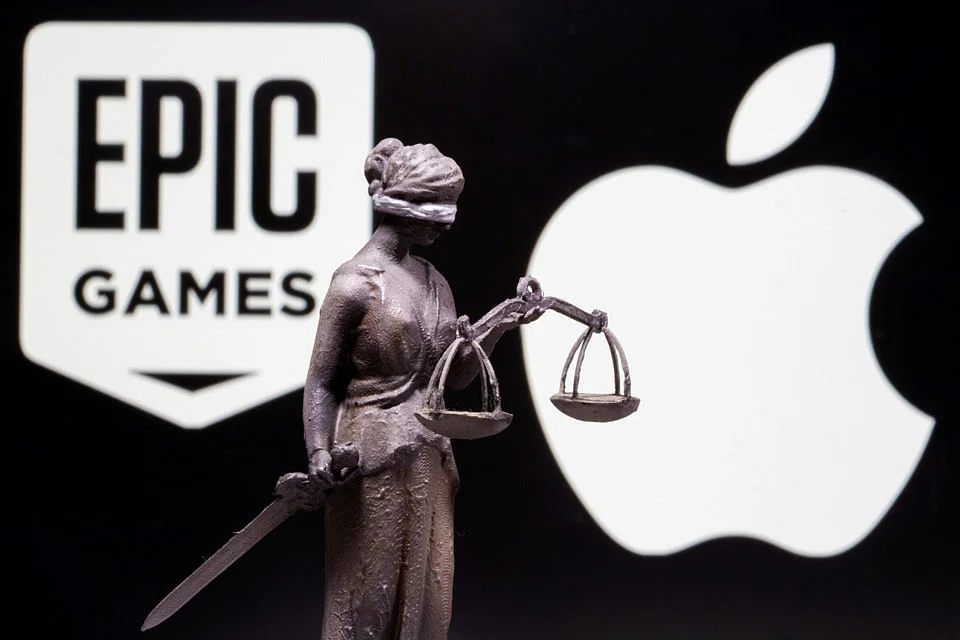
APPLE Inc's App Store has long been touted as a growth engine. Now, the world's most valuable company is fighting in US court to not reveal in public just how lucrative it is.
In a trial scheduled to start on Monday, Epic Games is alleging that the iPhone maker's 30 per cent commission on app sales is a violation of antitrust law, cheating developers and consumers. Epic's long-odds gambit to gain free access to the App Store, which has garnered support from mom-and-pop developers and giants like Microsoft Corp, comes amid increasing global regulatory scrutiny of Apple's domination of software on its ubiquitous phones.
On Friday, the European Union issued a warning over the App Store, saying that it thinks Apple abused its power. Apple has asked the judge in California to close the courtroom when Epic calls on an expert witness to discuss the "the purported 'profitability' of the App Store on a standalone basis".
Apple said in a filing late on Wednesday that it isn't objecting to the court considering such evidence brought by Epic, but is "concerned that analysts, investors, reporters, and others in the marketplace could misinterpret the public disclosure of non-public, unaudited financial information".
Until now, the legal argument that the App Store amounts to a monopoly has rested in part on numerical guesswork. Apple says it can't quantify the store's profit margins that Epic, the maker of the Fortnite game, has called "extraordinarily high". An Apple executive testified in Congress this month that the company doesn't report sales of individual business units, instead disclosing company-wide revenue figures in line with accounting rules.
"As a result of Apple's general philosophy that its products and services are part of an ecosystem, Apple views the value of all of its products and services as a whole," CEO Tim Cook said in a court filing. "Thus, Apple's business is not structured that way that allows a person to push a button and obtain an App Store" profit and loss statement.
Navigate Asia in
a new global order
Get the insights delivered to your inbox.
US District Judge Yvonne Gonzalez Rogers in Oakland will hear nearly three weeks of testimony from executives and economists without a jury. Epic is pursuing similar legal actions against Apple in the UK and Australia.
Epic said in a court filing on Friday that it wants to discuss in open court what happened to the vow by Apple co-founder Steve Jobs in 2008 that "we don't intend to make money off the App Store". Sealing the courtroom would "conceal from the public record facts and evidence showing whether Apple lived up to Mr Jobs's promise, or instead earns persistent and extraordinary profit margins from its App Store commissions", Epic said.
Analysts say losing the trial would be a big setback for Apple because the store has become a driver in the company's services segment. Sensor Tower estimates the App Store generated US$22 billion in commissions last year for Apple, while Bernstein analyst Toni Sacconaghi believes Apple will run the App Store this year with a gross profit of 88 per cent.
Apple said its total profit for 2020 of more than US$57 billion amounted to a 20.9 per cent margin, while adding that "despite its considerable profit, it is subject to competition in all of its lines of business". The company last year halved the fees it charges to smaller developers who sell software and services on the App store, lowering the 30 per cent rate to 15 per cent for developers who generate up to US$1 million in yearly revenue from their apps and those who are new to the store. Apple says many apps pay no fees in return for the company's efforts to host and maintain the security of the store.
If Epic were to win a ruling forcing Apple to roll back its commission on the Fortnite app, other developers would demand similar concessions. Epic is also challenging Google's app marketplace, Google Play.
"If Epic wins, the result could be to open up not just the Apple App Store but Google's as well, reducing prices and making it harder for Apple to block or interfere with apps that compete with its own products, such as Spotify or Google Stadia," said Stanford University law professor Mark Lemley.
Epic has calculated App Store sales and profit margins for fiscal years 2018 and 2019 based on internal data gleaned from Apple presentations, only to be told by Apple that the estimate is "flawed". Apple said it doesn't allocate costs for the App Store, and that internal documents discussing App Store revenue typically don't include costs. That means, it said, any margins or profits don't show the entire picture.
"With antitrust defendants, it is remarkable what they say they don't know," said Joshua Davis, a professor at the University of San Francisco's law school. "There's a game that gets played of incredibly capable businesses suddenly finding themselves allegedly incapable of performing basic tasks and this may be an instance of that."
Epic said Apple should not be allowed "to manipulate the public record by publicly denying its ability to calculate App Store profits - as Apple's experts have done in unsealed filings - while simultaneously hiding Epic's evidence regarding those claims based on internal Apple documents". If Epic makes its antitrust claim by presenting evidence of Apple's market power, the elusive data would be "extraordinarily important" to show that the iPhone maker couldn't make those profits in a competitive market, said Prof Davis.
Prof Lemley says that the trial won't necessarily turn on the mystery numbers. What matters is whether the judge thinks apps for iOS mobile devices are a separate market and, if so, whether Apple has a legitimate reason to process payments only through its App Store, he said. "Merely charging a high price isn't itself illegal; Epic must show conduct designed to acquire or maintain the monopoly," Prof Lemley said. "And it can certainly point to the 30 per cent charge, which is well known." BLOOMBERG
Decoding Asia newsletter: your guide to navigating Asia in a new global order. Sign up here to get Decoding Asia newsletter. Delivered to your inbox. Free.
Share with us your feedback on BT's products and services

