

The biggest AI skill may not be technical
Employers look for problem-solving skills, and curiosity, adaptability and a willingness to learn

THE conversation around artificial intelligence tends to swing between two extremes: utopia and catastrophe.
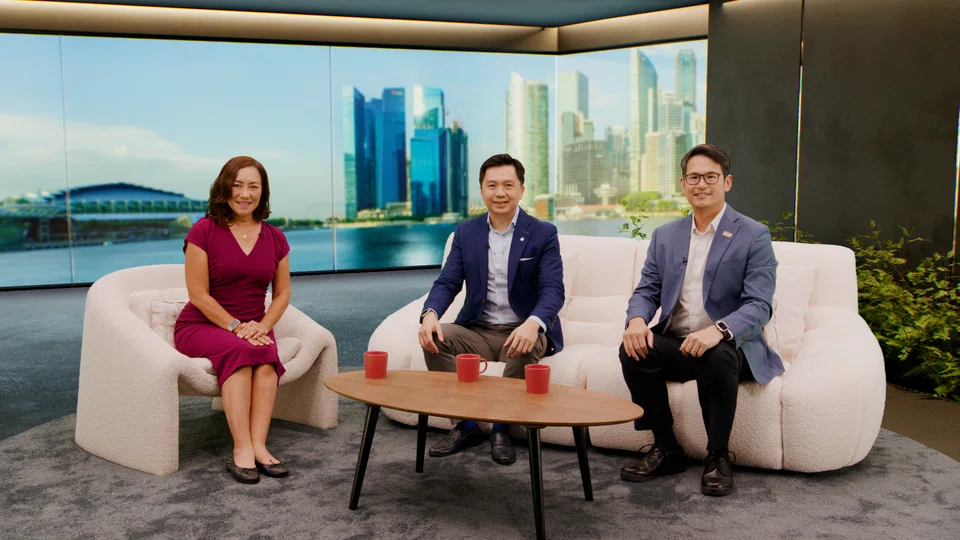
In a recent interview for The Business Times’ “Lens on Singapore” podcast, Dean Tong, head of group human resources at UOB, and Victor Chua, deputy chief executive officer of NUS-ISS, National University of Singapore, were asked for their respective vantage points.
One sits at the hiring end of the labour market and the other helps prepare workers for it.
What emerged was not a conversation about replacement; instead, it was a candid exchange about transition.
Most jobs will be affected, but that does not mean they disappear
Tong did not attempt to sugar-coat the scale of change.
“If the big question is whether AI is replacing jobs, in the long term, there’s no doubt about it,” he said. “Most jobs will be affected.”
Yet, almost in the same breath, he challenged one of the assumptions that often accompanies discussions about AI. Recent workforce reductions at UOB, he noted, had “nothing to do with AI”.
Instead, they reflected a combination of technology, process redesign and a more disciplined approach to replacing staff who leave.
He asserts that the distinction matters because not every workforce reduction is AI-driven.

At the same time, new roles are emerging. Tong pointed to the bank’s newly established Innovation Group, which is tasked with rolling out AI in the organisation.
He pointed out, however, that hiring is continuing in areas such as anti-money laundering, financial crime prevention and sales.
That reorganisation is already forcing employers to think differently about workforce development. Tong described UOB’s Better U Pivot Programme, which identifies employees whose jobs may be displaced and helps them to make that transition into new roles.
Success, however, depends on something very simple. “The employee must be willing to do this, because this is the single most important factor that determines the success or failure of the programme.”
Employees who enter the programme are given a 12-month protected period to learn, make mistakes and adapt, while being shielded from the usual performance management process. Tong added that the programme has achieved a success rate of around 80 per cent.
The rise of the “AI bilingual”
One of the most useful ideas to emerge from the conversation came from Chua.
Much of the public discussion around AI focuses on specialists: machine-learning engineers, data scientists and AI developers. Those shortages certainly exist. But Chua believes another shortage may prove more significant.
He calls it the shortage of “AI bilinguals”.
“There is the specialist shortage,” he said. “And then there is the second shortage, which is what I would term generalist shortage.”
These are people who retain their domain expertise, but learn how to apply AI within it. “It is AI plus X, X being your respective domain knowledge.”
The future is unlikely to belong exclusively to coders and engineers. It may equally belong to accountants, lawyers, human resources professionals and others who understand how AI can enhance the work they already do.
Experience, in other words, does not become irrelevant. It becomes augmented.
What employers are actually looking for
Perhaps the most revealing part of the discussion came when both men were asked what they personally look for when hiring.
Neither started with technical skills. Tong’s answer was immediate. “Problem-solving skills.”
He added: “When I talk about problem-solving skills, it starts with asking the right question.”
In a world where AI can generate answers instantly, defining the problem may become more valuable than producing the answer.
Tong also pointed to curiosity, adaptability and a willingness to learn as qualities he increasingly values.
Chua approached the question from a different angle. “I’m looking for humanistic ability, distinctive human abilities.”
Because in his opinion, “AI does not confer onto you legitimacy”.
Legitimacy, he argued, comes from judgment, accountability, trust and the ability to make sense of complexity.
Perhaps his most memorable line came moments later.
“AI should take the robot out of me. The way I stand apart from the robot is I need to become more human.”
Preparing for a future nobody can fully predict
Tong acknowledges the limits of what even large organisations currently know.
“Today it’s much easier to predict the jobs that are going to be affected than the new skills that are going to be created as a result.”
That uncertainty sits at the heart of the AI conversation. Everyone from employers to academic institutions is adapting. Yet nobody appears entirely certain what the workforce five years from now will look like.
What was striking was that neither Tong nor Chua sounded alarmist. Both recognised that jobs will change and agreed that some roles may disappear.
But neither suggested that workers are powerless.
Chua’s advice was simple. “Just do it.”
From both, the strongest warning came not about AI itself, but about standing still.
As Tong put it, “not taking this journey is not the option”.
When asked whether avoiding the journey was perhaps the one thing that guaranteed irrelevance, his answer was immediate.
“Absolutely.”
This article was adapted from a recent The Business Times “Lens on Singapore” podcast
Decoding Asia newsletter: your guide to navigating Asia in a new global order. Sign up here to get Decoding Asia newsletter. Delivered to your inbox. Free.
Copyright SPH Media. All rights reserved.






