

How a company is building AI that does more than answer questions
As artificial intelligence starts driving decisions, finance teams need systems that reason and act – not just report, explains Airwallex’s global vice-president of Data and AI Timothy Wong
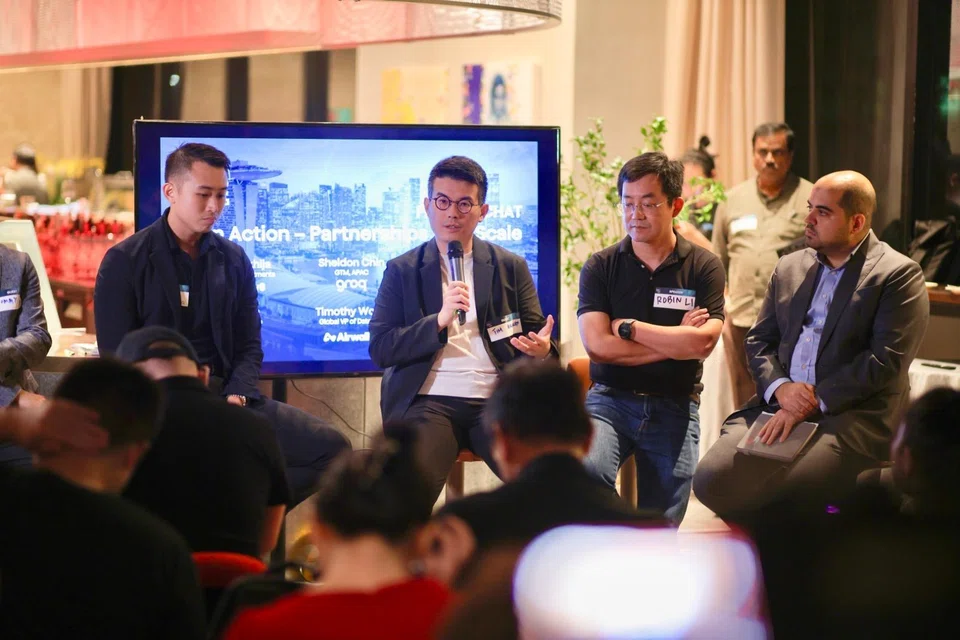
ARTIFICIAL intelligence (AI) is pushing business functions – especially complex and high-volume ones such as finance – beyond automation and towards autonomy.
With AI agents now executing multi-step workflows in real business environments, finance teams are no longer just managing transactions – they are orchestrating decisions at scale.
As a result, finance operations are slowly transforming, from how payments are processed and revenue is collected to how cash flow is managed and cross-border activities are run.
One area where these shifts are becoming increasingly visible is in payments and financial infrastructure. Airwallex, a global payments and financial platform for businesses, has made waves since its founding in Melbourne, Australia, in 2015.
Now co-headquartered in Singapore and San Francisco, the company serves over 200,000 corporate customers worldwide, including major names like Kris+ by Singapore Airlines, Qantas and Canva, alongside prominent small and medium-sized enterprises (SMEs) such as Singapore’s EU Holidays, Love Bonito and Motherswork.
Airwallex supports businesses with its AI-driven, integrated system that combines banking, payments, foreign exchange, accounting and expense-management tools. The company completed two fundraising rounds in 2025, raising US$300 million (S$380 million) in May 2025 and a further US$330 million in December 2025, increasing its valuation from US$6.2 billion to US$8 billion – a rise of nearly 30 per cent within half a year.
In this interview, Airwallex’s global vice-president of Data and AI, Timothy Wong, shares how the company is integrating AI into its various processes and offers insights on how businesses can better incorporate AI into their operations.
Q: AI is rapidly shaping how businesses scale. What do you think is the smartest way for organisations to integrate AI into their day-to-day operations?
The smartest way to integrate AI into day-to-day operations is to focus less on individual tools and more on how work gets done.
At Airwallex, we’ve treated AI as a productivity layer across the organisation – embedded directly into engineering, operations, finance and customer workflows, rather than isolated in specific teams or experiments. Today, over 90 per cent of employees actively use AI in their daily work — not as an add-on, but as part of their normal operating rhythm.
In engineering, AI has meaningfully changed how teams build and ship. We’ve seen a significant increase in deployment velocity, driven by faster iteration, automated reviews and tighter feedback loops across the development lifecycle.
In operations, over 75 per cent of workflows now have AI embedded, helping teams move from manual reviews and exception handling to more straight-through, decision-driven processes.
The common thread is that teams are encouraged to constantly ask: “What can AI do better or faster here?” They then redesign workflows around the answer. This mindset shift, from using AI as a tool to treating it as part of the system, is what unlocks sustained productivity gains.
AI drives the most value when it’s embedded into everyday decisions and feedback loops – not when it’s bolted on. That’s the approach we believe other organisations can adopt to improve productivity at scale.
Q: Many companies still rely on legacy financial systems that operate in silos. What advice would you give to businesses looking to integrate AI into such environments?
Most companies don’t need to rip out their legacy systems to use AI effectively – but they do need to rethink how those systems participate in decisions.
This is what I call the shift from optimising ‘time to insight’ to optimising ‘time to action’ – the real measure of whether AI is working isn’t how fast you get an answer, but how fast you close the loop between insight and decision.
The first step is unifying data access across old and new systems so information can flow reliably and in near real time. That foundation enables APIs (application programming interfaces) and event-driven integrations that let AI systems observe what’s happening, automate parts of the workflow and support better decision-making – without a full system overhaul.
Where many efforts fall short is assuming that access alone is enough. In practice, context management, evaluation and feedback loops matter just as much. AI only adds value when insights are trusted, decision ownership is clear and outcomes feed back into the system to improve future decisions.
Legacy systems can absolutely become more intelligent – but their real constraint isn’t compute or models, it’s how quickly they can absorb signals and drive action. That’s where modern data and AI architectures create leverage: not by replacing systems of record, but by making them more responsive and decision-aware.
At Airwallex, we design infrastructure, software and AI as a single system. This allows us to operate as a global source of truth for our customers’ finances – spanning business accounts, spend management and payments – while continuously learning from activity across regions and products.
Q: What makes Airwallex different from other fintechs and traditional financial institutions?
What sets Airwallex apart is that our infrastructure was built from first principles – not adapted from legacy banking systems. That foundation means AI isn’t a feature we added. It’s embedded in how the platform works.
Because our platform is unified end-to-end, our AI has a connected view of a customer’s organisation – across accounts, payments, spend and workflows. It surfaces the right insights and actions at the right moment, without customers needing to prompt or query the system. From their perspective, things simply work better.
AI at Airwallex is designed to suggest, assist and act, while keeping customers firmly in control. We deliberately avoid exposing technical distinctions. This is how we think AI should work in finance: quietly improving accuracy, speed and decision quality – while preserving trust, clarity and control.
Q: What are some key initiatives Airwallex is driving in Singapore, and how do they contribute to strengthening the broader fintech landscape?
Singapore is one of Airwallex’s global co-headquarters and plays a central role in building our products, platform and AI capabilities. Today, more than 100 employees based here work across product, engineering, design and AI, building our core financial infrastructure and the next generation of AI-native experiences.
Importantly, we are investing heavily in AI talent in Singapore, where we design and operate the systems that power decision-making, automation and intelligence across the company. From AI-native data platforms to embedded decision systems used by teams and customers globally, much of this work is conceived, built and scaled here.
Beyond our internal teams, we’re also focused on contributing to the broader fintech and start-up ecosystem. One example is the AI Sandbox, which is part of the Airwallex for Startups programme. This initiative enables selected start-ups to collaborate directly with our product, engineering and AI teams to build, test and iterate on solutions around real-world problem statements.
The most promising ideas are then co-developed as proofs of concept, with Airwallex acting as a design and technology partner to help turn them into production-ready solutions that address genuine business needs. In doing so, we aim not only to support individual founders, but also to help strengthen Singapore’s position as a hub for fintech innovation and applied AI.
Q: How does Airwallex see the financial sector evolving?
We see the financial sector moving toward embedded, intelligent services that are seamlessly integrated into how businesses operate day to day. Finance is shifting from a collection of standalone tools and manual workflows into systems that are increasingly context-aware, proactive and decision-driven.
AI is a key driver of this shift – not because it adds new features, but because it changes how financial workflows work end to end. Tasks that were once manual and reactive can now be automated, monitored and continuously improved as part of a single system.
In this next phase, financial platforms won’t just record transactions. They will increasingly support decisions and execute actions through workflows, closing the loop between insight, execution and feedback.
More broadly, AI represents a new medium for how humans work with software. Just as the app economy changed how technology was built, the AI era is changing how technology is used – shifting from explicit actions and rigid interfaces toward systems that understand context, intent and outcomes.
The most valuable financial platforms won’t just record what happened. They’ll close the loop between insight, decision and action – helping businesses move faster while staying in control.

Share with us your feedback on BT's products and services






