China's tech hub warrants an upgrade from Beijing
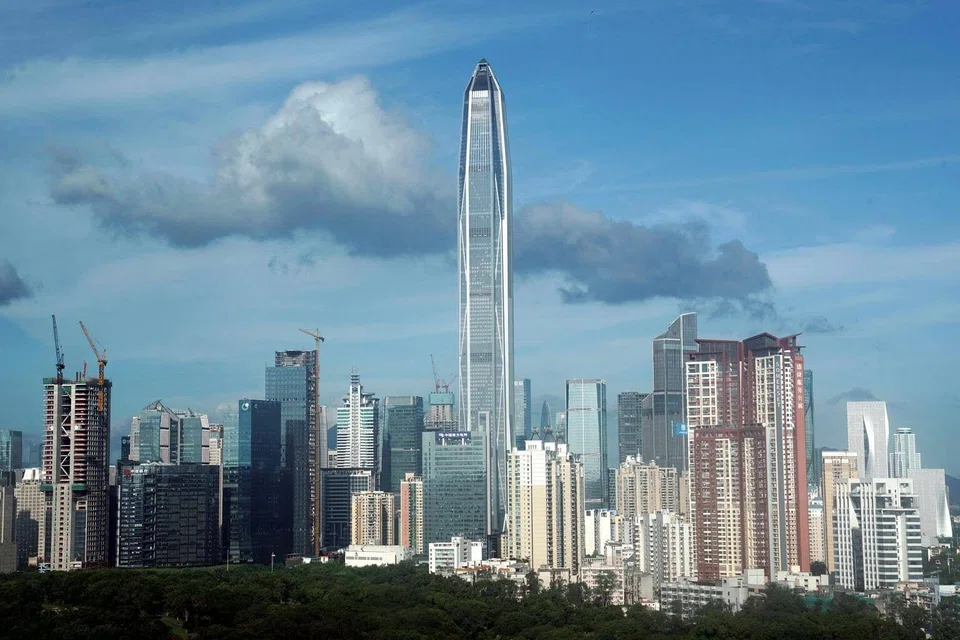
[HONG KONG] China's technology hub warrants an upgrade. Nearly four decades after the southern market town of Shenzhen was transformed into a buzzing metropolis with a roughly US$320 billion economy, it makes sense to designate the area as something like a province.
Shenzhen was the first so-called "special economic zone" allowed to experiment with liberalisation after reforms started under Deng Xiaoping. The policies remade it into a sprawling conurbation of 13 million people and GDP (gross domestic product) that ranks in the global top 40, ahead of Denmark and Colombia. Its relatively laissez-faire approach to business has fostered cutting-edge companies and startups, making it China's closest approximation to Silicon Valley.
As President Xi Jinping embarks on a rare visit to the region this week, according to the South China Morning Post, a smart way to commemorate the 40th anniversary of reform would be to designate Shenzhen, in Guangdong province, a "directly administered municipality". Though government officials have denied any such plans, conferring the status on the city would give it greater leeway to make and enforce local rules. It also would boost the city's influence in national policymaking groups, including in parliament and the Chinese Communist Party.
Greater political heft would be important for business. Shenzhen is home to a major stock market and port, and counts gaming giant Tencent, electric-car manufacturer BYD , telecom titan Huawei and drone-maker DJI as local heroes, among other up-and-coming technology outfits. City officials would almost certainly advocate for them at the national level. What's more, it would be a symbolic boost to Xi Jinping's Greater Bay Area ambition of linking the city to Hong Kong, as well as put it in better position to launch cross-border initiatives in areas such as financial services.
It's a good time for tech firms to enjoy greater clout in Beijing, too. A single sentence in an obscure education ministry document released in August erased over US$20 billion from Tencent's market value in a single day. A series of official broadsides against news app owner Toutiao led to an apology from the company's chief executive. Policymakers are also busy writing sweeping new rules on cybersecurity that could shape the sector for years.
What's more, US President Donald Trump's intensifying attacks have invigorated China's plan to develop more technology at home. A political step up would help develop Shenzhen 2.0.
CONTEXT NEWS
China's President Xi Jinping will visit the southern province of Guangdong during the week of Oct 22, the South China Morning Post reported on Oct 19, citing unnamed sources. He may attend the official opening ceremony of a new bridge linking Hong Kong to Macau and Zhuhai set for Oct 23, according to the newspaper.
The southern Chinese city of Shenzhen publicly denied reports that it would be elevated to a "directly administered municipality", saying it had no basis in fact, according to a website post dated Sept 26.
A high-speed rail connection between Hong Kong and Shenzhen started service on Sept 23. The project has proven controversial in part because it involved transferring part of the special administrative region's train station to mainland jurisdiction.
The route is part of a broader effort to link transportation infrastructure in the so-called Greater Bay Area of the Pearl River Delta, which includes Hong Kong, Macau, Shenzhen and other cities located in the southern province of Guangdong.
REUTERS
Share with us your feedback on BT's products and services