

Cloud, IoT, key to growing tech sector
Technology isn't just about offering new solutions, but is also tipped to change business fundamentals
Singapore
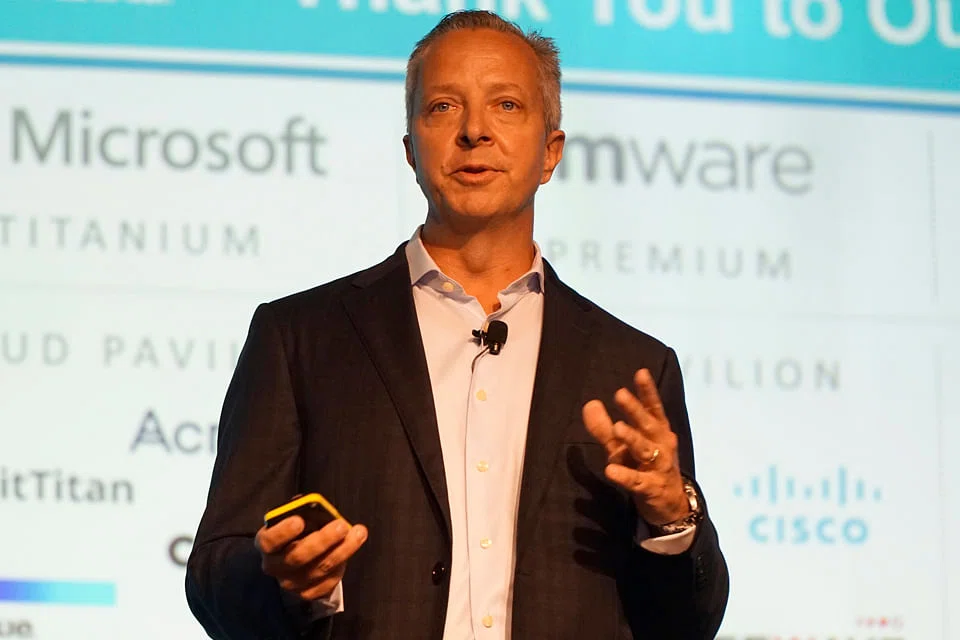
OF the many technological frontiers being pushed, solutions in cloud computing, the Internet of Things (IoT), and cybersecurity are important in driving technological change in the near future, said Ingram Micro executive vice-president Michael Zilis.
Furthermore, he added that it is not just about offering new products and solutions to businesses or consumers, but technological growth is also poised to change the very fundamentals of how businesses operate.
"Technology spending is growing faster than virtually any other area of spend, in both a business and a personal sense. In the solutions space in the last 10 years, we've had a proliferation of cloud computing and IoT.
"Cybersecurty is also becoming of utmost importance because protecting our data becomes increasingly necessary as our devices become increasingly connected," said Mr Zilis.
He was speaking at the inaugural Ingram Micro ONE Apac conference, which saw the company bring together about 1,700 attendees and 46 different solution showcase sponsors.
Featuring the likes of technology giants Microsoft and VMWare, the conference was one of the largest events of its kind to take place within the Asia-Pacific.
Other solution showcase sponsors at the three-day conference, which took place last week, included names such as Cisco Systems, Dell EMC, and Hewlett Packard Enterprise.
One of the major changes to companies' business models as a result of technological innovation, that was highlighted at the conference, would be the shift from traditional consumption models to a subscription based one.
Ingram Micro has had significant innovations on this frontier. Calling it Software-as-a-Service and Infrastructure-as-a-Service, it is finding ways to transform a whole host of services into subscription-based ones.
"We have different consumption models now; everybody wants everything 'as a service' which is subscription-based. Not just the hardware or the software, but the services, maintainence, and implementation capabilities as well.
"That's causing change for us. It's causing us to adapt to completely different cashflow models," said Mr Zilis.
On the company's own strategy for making the most of technological advancement, Ingram Micro said it was focusing on five areas as part of its growth strategy: offering everything as-a-service, cloud computing, IoT, developing a next generation data centre, and a future-ready workforce.
Commenting on the trajectory of technological progress, Mr Zilis said that it can often be difficult to predict how these advancements play out.
In an address to the conference, he said: "We are in an era of massive innovation and evolution of technology. A basic smartphone today has more computing power than the computers that put the first spaceship on the moon in 1969.
"And yet do you know what one of the top uses of smartphones is today? It's not to make calls or take photos, but rather to check the time."
Indeed, the improvements in automation and digital technology have had some initially unforseen repercussions as a number of industries are being heavily disrupted.
Asked if there were specific areas of technology he would pay attention to, Mr Zilis believed IoT and cloud computing were significant drivers of growth in the technology sector of emerging markets in the region.
Even though cloud computing and connected devices are nothing new - it is possible to consider bluetooth as a form of IoT and email servers as a rudimentary version of cloud computing, both of which are old pieces of technology - he gave reasons why these have potential for growth.
"It is precisely because there is a relative lack of infrastructure in many emerging Asean markets that gives technology players room to affect change . . . The emerging markets in the region are less saturated with existing players, so we believe there is a lot of room for growth."
TRENDING NOW

Singapore’s central gas buyer affirms Indonesia’s role as ‘important partner’ amid export review warning

Why the biggest business decision about AI isn’t which model to choose

Is Manila Asia’s new dining hot spot?

KKR founders among investors buying 42% of Peter Lim’s Valencia; club valued at US$1.4 billion

