Co-founder of AOL Steve Case in hunt for the next US tech hub
As innovation landscape shifts over time, any city could be the next Silicon Valley
Washington
SEVENTY years ago, Detroit was the technology capital of the US. Seventy years earlier, at the height of steel's golden age, it was Pittsburgh. During both periods, Steve Case points out, the stretch of California running from San Jose to San Francisco - what we now know as Silicon Valley - was mostly farmland. Its signature export wasn't computer chips or mobile apps. It was prunes.
In other words, the country's innovation landscape shifts over time. Question is, which unlikely city will emerge as the next technology hub?
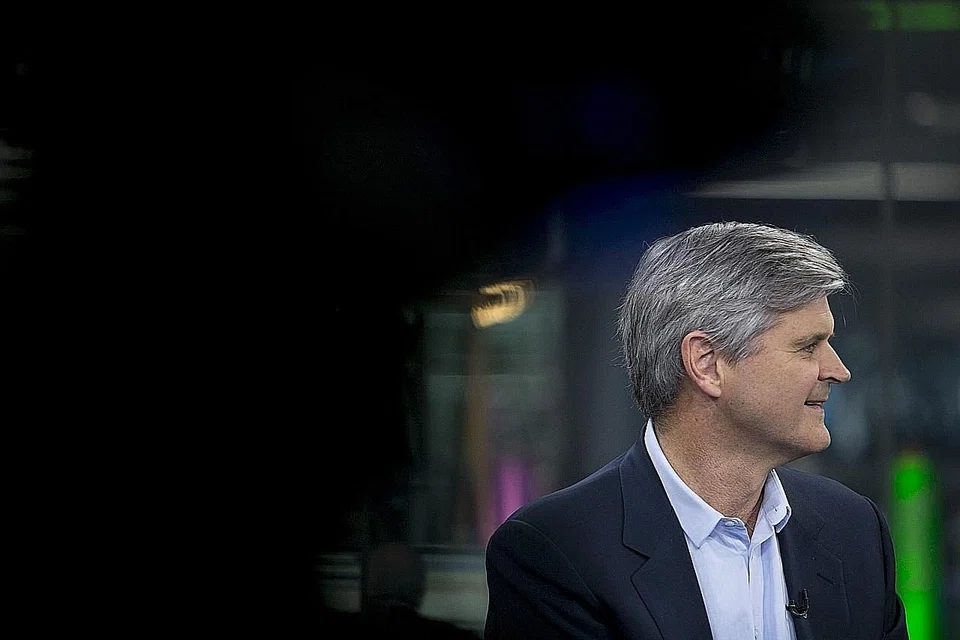
It could very well be anywhere. Or better yet, Mr Case says, it could be everywhere. "Most of the attention and most of the capital still find its way to places like Silicon Valley and Boston and New York City, but there are great companies and thriving startup communities being built all across the country," said Mr Case, an AOL founder and now the top executive at Revolution Ventures, a talent spotter that invests in early-stage tech companies. "The story of American entrepreneurship in other parts of the country, and in sectors other than technology, just isn't being told, and that has to change."
Mr Case has spent much of the past year mounting a grassroots campaign to highlight and accelerate the growth of startup communities in pockets of the country not generally known - at least, not anymore - for producing tomorrow's next big company. Dubbing it the Rise of the Rest tour, Mr Case and a small team have zigzagged across Middle America, holding business pitch competitions in nine cities and leaving behind more than US$1 million in funding. "There are interesting things happening in these cities," he said, "and by visiting, we just wanted to throw a little kerosene on the fire and take things to the next level."
During his travels as part of President Barack Obama's jobs council and a public-private partnership he led called Startup America, he began to realise that the types of businesses you might expect to find in the back yard of Google or Facebook - or only on the coasts - were setting up shop in places such as Iowa and Tennessee. The ideas were rich and exciting. The money, however, wasn't moving inland with them. Last year, three-quarters of all venture capital investments went to companies in three states: California, Massachusetts and New York. Leaving behind so many other entrepreneurs is bad business for America - or "putting all our eggs in two or three baskets", as Mr Case put it.
The rate at which Americans are starting new businesses has dipped in the past decade, data shows, while the pace at which companies are failing has accelerated. A steep challenge facing emerging entrepreneurs has long been access to capital, and that's particularly true for those outside the traditional start-up hotbeds, Case said.
In order to shed light on those places and the start-ups that call them home, Case climbed on a bus last summer for a four-cities-in-four-days tour through the Rust Belt - Detroit, Pittsburgh and Cincinnati - and ending in Nashville. As is now the routine, Case held a pitch competition in each city, featuring a panel of judges composed of local investors and successful entrepreneurs. And at each stop, the winning company received a $100,000 investment from Case.
He saw promise in Pittsburgh's SolePower, which makes shoe insoles that turn energy from walking into electricity to charge your cellphone. In Detroit, the cheque went to Stik, which runs an online review site for professional-services companies. In Nashville, Mr Case invested US$100,000 in two companies: Chekd.in, a data-driven marketing platform, and Artiphon, which makes a musical instrument that connects to smartphones. "The publicity and the doors that have opened as a result have been incredible," said Matt Stanton, a SolePower founder. His company used the money to finish its prototype and plans to start shipping its first products this year.
Mr Stanton's team and the other first-tour winners were later invited to Washington, where Mr Case's investment company is based, to meet with mentors and investors from the Mid-Atlantic region. A month later, Mr Case was back on the road, this time traversing America's heartland. He started in Madison, Wisconsin, moved through Minneapolis, Des Moines and Kansas City, Missouri, and wrapped up in St Louis.
Mr Case says that one of the most interesting developments from his tours has been the way winners tend to represent their city's identity or strengths. For example, in St Louis, the country's beer capital, the US$100,000 went to Synek, a home beer-tap system. And in Cincinnati, home to some of the world's largest consumer products companies, the winner was Frameri, which makes interchangeable eyeglass lenses that fit an array of frames. "That's an important point," Mr Case said. "It shows that this next wave of innovation - in areas like healthcare, energy, transportation, food - is naturally going to happen all across the country, because many of those different sectors are centred in different regions."
In part, the roadshows are meant to demonstrate to investors the quality of the startup opportunities in their back yards. At the same time, Mr Case hopes to draw attention from investors in places such as Silicon Valley - and it appears to be working.
Google, which has partnered Mr Case to sponsor the Rise of the Rest tour, held its own competition, featuring a dozen startups from outside California pitching to an auditorium packed with some of the most active angel investors and venture capitalists on the West Coast. Mr Case was a judge, and three of the Rise of the Rest tour winners - Pear Deck, Sole Power and 75F, a Minneapolis outfit that provides high-tech heating and air conditioning system for commercial office buildings - touted their startups to Silicon Valley's elite.
Now on the cusp of his third tour, Mr Case says he has been pleased by their impact, noting that the companies he has taken a stake in all seem to be growing stronger. However, it will take years to truly assess his effort.
"We'll have to look and see how much capital starts going into those other 47 states over the next decade," Mr Case said. He added that success will also be measured by "how many successful public offerings and billion-dollar-plus exits we see coming out of these Rise of the Rest regions". WP