

Data centre power consumption drives search for energy efficiency
Asia-Pacific is struggling to keep its power usage effectiveness comparable to other regions due to the higher temperatures in the tropics

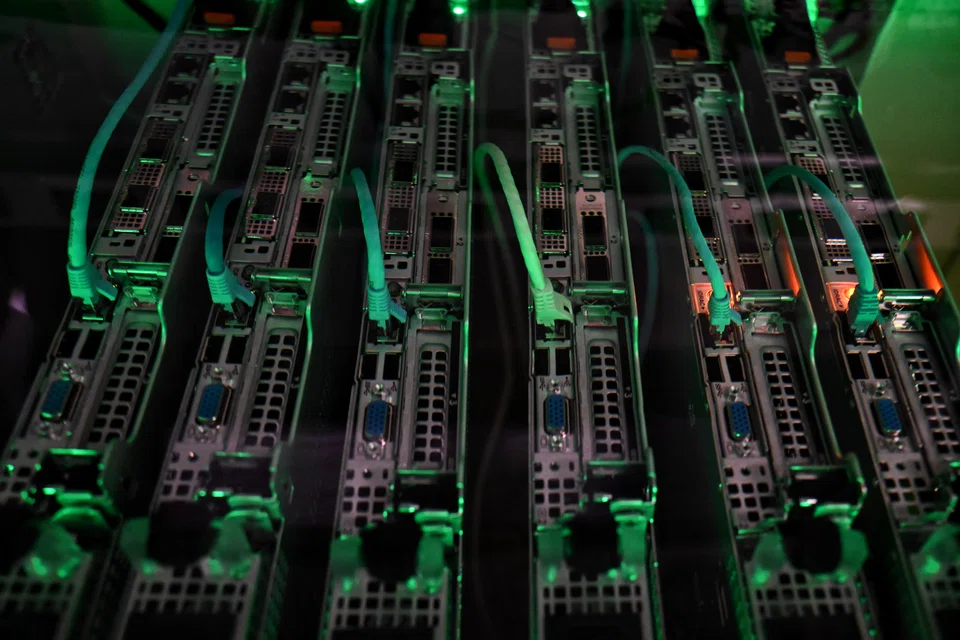
A POWER crunch is expected to hamper data centre growth across the world as an increase in power-hungry artificial intelligence (AI) processes continues to drive up energy consumption.
Data compiled by Macquarie Research indicated that the power needed to drive a ChatGPT response is about 3 Watt hours (Wh) per request, compared to less than 1 Wh per Google search.
Companies – many of which moved their data to cloud providers during the pandemic – are now paying more attention to the power drawn for AI’s computational needs.
Sustainability is now a key agenda among companies, and that has led to interest on how to be more energy efficient and get more performance, said Sheila Rohra, chief executive officer of data infrastructure company Hitachi Vantara.
“There’s this one customer, where we have reduced the power consumption by 40 per cent while improving the performance by 90 per cent,” she said.
Another Hitachi Vantara customer, BMW Group, migrated its storage for a 70 per cent smaller footprint and 80 per cent less power.
Rohra reckons that demand is chasing supply for power, and lowering power consumption would be key in helping to ease the power crunch.
Coupled with the growing costs of keeping data in the cloud, companies are also looking to move back to hosting their own data on premises within their own servers.
“We’re starting to see customers repatriate; but more importantly, they’re building up new solutions or new infrastructure,” said Rohra.
As a region, Asia-Pacific struggles to keep its power usage effectiveness (PUE) comparable to other regions due to the higher temperatures in the tropics.
Data from Microsoft shows that PUE on average in Apac was 1.41 – considerably higher than the global average of 1.18 or the average of 1.17 in the Americas.
Microsoft, for instance, sites its data centres in the Americas further north, where temperatures are cooler.
As data centres continue to sprout across Apac, the power draw has led some governments – such as Singapore’s – to bring down the PUE numbers. Singapore wants new data centres to meet higher standards and have a PUE of 1.3 and below.
Cooling appears to be the lowest hanging fruit, with new data centres probably capable of achieving lower PUE by using new cooling technology.
Charles Yonts, head of Asian ESG Research at Macquarie, reckons that new cooling options such as direct-to-chip water cooling and immersion cooling will bring PUE to 1.3 to 1.25 – a 20 per cent reduction from the current 1.4 to 1.5 average. “This will be mostly for new implementation, so it’s not a matter of cutting energy for existing data centres,” he said.
These new solutions are being tested at Singapore’s Sustainable Tropical Data Centre Testbed, with a reduction in energy use by 40 per cent to under 1.2 PUE using a mix of air and liquid cooling.
Immersion cooling, where servers are submerged into a liquid, is likely to be favoured for new data centres rather than retrofitted into existing data centres, owing to the cost and disruption to operations.
There are also drawbacks to retrofitting existing data centres to use direct-to-chip water cooling. Data centres will need to reroute plumbing and piping to get chilled water pumped into the server racks.
“You can retrofit, but it’s expensive (and) very difficult. That’s the feedback we get from operators and engineering companies we have talked to,” said Yonts.
TRENDING NOW

From legacy to launch: Francis Yeoh and Yeoh Pei Xien on family unity and YTL’s next‑gen ventures

Things to know about DBS’ incoming chairman Anthony Lim

Wealthy Indonesians snap up government bonds as yields near 8%: OCBC

From local AI partnerships to global opportunities: How MNCs help Singapore firms scale

