

DeepSeek’s low-cost model deals fresh blow to rivals OpenAI, Z.AI; hits memory makers
It claims its V4.1 Flash outperforms mainstays, yet offers a steep discount to the competition
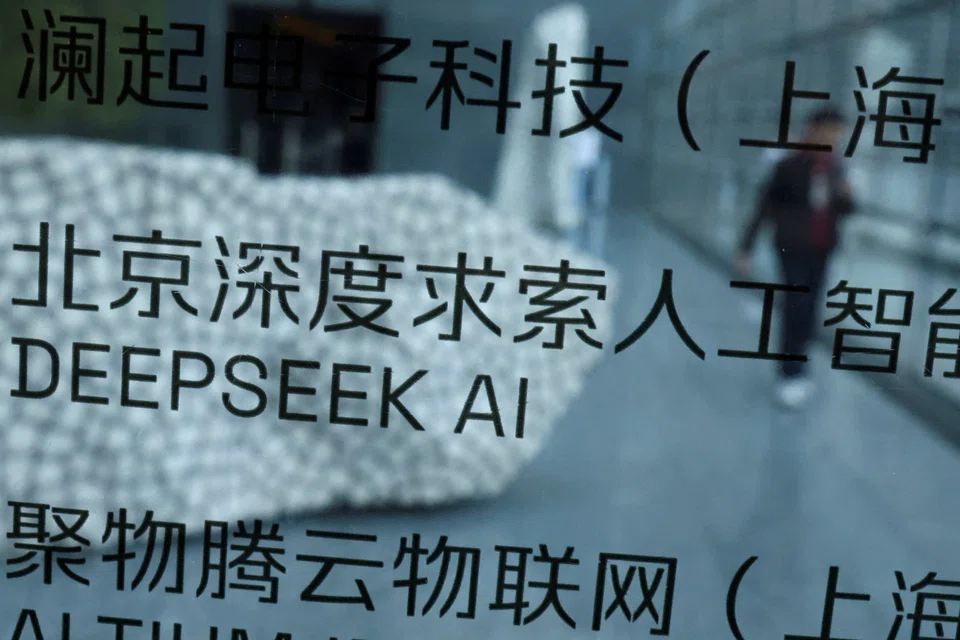
[BENGALURU] DeepSeek rolled out an artificial intelligence model that charges as little as a fraction of a cent per million tokens, ramping up the pressure on rivals from Anthropic to Z.AI.
The Chinese startup unveiled the V4.1 Flash on Thursday (Sep 10), a slimmed-down platform it claims outperformed mainstays such as Moonshot’s Kimi K3, yet offers a steep discount to the competition.
Shares in MiniMax Group and Z.AI plunged more than 8 per cent in Hong Kong. Alibaba, the e-commerce giant that is pivoting into AI, slid more than 2 per cent.
DeepSeek’s latest move highlights the intensifying price battle between Chinese open-weight models and their US counterparts, at a time Anthropic and ChatGPT-developer OpenAI are preparing to go public.
The Chinese firm is betting that good-enough yet ultra-cheap models can beat top-tier models to drive the next phase of AI adoption.
The Hangzhou-headquartered lab that has roiled the industry with inventive techniques said its latest model offered “more efficient architecture” at lower prices.
DeepSeek’s discounts are reshaping how developers, startups and enterprises budget for AI agents that can run hours at a stretch, completing tasks autonomously while working towards a targeted goal.
The industry’s focus has shifted towards AI agents that can write code over long sessions, summon tools or browse the web in search of information – all with little or no human intervention.
DeepSeek “death zone”
The advent of cheap yet high-powered Chinese models has created what Artificial Analysis terms a DeepSeek “death zone”.


To compete, AI contenders must now either beat DeepSeek and its Chinese peers on price, or soundly surpass them on capability.
DeepSeek’s announcement that it has trimmed what is known as KV cache in the latest model – reducing the required amount of high-bandwidth memory and solid state drive storage – has given investors fresh concerns about tech.
There has been a chronic shortage of memory chips because of strong AI demand, driving up profits for companies like Micron Technology and SK Hynix.
DeepSeek said it is using a “causal encoder-decoder” design that activates only a tiny part of the capacity of its 552 billion-parameter model at a time.
That is a fraction of what the larger V4-Pro required. In benchmarks, the new model beats the V4-Pro on coding and agentic tasks, though it trails the flagship models of Anthropic and OpenAI.
Starting Sep 14, the startup is retiring the V4-Pro by automatically rerouting all inference tasks to the V4.1 Flash, which will in turn be billed at the cheaper rates.
Memory makers hit
For fund managers wading back into South Korean memory makers’ stocks, it raises doubts on the strength of demand for memory.
Samsung Electronics and SK Hynix shares dipped more than 3 per cent each on Friday, paring their nascent rebound from July’s steep sell-off.
While most investors see the latest DeepSeek development as a short-term setback, the latest declines show the rebound will not be linear.
“DeepSeek’s new model could stoke concerns about a slowdown in semiconductor demand in the near term,” said Ha Seok-keun, chief investment officer at Eugene Asset Management.
Still, new models from the likes of Meta Platforms and OpenAI “will have a greater impact on the industry’s fundamentals by boosting actual AI usage and semiconductor demand”.
Local retail traders drove a feverish rally in Samsung and SK Hynix earlier this year before abruptly reversing course on a severe bout of AI scepticism.
They have been rapidly exiting leveraged exchange-traded funds tied to the chipmakers, and have sold more than US$10 billion worth of the two stocks in September alone.
Daily swings being less dictated by the whims of retail investors has tempted the return of some foreign funds, which have been large sellers year to date.
“We are definitely more positive on (South) Korean memory chipmakers than anything else in semiconductors,” said Isaac Thong, senior investment director and manager of the Aberdeen Asian Income Fund in Singapore.
Based on a blend of price-to-book and price-to-earnings valuations, “these stocks look cheap, especially compared to global peers”, he added.
Samsung trades at 2.7 times current book value and SK Hynix at five times, compared with 11 times for the Philadelphia Semiconductor Index.
The Korean memory stocks are both trading at around four times forward estimated earnings, versus 19 times for the gauge of global chipmakers.
The two Korean memory stocks remain more than 25 per cent below their all-time highs, however, with investors still spooked by wild swings on daily news and position adjustments. While volatility has subsided, it remains near peak levels seen during Covid and the 2008 financial crisis.
“These names are going to be volatile. For most investors, there are ways to get the same returns with a lot less volatility,” said Matthew Tuttle, CEO at Tuttle Capital Management.
Despite the decrease in leverage and measures implemented by regulators in an effort to restore calm, daily moves of 5 per cent or more are still common for Samsung and SK Hynix.
Given the strong fundamentals, foreign investors may return when there is a significant decrease in volatility, according to Jung In Yun, CEO at Fibonacci Asset Management Global.
The DeepSeek news may drive “some sentiment-driven pressure rather than assume a lasting sector sell-off”, he added. Longer term, “cheaper AI could drive greater usage, offsetting efficiency gains”. BLOOMBERG
Decoding Asia newsletter: your guide to navigating Asia in a new global order. Sign up here to get Decoding Asia newsletter. Delivered to your inbox. Free.
Share with us your feedback on BT's products and services






