

Facebook reports big user shift to mobile
Though net income in the first quarter fell to US$512 million, the company posts a strong set of results with advertising revenue rising 46 per cent to US$3.32 billion
San Francisco
FACEBOOK is now so thoroughly a mobile service that its original website may soon become a footnote in the company's financial statements.
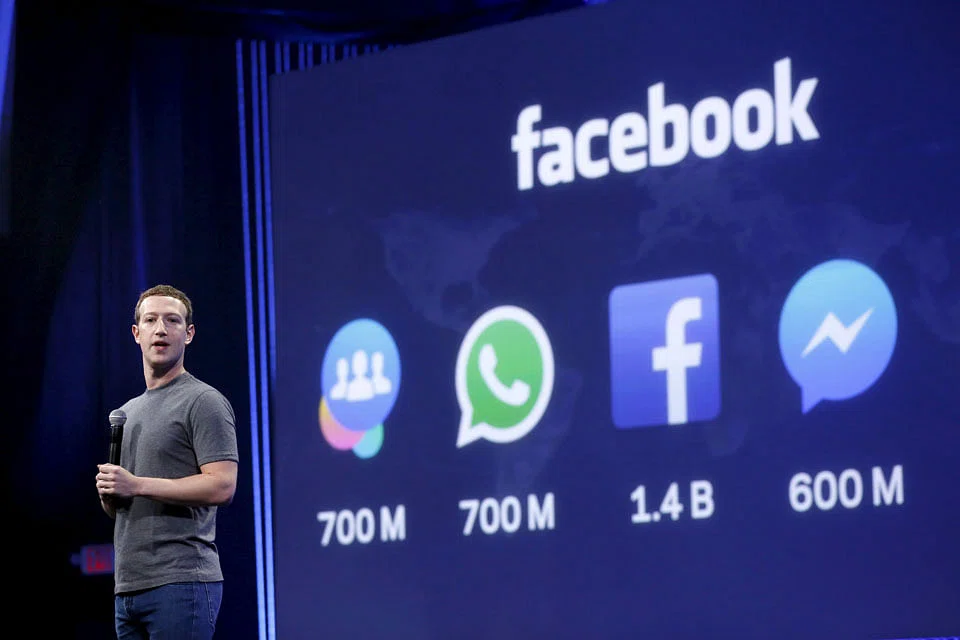
The world's largest social network reported on Wednesday that almost three-quarters of its advertising revenue and most of its 1.44 billion users came from cellphones and other mobile devices in the first quarter of the year.
And Facebook is beginning to make a similar transition from text to video, with its users already watching four billion videos a day, an average of four per person (although the view may be more like a glance, since Facebook considers three seconds long enough to count).
"More than any other company right now, they are the single biggest beneficiary of this shift to video and mobile," said Mark Mahaney, an Internet analyst with RBC Capital Markets. "This growth is going to be more sustainable than people realise."
Revenue and profit grew a bit more slowly in the first quarter than in the recent past, Facebook reported on Wednesday.
But analysts said that was mainly a matter of choice. Facebook, which makes virtually all of its money from advertising, limits the number of ads it sells on its social network and on Instagram, the separate photo-sharing app it owns. So far, it has allowed no advertising on its fast-growing messaging services, Facebook Messenger and WhatsApp.
"They have advertisers pounding at the doors to get their customers," said Ben Schachter, an analyst with Macquarie Securities.
In a conference call with investors to discuss the financial results, Mark Zuckerberg, Facebook's co-founder and chief executive, made it clear that he had no interest in flooding users of Facebook and Instagram with more commercial messages - just better ones. "The primary goal is to increase the quality. That's our strategy for growing the business," he said.
That approach certainly has not hurt the company's bottom line. The average price per ad rose 285 per cent in the quarter, the company said, even as the number of ad views plunged 62 per cent.
Facebook reported revenue of US$3.54 billion in the quarter, up 42 per cent from the US$2.5 billion it brought in during the same period a year ago. That fell a bit short of the US$3.56 billion that Wall Street analysts had been expecting, according to a survey conducted by S&P Capital IQ, although Facebook noted that revenue would have been US$188 million higher if currency fluctuations were excluded.
The company's net income was US$512 million, or 18 cents a share, compared with US$642 million, or 25 cents a share, a year ago. Excluding costs for employee stock compensation and certain other expenses, Facebook's profit was US$1.19 billion, or 42 cents a share, up 28 per cent from last year. That topped the 40 cents a share that analysts had expected.
Last year, Mr Zuckerberg signalled that Facebook would spend more on new services, including its virtual reality company, Oculus VR, in 2015. And he appears to have been true to his word: Expenses rose 82 per cent in the quarter.
Mr Schachter of Macquarie Securities said that was a bit disappointing, since the company had made similar warnings in the past without increasing spending.
Still, the results were strong. The company's advertising revenue rose 46 per cent to US$3.32 billion in the quarter.
"We're really pleased with the growth, which is across all of our verticals," Sheryl Sandberg, Facebook's chief operating officer, said in an interview.
She said the company's nascent video advertising business was growing quickly, with the movie and entertainment industry, in particular, embracing it.
Facebook has also been building more sophisticated tools that let advertisers combine the data it has collected about its users with other sources to show targeted text, image and video ads to people using other websites and mobile apps.
Globally, Facebook is one of the most powerful players in digital advertising. The company had 7.9 per cent of the US$145 billion global digital advertising market in 2014, according to the research firm eMarketer, second only to Google, which had 31.4 per cent.
Mr Zuckerberg now has his sights set on messaging and free Internet phone calls. "What we're focused on doing is providing more higher-quality services for free than what you could otherwise get in paying for them," he said. NYT
TRENDING NOW

Nvidia reinstates Jensen Huang as CEO; Trump says move poses no national security risk

Indonesia’s coal tycoon Low Tuck Kwong replaced as Bayan Resources president-director

Nvidia surges 33% after reinstating Jensen Huang, reviving AI trade; stocks soar in US and Europe

Consider lowering homeownership barriers for some non-resident foreigners

