Google looks to govt fillip to Chromebook sales in Singapore (Amended)
Singapore
THE upcoming move to delink Internet access from public officers' work computers may give an impetus to Google's Chromebook project in Singapore, says Caesar Sengupta, Google's vice-president for product management.
The Singapore government is in the market for low-cost laptops as a second device through which civil servants will be able to access the Internet at work. These laptops will be separated from the government's internal IT systems, including email. The move entails buying around 143,000 devices.
Chromebooks from four vendors, as well as Windows laptops, ranging in size from 11 to 14 inches and costing between S$295 and S$400 apiece have been shortlisted. The two-device policy for civil servants is set to roll out from May this year.
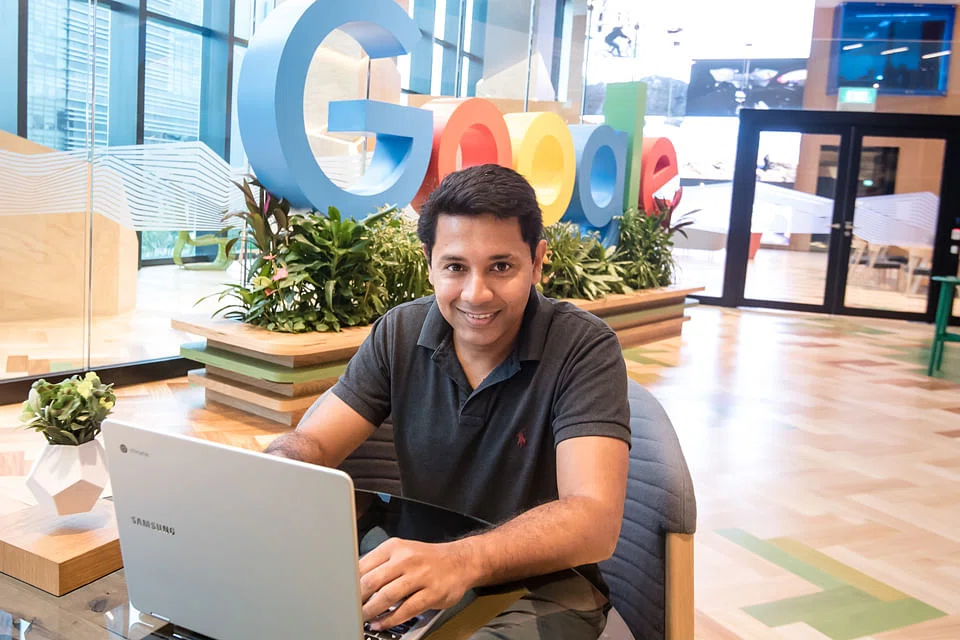
Local boy Mr Sengupta has reason to be excited about the possibility of civil servants using Chromebooks. Back in 2010, he was part of the core Google team at the company headquarters in Mountain View, California that sat down to visualise what a Chromebook would be. He later led the product management team for Chromebooks.
The first computers came out in 2011 and, in the United States at least, were an instant hit. The Chrome OS (operating system) is today the second most popular OS in the US behind Windows, and above the MacBook OS of Apple computers.
Last year, Chromebooks' shipments globally reached 10.8 million units, up 40 per cent from the 2015 number, according to research agency IDC. Gartner data shows that 2016 PC (personal computer) shipments totalled 269.7 million units, a 6.2 per cent decline from 2015.
PC shipments have fallen annually since 2012. The Gartner data do not include Chromebook shipments which are counted separately. The data show that sales of Chromebooks are growing, even though from a small base, while the overall PC market is declining.
Chromebooks were previously available in Singapore for retail purchase, soon after the global launch, but due to a lack of demand most shops here have stopped selling them.
Mr Sengupta, who is now based in Singapore, is currently leading a global team of engineers developing products for the next billion users coming online. He is one of Google's most senior engineers in the Asia-Pacific.
Original equipment manufacturers (OEMs) such as Hewlett-Packard, Acer, Lenovo, Asus and Dell support Chromebooks in Singapore. They had responded to the government tender and have 11 and 14-inch devices available.
Resellers - including Innocom, Newstead Technologies, Acer Direct, HP Direct and GSA - supply Chromebooks to local enterprises and schools.
Mr Sengupta agrees that a government pick of Chromebooks for civil servants will go a long way in popularising these laptops in Singapore. However, he adds: "The government selection will be a mixture of both (Chrome OS and Windows OS). Look, this is such a Windows market; if we get like a little bit, we'll be very happy."
The Google offical adds that there is a reason why it's going to take some time to change mindsets about what OS a computer should run on as the Windows OS is so entrenched.
"But we are training about 40 people from the government every week on how to use Chromebooks and what security you need to have. I think people are starting to see the ease of use and the fact that the total cost of ownership is much lower. They just love the enhanced security and ease of deployment, (and) we expect many more to join over time," Mr Sengupta says.
Lionel Ch'ng, HP Inc's managing director for Singapore, agrees with Mr Sengupta that there's been a growing interest in Chromebooks. "HP has seen an increased interest in Chromebooks for one-to-one learning in schools and also in the public sector for Internet surfing devices. We continue to actively explore a wider range of Chromebooks to address the needs of our customer."
IDC's Maciek Gornicki, however, tempers expectations. He says: "Bear in mind that although the Singapore government approved Chrome OS as one of the platforms for the second-device plan for civil servants, it will be up to IT departments of individual agencies to decide which devices they go for, so we are yet to see what percentage of them will choose Chromebooks." Mr Gornicki is IDC's Asia Pacific research manager for client devices group.
According to Google, more than 10 government agencies are already on board using Chromebooks. Mr Sengupta hopes more agencies will follow suit. "I'm pretty confident that the ministries which have selected Chromebooks will get them up and running before others (who choose Windows-based PCs) have done so," he says.
In the US and elsewhere, education is one sector where Chromebook adoption has been very high. The popularity of Chromebooks in schools is one reason why the Chrome OS has become the No 2 OS in the US. In the UK, it is the top-selling PC OS in the education market.
In Singapore, Google hasn't yet given a formal push to Chromebook for education. Despite that, a few secondary schools, as well as a few private schools, here allow their students to use Chromebooks in school.
Says Mr Gornicki : "I think Google will need to focus more on marketing Chromebooks in the education space in Singapore; up until now they have been doing much more work in Australia and New Zealand, with the Asia-Pacific region being less of a focus. But it is entirely possible we will see ongoing uptake in the education space in the future."
Mr Sengupta says Chromebooks are at an important tipping point because, from this year, each computer will have the Android platform and, by extension, Google Play Store with its million-plus apps natively integrated. This, he says, will give users access to familiar programmes such as Microsoft Office and Adobe Photoshop. These will not be Web-browser versions but apps that will work natively on the Chromebooks through Android mobile apps.
One weakness that Google needs to address is a lack of significant presence in the enterprise segment.
Mr Gornicki notes: "Companies are not ready to replace Windows PCs with Chromebooks. However, the Chrome OS is starting to gain traction in some verticals, such as retail or financial services - markets that historically used to depend a lot on thin clients. We are, therefore, looking at potential thin clients replacement scenario."
A thin client refers to a lightweight computer that is purpose-built for connecting remotely to a server for functionality.
Mr Sengupta is hopeful that with Chromebooks becoming part of the government contract and with more interest from the education sector, there will be sufficient demand generated locally to make it worthwhile for OEMs to set up the infrastructure needed to reintroduce Chromebooks in local retail outlets.
Amendment note: An earlier version of this article stated 10 ministries are already using Chromebooks. Google has clarified that it is actually 10 government agencies and not ministries.