

India launches ambitious plan for a robust digital future
Govt also aims to cut electronics imports by 2020
New Delhi
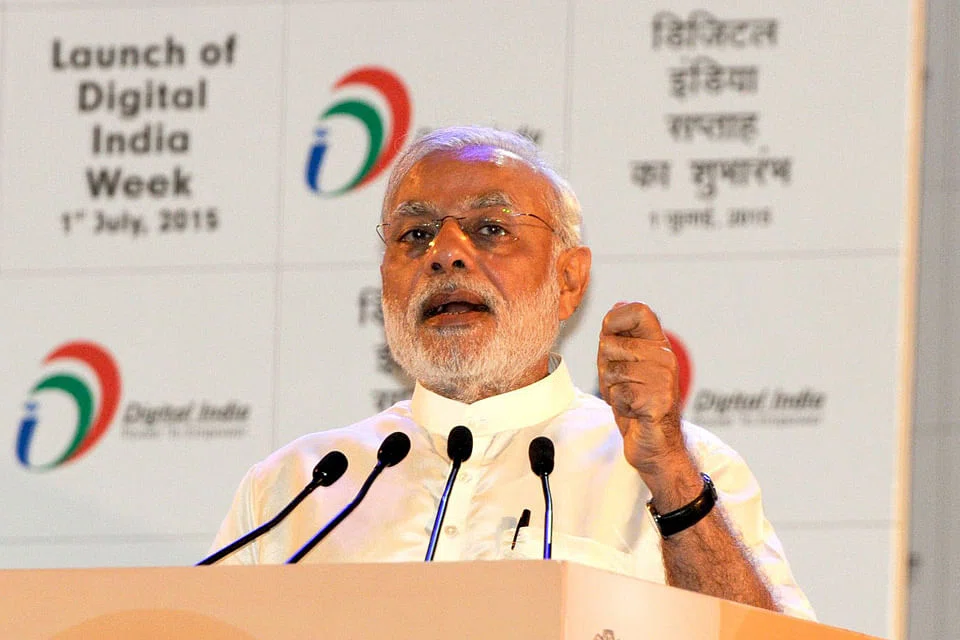
STANDING alongside some of the titans of Indian industry and senior ministers in his cabinet, Prime Minister Narendra Modi announced the start of a "Digital India week" at a packed stadium in the capital last week, highlighting his government's push for greater Internet connectivity and services for more of the country's people and a desire to jump-start Indian manufacturing in electronics.
With an analogy, he evoked the image of a small child, once enthralled with a pair of glasses in an adult's pocket, or a pen, now captivated by a mobile phone.
"That means that he may or may not understand anything else, but he can understand digital power," he said on Wednesday. "Time demands that we understand this change, and if we don't understand this change, then we will be left in a corner and the world will move far away and we will be left watching."
The statement was not, according to analysts, needlessly overwrought. India has lagged behind much of the world in digital infrastructure. It ranked 115th globally on its average connection speed in the first quarter of this year, according to a study by Akamai Technologies, and just over 100 million subscribers in the country, out of a population of more than 1.2 billion, have broadband connections, data in April from a government regulatory body showed.
The problem lies partly in the slow progress of a project started in 2011 to expand the country's fibre optic network. But India also represents great opportunity in the digital economy because of its bulging population and a fast-growing market for electronic goods. Mr Modi noted that imports of electronic goods were second only to oil. "Why can't we make quality electronic goods that are globally competitive," he asked.
Mr Modi underscored his government's aim to substantially cut his country's imports of electronics by 2020, an ambitious goal for an India that, according to Neeraj Aggarwal at the Boston Consulting Group in India, is "almost not a player in this space". In addition, the Digital India campaign includes a commitment to providing citizens with access to healthcare, education, banking, insurance, pension and agricultural services through a network of "common service centres" that are supposed to be open in 250,000 villages across the country by 2019.
"In a sense it's what we've been waiting for," said Nikhil Pahwa, founder and editor of MediaNama.com, which analyses India's digital economy. "No government till now had made a strong concerted effort on focusing on digitising India."
Industrialists at the announcement, including Mukesh Ambani, chairman of Reliance Industries, and the leaders of some of India's largest outsourcing companies, pledged a total of nearly US$71 billion to realise the government's goals. The event on Wednesday was a statement of intent more than a detailed policy brief, and the path to the goals the government described is not easy.
While Mr Modi spoke of empowering young people to build startups and innovate, Mr Pahwa complained of byzantine regulations for technology companies. Entrepreneurs complain that online payments in India have also been hamstrung by a series of measures. "The Internet in India has grown despite government policy, not because of government policy," said Mr Pahwa.
But Mr Aggarwal said the expansion of infrastructure and services could have the potential to pull in a huge base of consumers. "It creates an enabling infrastructure, and a lot of private sector innovation can ride on top of that," he said. NYT
TRENDING NOW

He built the Vingroup empire. Now South-east Asia’s richest man is handing some key roles to his sons

32 companies, 6 individuals bag accolades at Singapore Corporate Awards 2026
Can a first-time homebuyer couple earning S$18,000 a month afford a new EC unit?

Floods compound Philippine growth woes from public-works scandal

