

Japanese founder-run firms face succession problems
Tokyo
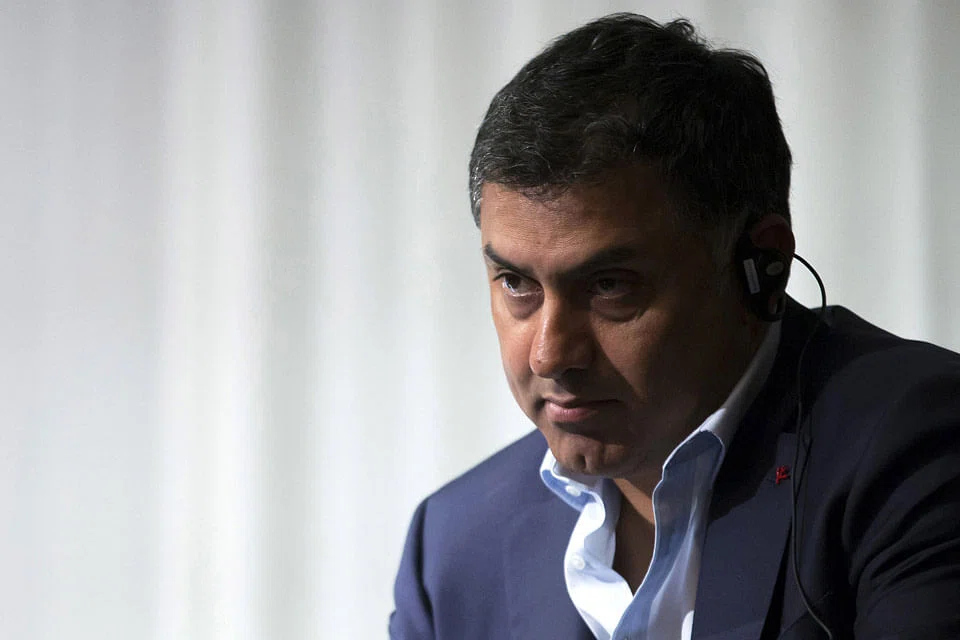
THE surprise departure of Nikesh Arora, heir apparent at SoftBank Group Corp, highlights a problem that many Japanese companies face: passing the reins to a successor.
SoftBank founder Masayoshi Son, 58, said last Tuesday that he wants to remain at the helm of the company that he built from a computer software distributor into one of Japan's largest telecommunications and investment groups, while Mr Arora aspired to be chief executive officer more quickly.
Mr Son's decision to cling to control until he loses confidence in his physical strength is the latest example of a leadership transfer at a Japanese company that has gone wrong. Many of these firms are managed and owned by ageing entrepreneurs, such as the 67-year-old billionaire Tadashi Yanai's Fast Retailing Co, and often the transition is far from smooth.
"Succession planning is going to be the biggest issue for Japanese companies run by their founders in the next five to 10 years," Dairo Murata, an analyst at JPMorgan Securities Japan Co in Tokyo, said. "It comes to the surface as a risk for investors if there's still no clear picture of succession when they get old."
In SoftBank's case, the founder simply changed his mind. Mr Son recruited Mr Arora from Google Inc in 2014, and installed him to president last June, saying that he is the most likely candidate to take over the business. Although it had never been made public to shareholders or employees, Mr Arora and Mr Son had discussed the CEO giving up his post at 60, a birthday coming in August next year.
"The older those business managers become, the harder it gets for them to pass the baton to the next generation," Mitsushige Akino, a Tokyo-based executive officer at Ichiyoshi Asset Management Co, said. "They struggle to find someone who they think is more capable than themselves. From the heir's point of view, it's also difficult to step into the shoes of charismatic leaders."
A family feud at a high-end furniture retailer, a household name in Japan, became the most high-profile case of how company succession can go wrong. Katsuhisa Otsuka, the then 71-year-old founder of Otsuka Kagu Ltd, tried to fire his daughter five years after naming her president. In a February 2015 news conference, he called her a "bad child", launching a proxy fight to remove her that ultimately ended in failure.
A similar spat erupted this year at Seven & i Holdings Co, this time involving billionaire activist investor Dan Loeb. The hedge fund head intervened in March to stop a plan by Toshifumi Suzuki, the then 83-year-old chairman and CEO of the retail giant, to remove a possible candidate to take the reins.
Mr Loeb raised concerns about Mr Suzuki's "chronic health problems" and claimed that the CEO planned to anoint his son as successor. At a board meeting in April, Mr Suzuki failed to get his way. Ryuichi Isaka - the executive that Mr Suzuki had tried to remove - became the new president, while Mr Suzuki resigned.
Sometimes, it takes a scandal to get older leaders to relinquish the top role. Suzuki Motor Corp's admission that it used unapproved fuel economy testing methods forced the 86-year-old chairman Osamu Suzuki, a member of the founding family, to step down from the post of chief executive officer as of the company's June 29 annual shareholder meeting, paving the way for a new management structure.
Succession has also occupied the thoughts of Japan's richest person, Fast Retailing's Yanai, who turned the casual clothing maker and retailer that he inherited from his father into a global name and owns more than a fifth of the company. At 67, he serves as chairman, president and CEO.
Mr Yanai ceded the president's role to Genichi Tamatsuka, the current chairman and CEO of Lawson Inc, in 2002 but returned to the position after only three years. While once saying that he would retire at 65, Mr Yanai has stayed at the helm and said that he wants to choose his replacement from the company's executive officers. BLOOMBERG
TRENDING NOW
‘We don’t want to stay as we are’: CEO Patrick Ng builds a more resilient Huationg
URA to review guidelines on floor space to give developers more design flexibility: Chee Hong Tat

He built the Vingroup empire. Now South-east Asia’s richest man is handing some key roles to his sons
32 companies, 6 individuals bag accolades at Singapore Corporate Awards 2026

