

Latest iteration of Apple versus Samsung
The iPhone 6s is going head-to-head against the Galaxy Note 5
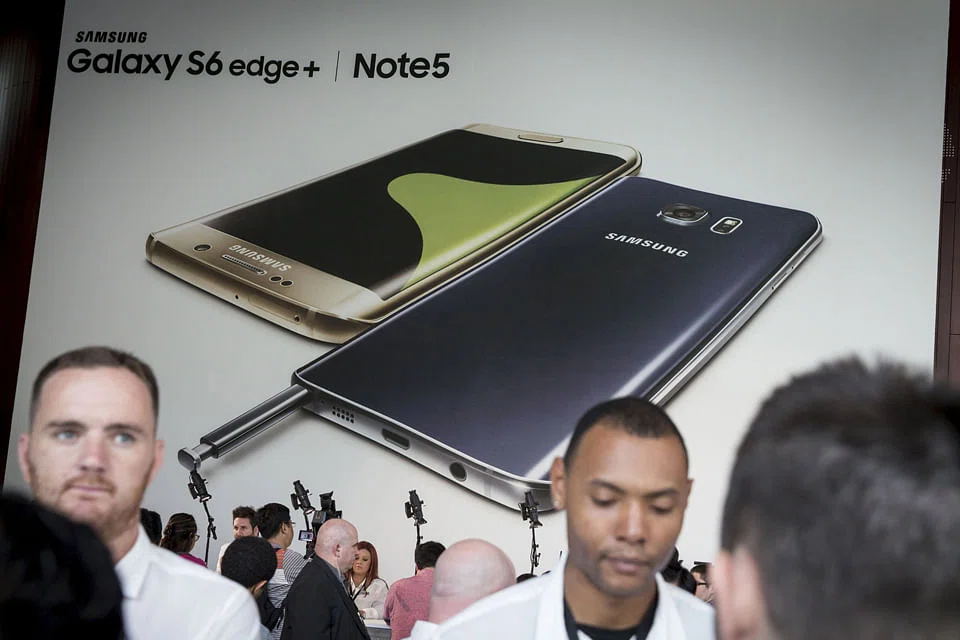
Singapore
OVER the weekend, the iPhone 6s went on sale in selected markets, including Singapore. The first week's sales figure will be awaited for with interest as it is a good benchmark to see if the latest iteration of the iPhone is even more popular than the previous one. Going by historical trends, that will most likely be the case.
The iPhone 6s, especially the bigger 5.5 inch version, is going head-to-head with its Korean rival, Samsung's Galaxy Note 5 that hit the stores a few weeks ago. The Note 5 will have some help from its sibling, the Galaxy S6 Edge+ which also comes with the same 5.7 inch screen as the Note 5.
Initial reports indicate that the Note 5 is doing better than the Note 4 and it remains to be seen if the phone, and its running mate, the Galaxy S6 Edge+ can halt the decline in phone sales that Samsung has suffered since its heyday in 2013.
The interesting point is, despite popular perception, Samsung's loss has not been entirely Apple's gain. For example, according to research agency IDC's numbers, in the second quarter of 2013 Samsung had a 31.9 per cent global market share in smartphones with Apple coming in a distant second with 12.9 per cent market share. Contrast that with the second quarter of 2015. Samsung's marketshare dipped to 21.4 per cent but Apple's share rose just one percentage point to 13.9 per cent.
Samsung's marketshare is being eroded not by Apple but by Chinese brands like Xiaomi, Huawei and Lenovo which have posted impressive gains on the back of sales in China and India. The unique selling point of these companies is that they offer phones which are a shade underpowered compared with the latest and greatest but at a much lower price point. This works well in price-conscious markets and explains Samsung's eroding marketshare as the sale of its mid-range phones have been badly affected. It remains to be seen how much of the new tech advances of the Note 5, Galaxy S6 Edge+ and Galaxy S6 Samsung is able to filter into its lower ranged phones in order to regain marketshare.
The first Samsung Galaxy Note was launched in October 2011 as the world's first "phablet" phone with what was then considered a huge 5.3 inch screen. It was no accident that Samsung chose the launch date to be just around the time that the iPhone would be out. The phone would go up against the Apple product with specifications that would be the best that the South Korean company had on offer.
The Note itself was a interesting device, which apart from the huge screen, also had a stylus to write on the screen. The phone was written off as "weird" by many analysts who must have been very surprised when it turned out to be a resounding success with users.
In fact, the Galaxy Note series has proved to be so popular that there is now some confusion in the market as to which model is actually Samsung's flagship device. Is it the Galaxy S series or the Note series? As to the popularity of the Note phones, imitation is the best form of flattery. Even Apple has been forced to develop a "huge" 5.5 inch phone after the late Steve Jobs had said that a 3.5 inch screen was the "optimum" for a smartphone with Apple's current CEO, Tim Cook, amending that a few years ago to say that 4 inch screen was "ideal"!
This brings us to the Galaxy Note 5 itself. It bears the new design language that Samsung introduced with its Galaxy S6 phone. Gone are the days of plastic body with fake leather back. The Note 5 and the S6 Edge+ comes with a full metal body with glass in front and back. In one word, they look absolutely stunning, easily among the best looking phones on the market. The company has finally ditched the rather unfair sobriquet of "Sammy plastic".
A curved backplate and trimmed-down bezels around the quad HD, Super Amoled screen make the Note 5 much easier to hold than any of the previous generation Note.
The standout feature of the Note 5 is undoubtedly its screen. Screen resolutions have reached a point where giving the pixel per inch or ppi count does not make sense because the human eye is not capable of noticing the difference. What does, however, stand out in the Note 5 is that Samsung has managed to keep all the good things about its Super Amoled screen, like stunning colours and brightness, while eliminating its many negative points such as oversaturation and less than accurate depiction of colours. It is easily the best screen on a smartphone yet.
As is usual with the Note series, it is a power-packed device with Samsung's own highly regarded octa-core Exynos 7420 chipset and 4 GB of RAM.
However, two changes made by Samsung have the potential of upsetting its fan base of power users. In line with its new design philosophy, the new phones do not have removable batteries and do not come with expandable storage.
While a removable battery may not cause too many complaints, the fact that the phone comes with only 32 GB and 64 GB of storage may be some cause for angst, especially considering that the phone has excellent high resolution video capture capability.
To compensate, Samsung has bundled in an additional 100 GB of free cloud services with Microsoft One Drive. The extra space is welcome but one wonders if many users would find it useful. As an Android phone, the Note 5 is fully integrated into the Google eco-system where Google Drive, Photos and e-mail are seamlessly inter-linked. Having One Drive as the de facto online storage option may not be liked by many users.
One of the reasons for iPhone's popularity is the eco-system that Apple has built up around the phone. Its latest effort in this direction has been Apple Pay, touted as the easiest way to pay for purchases in stores. Considering the fact that the two companies are such fierce rivals, it is no surprise that the South Korean company has introduced Samsung Pay, which in theory will work in far more situations than Apple Pay or any of its rivals due to the technology used.
Samsung made a statement last week which said that its new mobile payment service has processed more than US$30 million worth of transactions in its first month in South Korea, a level of market adoption that the company said was "beyond our expectations". Samsung is in the process of launching Samsung Pay in the US, and the Note 5 will be one of its preferred devices to move this forward.
It would be interesting to see how this service works as Samsung rolls it out in more markets.
TRENDING NOW

Nvidia reinstates Jensen Huang as CEO; Trump says move poses no national security risk

Beyond the greenback, Vietnam’s big borrowers turn to Asian-currency bonds

Indonesia’s coal tycoon Low Tuck Kwong replaced as Bayan Resources president-director

Six workers file employment claims against Crystal Jade Food Manufacturing

