

Lenovo to take on global smartphone market leaders
Beijing
LENOVO Group says its US$2.91 billion purchase of Motorola Mobility from Google will help the company boost global smartphone sales and challenge market leaders Samsung Electronics and Apple.
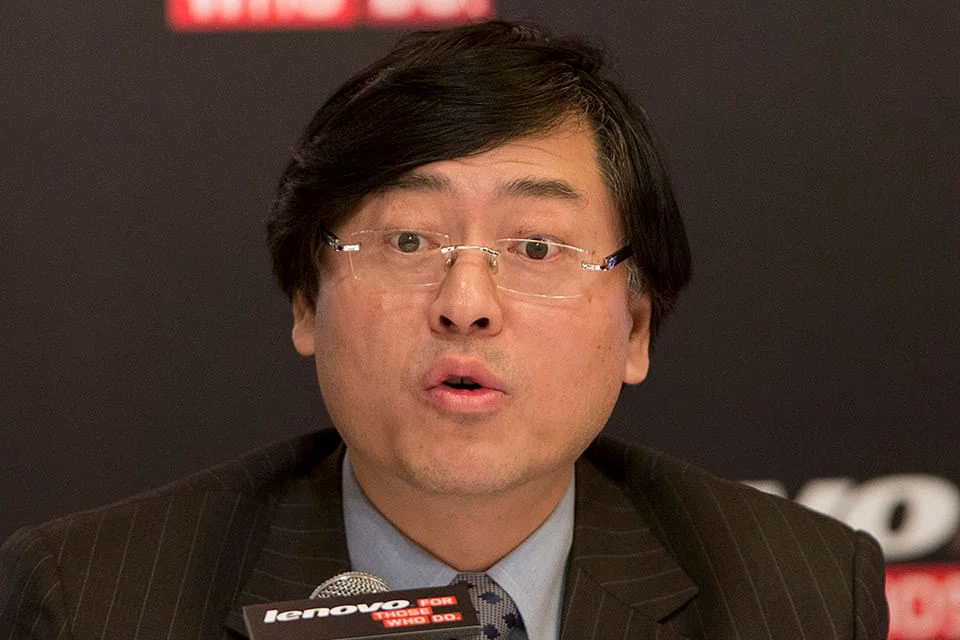
"Lenovo will be number three in the global smartphone market, but definitely we will not stop here," chief executive officer Yang Yuanqing said. "We want to become the leader in the smartphone and mobile devices area."
The Motorola name will help Lenovo win sales in mature markets such as the United States and Europe, where its own handsets have made little headway, and serve as a premium brand in emerging markets, Mr Yang said. The acquisition, completed on Thursday, also gives Lenovo a new weapon in its battle for market share with Xiaomi Corp, which surpassed the Beijing-based company in third-quarter smartphone sales.
Lenovo boosted global smartphone shipments by 38 per cent in the third quarter to 16.9 million units, ranking it fourth worldwide, International Data Corp (IDC) said on Oct 29. Its market share expanded to 5.2 per cent, from 4.7 per cent a year earlier.
Beijing-based Xiaomi surged to third place after more than tripling shipments to 17.3 million units, taking 5.3 per cent of the global market, IDC said.
Samsung, based in Suwon, South Korea, remained the world's largest smartphone vendor, with 23.8 per cent, followed by Cupertino, California-based Apple with 12 per cent, IDC said. Motorola wasn't among the top five vendors in IDC's ranking.
Lenovo declined 0.5 per cent to HK$11.42 at the close of trade on Friday in Hong Kong. The stock has advanced 21 per cent this year, compared with a 3 per cent gain for the city's Hang Seng Index.
Motorola's sales in Asia, Latin America and the US would have boosted Lenovo's global ranking to third in the period, said Kiranjeet Kaur, a Singapore-based analyst at IDC. Their combined market share would have been 8 per cent, Neil Mawston, executive director of researcher Strategy Analytics, wrote in an e-mail.
Lenovo has made inroads beyond China, with international markets accounting for 20 per cent of third-quarter smartphone shipments, compared with 9 per cent a year earlier, IDC said.
The payment for Motorola included US$1.41 billion in cash and Lenovo stock at the completion of the purchase, and US$1.5 billion in a three-year promissory note, Lenovo said.
Lenovo also paid Google about US$228.5 million to account for cash and working capital remaining at Motorola at the close of the acquisition.
The transaction leaves most of Motorola's patent portfolio with Google with Lenovo getting an intellectual-property licence.
Motorola had operating losses of more than US$1 billion last year, according to data compiled by Bloomberg. Lenovo can turn the unit around in four to six quarters, Mr Yang reiterated. In the first year after the purchase, Lenovo will sell 100 million devices, he said.
With rising industry competition and continued losses at Motorola, integrating the two companies may not be as easy or smooth as Lenovo expects, Strategy Analytics' Mr Mawston said. WP
TRENDING NOW

Could Jensen Huang work for Elon Musk? It would be ‘a titanic ego death match’, says biographer

What shattered Crystal Jade? How the culinary empire shrank from 120 to just 9 outlets

Vietnam’s Long Thanh airport hits new snag as airlines seek to delay moving operations

Beyond the greenback, Vietnam’s big borrowers turn to Asian-currency bonds

