

Money talks and talent walks in Google's HTC buy
San Francisco
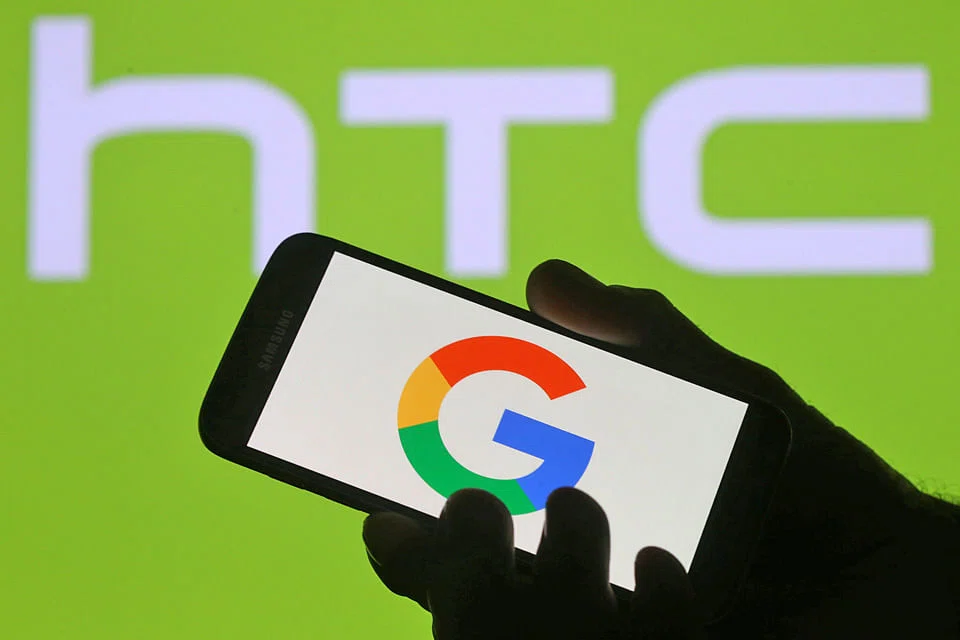
GOOGLE has agreed to buy part of HTC Corp's engineering and design teams for US$1.1 billion, taking on a cadre of veterans who worked on the Pixel phone and could bolster its nascent hardware business.
Alphabet Inc's Google is taking on some 2,000 employees with experience working on its signature Pixel devices, intended to showcase the best features of the Android software that now powers the vast majority of the world's smartphones.
The deal comes with a non-exclusive licensing agreement for HTC intellectual property.
Google now gains tighter control over the design and production of the Pixel and other devices, potentially helping sales. Those gadgets are becoming the pillars of a strategic push to distribute critical software products like its voice-enabled Assistant and better compete with Apple Inc.
The search giant is preparing to unveil a second generation of devices in October, building on a portfolio that runs the gamut from Google Home speakers to Daydream virtual reality headsets.
"The end game here is more flexibility on hardware innovation, which can spur incremental revenue through services enabled by those innovations," said Jitendra Waral, a senior analyst with Bloomberg Intelligence. "Google essentially gets more control over its hardware design; it can help them accelerate innovation with its own products and use that as the benchmark for the Android ecosystem to follow."
Alphabet investors may be concerned about history repeating itself. In 2012, Google paid US$12.5 billion for Motorola Mobility, then a leading Android handset manufacturer. In less than three years, Google sold it to Lenovo Group Ltd for less than US$3 billion, while keeping Motorola's valuable patent portfolio.
Owning Motorola had eroded the search giant's profit margins and upset other phone makers that relied on Android, Google software that it supplies to handset manufacturers to promote its services.
The HTC transaction, however, costs a lot less and comes at a very different time - when Google and its biggest rivals are more focused than ever on consumer devices built around new artificial-intelligence and augmented-reality services.
AR demands powerful cameras and sensors working in sync with software to process and superimpose 3D images on real world scenes. Having different Android partners making their own phones with disparate components makes this task more difficult for Google - especially when Apple can pick one set of AR hardware to marry to its software.
"For Google, HTC is a completely different deal than Motorola," said Jason Low, a Canalys analyst based in Shanghai. "It needs better control over manufacturing if it expects the Pixel series to compete with iPhones someday."
Google has also launched its own phones since Motorola, so Android phone makers have got used to their partner as a rival. And some of the biggest emergent manufacturers, such as China's Huawei Technologies Co and Xiaomi Corp, are now less reliant on Google for services.
The production resources of HTC - which assembled the first Pixel device and was key to the Nexus line - may support its existing phone operation. Greater control of hardware production would also give Google more influence over the distribution of new services such as its voice-based digital assistant.
Google's Pixel is far from a top- selling phone. External estimates pegged sales at 552,000 units during its first quarter.
Yet selling Pixels has auxiliary benefits for Google, chief among them the boost to its primary sales. With each Pixel phone it moves, Google doles out less in traffic acquisition costs: it pays money to partners like Apple and carriers to install Google's search service. That cost has risen steadily, pulling down its sales totals in the last quarter in particular.
A bigger hardware unit would offset such expenses, Eric Sheridan, an analyst at UBS, wrote in a recent research note. But it also comes with more spending, in maintenance and marketing. An HTC acquisition and a larger Google hardware unit could hurt the company's profit margins, Mr Sheridan warned.
It's unclear what the departure of key engineering talent spells for the future of HTC, which once ranked among the world's top smartphone makers but lost share to Apple, Samsung and Chinese manufacturers like Huawei. It's since waded into virtual reality with the Vive headset.
Shares of the Taoyuan City, Taiwan-based company have fallen more than 12 per cent this year.
"The bright side is that HTC can focus on its VR business. They have very high hopes for VR and are trying very hard to improve user experience and enrich content," Canalys' Mr Low said. BLOOMBERG
TRENDING NOW

Once staunchly pro-China, Malaysian Chinese businesses are now distancing themselves from Beijing

Stocks to watch: HPL, Aims Apac Reit, Zico, Advanced Systems Automation, ComfortDelGro
‘How many will survive?’: Bubble fears arise as China’s humanoid robotics face reality check

Smaller board lots can’t fix a market run by three banks

