Musk’s trial against OpenAI hits some rough spots in first week
Musk was the first witness to testify at the high-profile trial in federal court in Oakland, California.
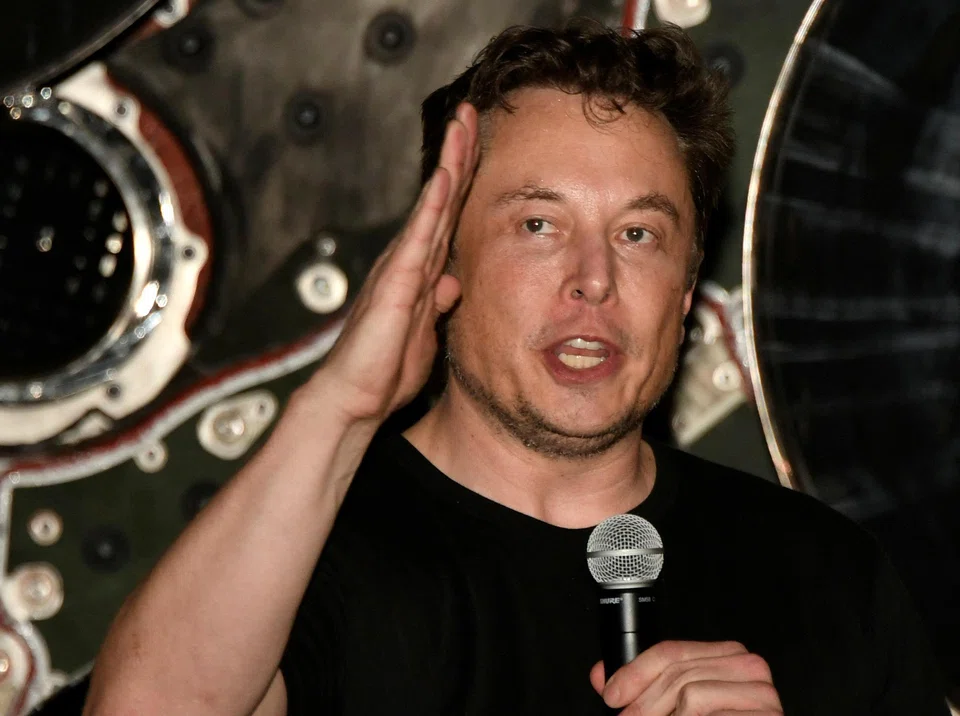
[AUSTIN, TEXAS] Elon Musk set out to tell a jury that his falling out with OpenAI was a simple tale of betrayal.
But the many questions that came up during the billionaire’s three days on the witness stand this week revealed the decade-long saga to be complicated – with twists and turns that cast some doubt on Musk’s version of events.
Musk has accused OpenAI, Sam Altman and Greg Brockman of subverting the mission of the artificial intelligence (AI) non-profit that the men founded together in 2015 by accepting billions of dollars in investments from Microsoft and turning it into a for-profit company now approaching a valuation of US$1 trillion and moving toward an initial public offering (IPO).
OpenAI, Altman, Brockman and Microsoft deny Musk’s allegations and argue he is trying to undermine a top competitor to his own company, xAI.
Musk was the first witness to testify at the high-profile trial in federal court in Oakland, California. Brockman, OpenAI’s president, is expected to be called to the stand Monday (May 4), and Altman, the chief executive officer, is likely to testify later in the case.
Musk told jurors about the dissolution of his relationship with his fellow co-founders and how he came to distrust their motives. But he also faced scrutiny over his financial support for the non-profit, his attempts to retain control of it and actions he has taken since creating a for-profit AI company that competes directly with OpenAI.
The world’s richest person has a solid track record in court, winning several trials where he testified. But he’s used to playing defence, punching holes in claims against him. In this case, he’s the one alleging wrongdoing by others and he needs his narrative to hold up under attack to prevail.
Musk spent hours recalling how a rift grew with his fellow co-founders over differing visions of who should lead OpenAI and how to structure it to keep pace with Google and other well-heeled rivals in the AI race.
The serial entrepreneur stayed on script in a back and forth with his own lawyer, and his well-timed quips on the stand elicited laughter from spectators in the courtroom.
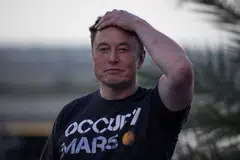
But he sometimes grew visibly irritated and combative under questioning by OpenAI’s attorney, William Savitt, who he suggested was asking “unfair” questions designed to trick him.
Among his concessions, Musk acknowledged that there was no document outlining the terms and conditions of his donations to OpenAI, besides the company charter. He was also forced to admit he didn’t deliver on a pledge to provide as much as US$1 billion in funding. His total contribution was US$38 million.
Musk tried to explain there was no need for a contract.
“If you make a non-profit, it’s a non-profit,” Musk said. “What more do you need to know?”
At other points in the cross-examination by Savitt, Musk was confronted with his own written words – and had to explain why he wasn’t being inconsistent.
In a 2016 email exchange with employees at Neuralink, his neurotechnology company, Musk said he was “concerned” that OpenAI wouldn’t be able to keep up with Google’s Deepmind AI project.
“Setting it up as a non-profit might, in hindsight, have been the wrong move,” Musk said in the email. “Sense of urgency is not as high.”
Musk told the jury repeatedly that he was amenable to OpenAI having a for-profit subsidiary as long as the non-profit entity remained the priority.
The jury and judge could reject Musk’s claims altogether if they find that he waited too long to sue. He faced pointed queries from Savitt about why he didn’t file a complaint sooner than 2024 if he was starting to lose trust in OpenAI’s other leaders as early as 2017.
Musk, who left OpenAI’s board in 2018, said it took time for him to realise that Altman and Brockman were violating the charity’s founding principles – and that it finally crystallised in 2022 when OpenAI accepted a US$10 billion investment from Microsoft.
In 2023, he founded xAI, whose Grok chatbot vies with ChatGPT and commercial offerings from other AI giants. xAI was recently acquired by SpaceX as Musk’s rocket maker prepares for an IPO.
But as much as Musk and Altman’s companies compete, Musk also disclosed on the stand that xAI “distills” OpenAI’s technology to compare chatbot responses.
“It is standard practice to use other AIs to validate your AI,” he testified.
There were also questions about Musk’s competing loyalties as both an OpenAI board member and the boss of Tesla and Neuralink, both of which are heavily invested in AI.
Savitt suggested that despite Musk’s fiduciary duties to OpenAI, in 2017 he was actually attempting to hire top researchers away from the non-profit to his other companies.
The topic of AI safety – ensuring that the rapidly-evolving technology conforms with human intent and ethical values – also put Musk in a tough spot.
He claims that OpenAI’s profit-seeking mission could have catastrophic consequences for humanity. But Savitt got Musk to acknowledge that his own for-profit company poses a danger with its commitment to investors and profits over a public mission.
“So xAI suffers from that safety risk?” Savitt asked.
“Yes,” Musk replied. BLOOMBERG
Decoding Asia newsletter: your guide to navigating Asia in a new global order. Sign up here to get Decoding Asia newsletter. Delivered to your inbox. Free.
Share with us your feedback on BT's products and services