
New Certis Corporate University to create future-ready workforce

The S$10m facility leverages innovative learning technologies, new teaching approaches to drive continuous learning

Chan Wai Peng
Published Mon, Nov 25, 2019 · 09:50 PM

    Singapore

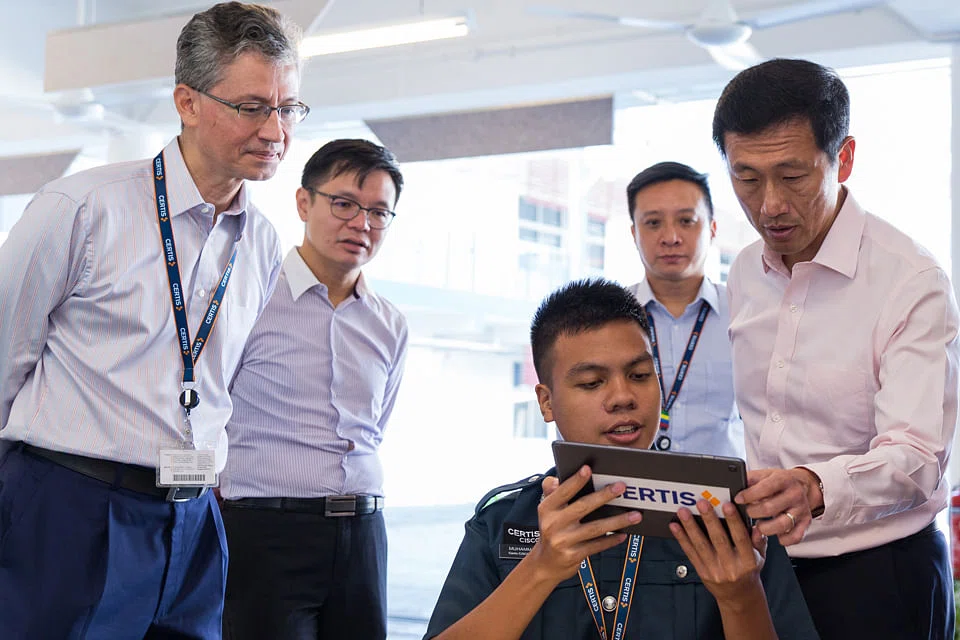
    THE Certis Corporate University (CCU) was launched on Nov 25 as part of Certis' commitment to invest in employees and build a future-ready workforce.

    The S$10 million facility leverages innovative learning technologies and new teaching approaches to drive effective continuous learning.

    Within the next three years, around 20,000 Certis employees are expected to benefit from over 30 programmes covering the use of several skills such as artificial intelligence.

    The CCU will replace the Certis Academy at Toh Tuck Terrace.

    Certis' Group chief executive officer Paul Chong said: "As we seek to continually be at the forefront of digital transformation, it is vital that our leaders and employees continue to stay ahead through upskilling and reskilling."

    The CCU will focus on three core areas - leadership development, training of a multi-skilled workforce for Industry 4.0, and supporting Certis' digitalisation, said Olivier Lim, chairman of Certis.

    "Through Certis Corporate University, we aim to equip our workforce with critical and industry-relevant skillsets, so that they are able to stay future-ready in this fast-evolving business climate, and set the standards in our industry and beyond," said Mr Chong.

    During the launch, guest-of-honour Ong Ye Kung, Minister for Education, gave insights to four things that he had observed the security industry - and many other industries - undertook in order to upgrade itself.

    Firstly, have better contracts such as those that adopt an "outcome-based" approach instead of a "manpower input-based approach", allowing for better flexibility and greater productivity.

    Secondly, welcome technology in order to overcome the industry's lack of manpower through complementing the strengths of both technology and manpower.

    Thirdly, upgrade the skills of workers in the industry through investing in training and skills development.

    And lastly, have important industry leaders take the lead for the change and guide others in the industry.

    Mr Ong emphasised on the third strategy, stating for any industry or company which operates on the "basis of a low-skilled and low-wage worker" that "there is no way you can sustain this model, at least not in the Singapore context".

    "This transformation (having more qualified workers) is critical for the industry and also for the whole Singapore economy," he said.