
Obscure Japanese firm ensures iPhones get slimmer, better
 Add BT as a preferred source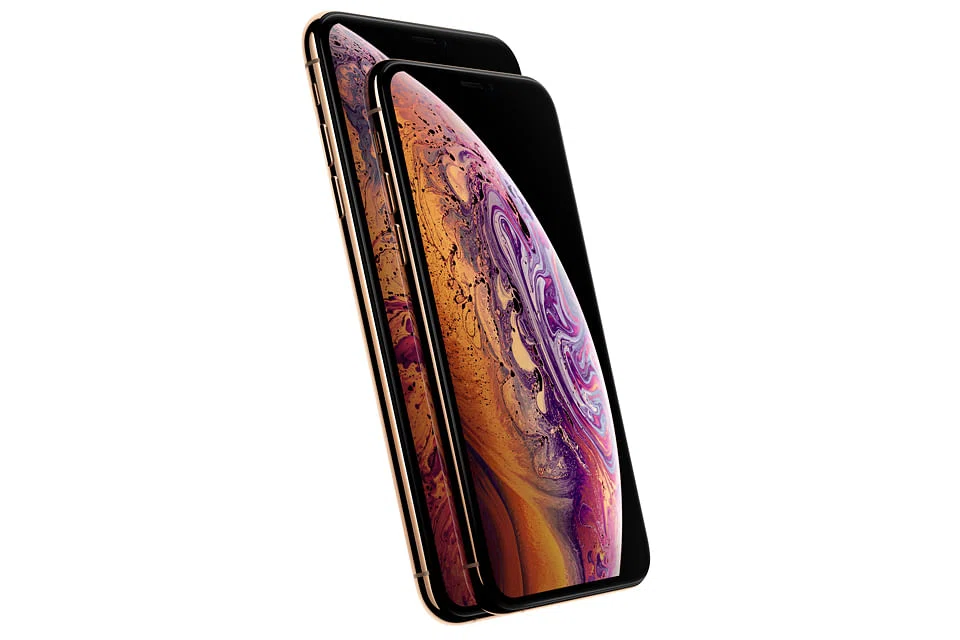
Tokyo
AFTER two decades in development, chipmakers are making a costly bet on a technology that will cram even more transistors onto silicon. Their success may hinge on a little-known company in the suburbs of Tokyo.
Lasertec Corp is the world's sole maker of equipment that tests glass squares slightly bigger than a CD case that act as a stencil for chip designs. By shining light through the squares, circuits smaller than the width of a few strands of DNA are imprinted onto silicon wafers in a process called lithography. These templates have to be perfect: even a tiny defect can make every single chip in the batch unusable.
Consumers take it for granted that gadgets will keep getting slimmer, more powerful and cheaper, but the chip companies are running out of ways to etch ever smaller circuit patterns onto silicon. After years of setbacks, the industry has settled on extreme ultraviolet lithography, which uses plasma as the light source to draw lines smaller than 7 nanometres. That's the size seen in Apple Inc's A12 Bionic chip, featured in the iPhone XS and XR.
In 2017, Yokohama, Japan-based Lasertec solved the final piece of the puzzle when it created a machine that can test blank EUV masks for internal flaws, giving it a monopoly. The company's stock has tripled since then.
Lasertec has already received orders for 4 billion yen (S$48.7 million) machines that test EUV blanks, according to Lasertec president Osamu Okabayashi. The company may see additional sales as soon as this summer, depending on how quickly Samsung Electronics Co and Taiwan Semiconductor Manufacturing Co ramp up mass production, he said. Lasertec closed 5.2 per cent higher in Tokyo on Tuesday, the biggest gain since the start of the month.
Navigate Asia in
a new global order
Get the insights delivered to your inbox.
"We spent six years developing this equipment," Mr Okabayashi said in an interview. "At this point it's become an industry standard and it would be very difficult for somebody else to enter the space."
An EUV mask, a sandwich of about 80 alternating layers of silicon and molybdenum, can fetch as much as US$100,000. Only two companies - glassmakers Hoya Corp and AGC Inc, both in Japan - manufacture the blanks. Lasertec's machines can spot problems early on, which is critical to making the technology cost competitive. "For EUV, masks have to be perfect," Mr Okabayashi said.
EUV lithography is so complex and expensive that so far only Samsung and TSMC have said they will use it to move to 7-nanometer chipmaking. Intel Corp has delayed its introduction, while difficulties in making EUV economically viable have prompted Globalfoundries Inc to reportedly abandon it altogether.
Samsung has said that the move lets it use chip area 40 per cent more efficiently, improving performance by 20 per cent and halving power consumption. Apple's 7-nanometer processor is manufactured by TSMC and is specialised for machine-learning applications. In the past few months, Qualcomm Inc and Huawei Technologies Co unveiled a 7-nanometre chip that will power 5G devices. BLOOMBERG
Share with us your feedback on BT's products and services

