

Paktor snags US$10m funding; Infocomm Investments partners Bansea to fund seed-stage startups
Singapore
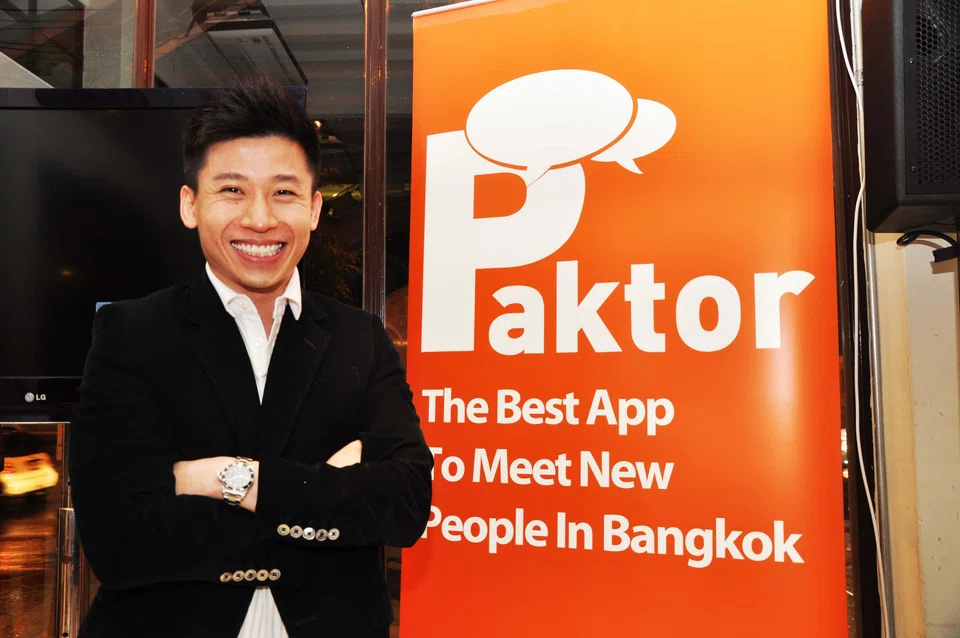
THE startup ecosystem scored two positives on Monday: homegrown dating platform Paktor snagged US$10 million in a new funding round, while Infocomm Investments (IIPL) has partnered Bansea (the Business Angel Network South-east Asia) to jointly invest in local seed-stage startups.
With the new money - which takes Paktor's total funding to-date to over US$20.5 million - the startup will expand into Japan and South Korea, deepening its presence across Asia.
Founded in July 2013, Paktor has amassed 15 million users. Its services include a mobile social dating app, a Web dating platform, and online-to-offline events such as one-to-one matchmaking and coaching workshops.
The startup is profitable, founder Joseph Phua told The Business Times. It operates on a freemium model, where users can pay to enjoy premium features such as search filters and suggested profiles. Paktor aims to hit "eight-digit US$ net revenue" in 2016.
Mr Phua said: "We're moving into Japan and South Korea after a year of planning as all factors are aligned, including having new Japanese and Korean stakeholders who will be able to assist the company on the ground."
Paktor's latest financing round saw participation by new investors YJ Capital (the corporate venture capital arm of Yahoo Japan), Global Grand Leisure, Golden Equator Capital and Sebrina Holdings Venture Capital. Existing investors Vertex Asia Fund, PT Media Nusantara Citra Tbk, Majuven, and Convergence Ventures also supported the round.
The "Korean stakeholder" - undisclosed - is investing via a neutral vehicle, BT has learnt.
Asked about exit strategy, Mr Phua said that Paktor is currently focused on growing its various business segments, most of which are in the early stages of growth. He added: "Exit will come in due time but it's not something that we strategise for."
IIPL has inked a co-investment partnership with Bansea to invest through Bansea One, a pioneer syndicate investment initiative formed in June 2016. Bansea One will invest S$50,000 each in 5-10 startups over a year. Under the partnership, the seed funding provided by Bansea may be complemented by additional co-investment capital from IIPL's US$200 million fund.
IIPL head Alex Lin said: "Our startup ecosystem has matured significantly over the years; we now see more startups coming through IIPL's Clinic@BASH weekly. A few years ago, we would have been hunting for startups. Providing seed investment into some of these young companies will continue to support their growth."
Bansea One is backed by the over 60 members of Bansea, who are Singapore-based angel investors dedicated to the development of angel investment in the region.
Membership is by-invitation only and members must be accredited investors; they include Mark Hon, Julien De Salaberry, Pierre Humblot and Hellmut Schütte.
Dr Hon, Bansea chairman, did not disclose Bansea's fund size - citing "commercial reasons" - but noted that Bansea's first fund was oversubscribed.
He added that Bansea One is a single investment vehicle working alongside partner funds, which include IIPL and homegrown collaborative fundraising platform Fundnel. Asked if syndicated investments mark the latest venture capital trend, Dr Hon replied in the positive. "There is increased interest as new business angels look to participate in the startup scene. They benefit from this setup as it allows them to invest along with more experienced business angels."
Isaac Ho, chief of private investment firm Venturecraft, affirmed that syndicated investments are on the rise in Asia.
He said: "Good projects are getting more expensive, and looking for know-how beyond what a single venture capital firm can provide."
He added that many venture capital firms in Singapore and Asia are small - managing S$20-50 million each - and are increasingly forming syndicated efforts to take on larger investments, as well as Chinese venture capital firms, which have deeper pockets.






