

Private markets slow to adopt tokenisation; still seeking clear use-case
Industry players disagree about the best applications for blockchain or distributed ledger technology, and many remain unconvinced of its benefits


BLOCKCHAIN technology was expected to liberalise illiquid, disparate and chunky private-market assets by breaking them into digital tokens; but adoption has been slow.
Industry players disagree about the best applications for blockchain or distributed ledger technology (DLT); many also remain unconvinced of its benefits.
Danny Toe, chief executive of private markets exchange ADDX, is among DLT’s proponents; but he admits progress is wanting.
“How tokenisation is used in the market is more piecemeal, so the benefit of using this tech is not fully there yet,” Toe said. “That’s why there is a lot of debate about whether it makes sense.”

ADDX last week launched a fixed-income marketplace for digitised commercial paper and bonds. Its maiden listing is a five-month commercial paper issued by Singapore and Hong Kong-listed real estate services company LHN .
As an indicator of demand, ADDX said LHN upsized its offering from S$5 million to S$10 million after receiving orders of over S$17 million.
LHN’s instrument used umbrella terms and an issuance process that ADDX said can be completed in “a matter of days” at possibly a tenth of the traditional cost.
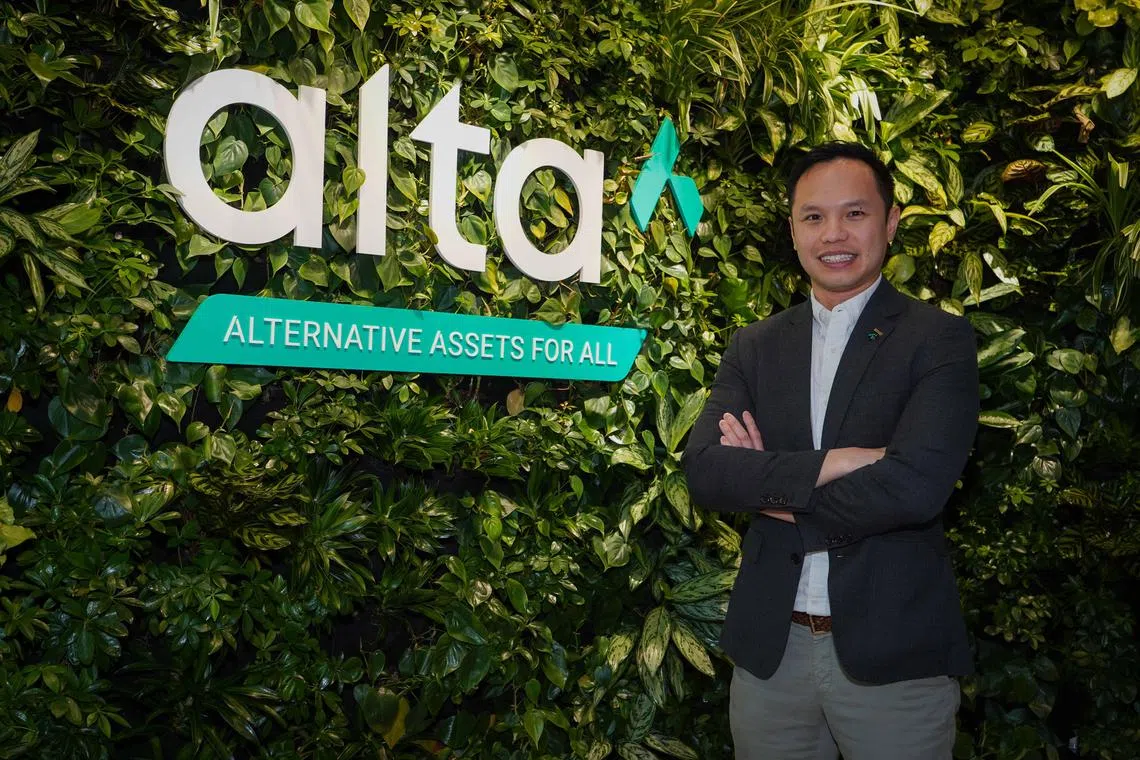
Reducing cost and time is something digital alternative assets marketplace Alta is promising too.
Kelvin Lee, Alta’s co-founder and chief executive, said digitally native funds “created entirely on blockchain” with limited physical documentation or lawyers could reduce costs by 20 to 30 per cent.
The tokenisation of equity in a private company, meanwhile, could do away with the need for a central securities depository that keeps track of who owns what.
Today, Lee noted, transfers of ownership for many assets cannot take place on a public holiday. DLT is able to automate such processes and more “so that human intervention is markedly reduced”, he said.
Private markets players told The Business Times that many tasks – valuation, disclosure, payments and record-keeping, among them – still require individually executed instructions, manual data entry in spreadsheets, e-mailed documents and even faxes.
In an industry with a two-and-twenty fee model, however, there is less of an emphasis on keeping costs down; and because clients are mostly institutions, volumes are low enough that the system still works.
An audience member at a recent webinar on tokenisation, hosted by trading solutions provider Calastone, summed up the scepticism with the question: “If tokenisation of funds is El Dorado or the promised land, why hasn’t it happened quicker?”
There is also disagreement about where DLT can make a difference, so managers are less inclined to accept the risks that come with early adoption.
To illustrate: one panellist on the Calastone webinar suggested DLT would be more useful for private funds than equities.
John Allan, head of the innovation and operations unit at The Investment Association, which represents investment managers in the United Kingdom, believes the “lowest use case (for DLT) is in the equities market, which is already fantastically efficient from a trading perspective”.
Alta’s Lee, however, had quite the opposite view. Speaking to BT, Lee said he sees less of a benefit for a fund and greater benefits for a private company tokenising equity.
Eric Chng, head of alternative solutions for Asia-Pacific and the Middle East at financial services conglomerate State Street, said there was often a misunderstanding about the various forms of tokenisation.
“There are (several) orders of tokenisation, and people don’t necessarily see the difference,” he said.
Asset-level tokenisation, for instance, involves splitting assets such as buildings into smaller tradeable units. Fund-level tokenisation, meanwhile, involves splitting a fund up for various investors. While similar, these orders operate differently and have differing benefits.
State Street has a digital assets arm that provides digital custody and tokenisation services, and is working on solutions that make sense for its clients.
Chng isn’t convinced that DLT is necessary for many forms of tokenisation at this stage, however, and he believes public markets structures such as trusts and funds can be adapted for some private markets assets too.
“You don’t need tokenisation. Tokenisation is just a sexy way of splitting ownership,” he said, adding that State Street has “no clients that have tokenised funds in any meaningful sense”.

Both ADDX’s Toe and Alta’s Lee acknowledged that DLT is not necessary for some of their products. “Of course there are other technologies that people can use to replicate what we are offering,” said Toe.
He added, however, that DLT can also automate some rules and processes using smart contracts, which traditional technologies cannot do. For instance, each issued token could incorporate rules about when it can be bought and sold, and how much money the holder is entitled to.
Such automation would lower the marginal cost of servicing one more investor and broaden access to private markets. “Tokensiation and blockchain still makes a lot of sense,” he said.
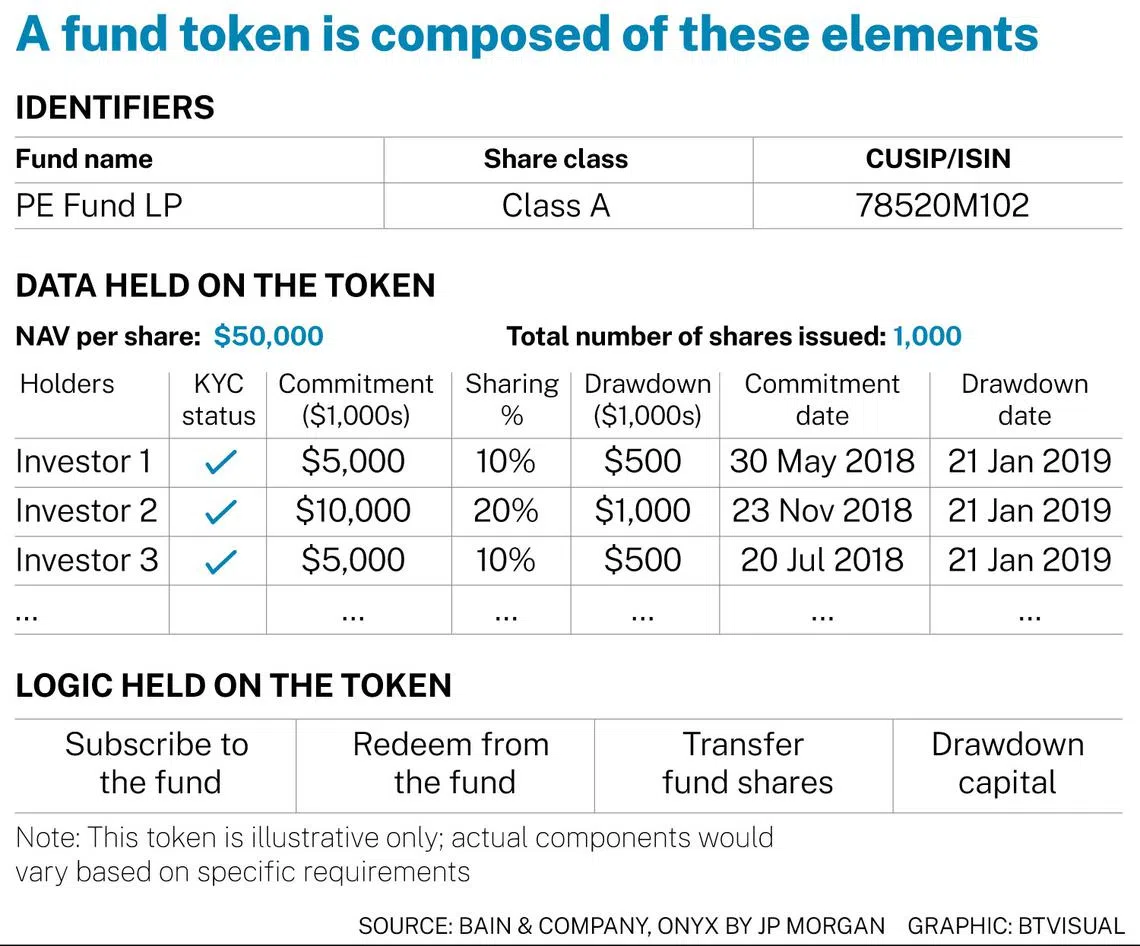
Adam Belding, chief architect at Calastone, said private markets assets can also be a great deal more complicated; and the “permutational complexity is quite explosive”.
Nevertheless, he said companies make the mistake of looking at promised benefits “thrown about” on the Internet or in news articles. They should instead ask: What am I trying to do with my business and can this technology potentially help me with that?
“That’s the piece that often gets missed,” he said. Calastone is working with fund house Schroders to tokenise an investment vehicle for variable capital companies, a corporate structure used for investment funds.
“Tokenising fund units will not provide the transformation that the industry is looking for,” Belding said. Operating collective investments on a native DLT platform, however, and applying DLT and tokenisation at all levels of the fund – from trading to administration and distribution – could provide a “much more fundamental transformation”.
Nisha Surendran, emerging solutions lead for Citi Digital Assets, added that the transition from traditional to digital infrastructure is complex.

“In the near term, tokenisation and DLT-based issuance and administration of assets would likely introduce new operational challenges and cost overheads, as industry players need to simultaneously grapple with the old and the new,” she said.
“Asset issuers and investors in different jurisdictions, including on upcoming private market exchanges, need solutions that connect supply to demand in a way that works alongside traditional capabilities.”
Toe echoes this sentiment, adding: “Different market participants must move together – banks, securities houses, fund administrators. That’s the only way we can fully realise the potential.”
TRENDING NOW

Singapore identifies 7 firms responsible for haze fires, notices issued urging action: Grace Fu

Could stablecoins be the future of money?

Singapore should prepare for prolonged haze until November, says Grace Fu

High Court rules against Julius Baer’s Singapore trust arm in US$50 million family trust dispute

