

Samsung's Q2 profit falls 8% as mobile unit's earnings slump
Less-than-stellar sales prompt electronic giant to promise flexible pricing of new flagship smartphone
Seoul
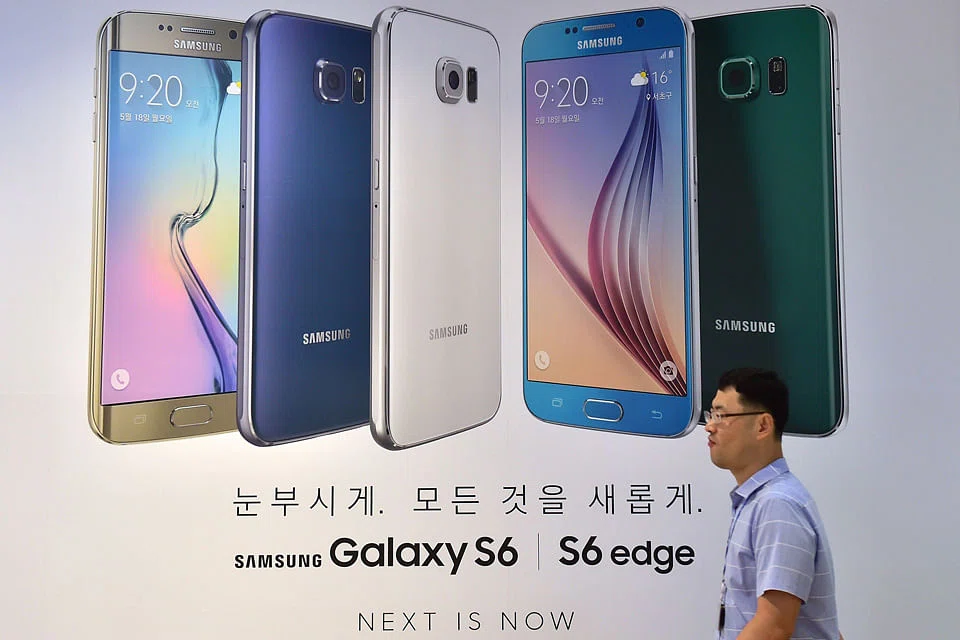
SOUTH Korean giant Samsung Electronics posted an 8 per cent fall in second-quarter net profit on Thursday and promised "flexible" pricing of its new flagship smartphone after less-than-stellar sales contributed to a slump in its mobile unit's earnings.
The world's largest smartphone maker said net profit for the April-June period stood at 5.75 trillion won (S$6.7 billion), down from 6.25 trillion won a year ago and slightly below analyst estimates.
The conglomerate has now seen its net profit decline for five straight quarters year on year, mainly due to heightened competition in an increasingly saturated smartphone market that it had dominated for years.
Operating profit also shrank 4.03 per cent from a year ago to 6.9 trillion won, while sales dropped 7.3 per cent to 48.5 trillion won.
Samsung has faced a double challenge from US arch-rival Apple in the high-end smartphone market and rising Chinese firms such as Xiaomi in the mid and low-end market.
Hopes of a turnaround had largely been pinned on the sixth edition of its flagship smartphone launched in April.
The Galaxy S6 and S6 edge with a wraparound screen received rave reviews, but company predictions of record sales fell short of expectations, partly due to production and supply constraints.
Operating profit in the mobile division was down 38 per cent year on year in the second quarter at 2.76 trillion won.
The company also announced on Thursday a mid-year dividend of 1,000 won a share, or 148.9 trillion won in total, compared to 500 won a year ago. But it did not stop investors from dumping Samsung shares in Seoul stock market, where the firm's shares dropped 3.8 per cent to close at 1.21 million won.
The second half of 2015 would continue to pose "mounting challenges", the firm said in its regulatory filing, with smartphone demand predicted to increase but at a lower rate.
"We will strive to maintain solid sales of high-end smartphones by flexibly adjusting S6 and Edge prices depending on marketing circumstances, while also launching new large-display models," Park Jin-Young, vice-head of communications at Samsung's mobile division, said during a conference call.
In an effort to see off smaller rivals nipping at its heels in emerging markets, Samsung slimmed down its line of low and mid-range smartphones last year, and ramped up production of those that remained in a higher-volume, lower-price strategy.
At the same time, booming memory chip sales have managed to mitigate some of the slump elsewhere, thanks to tight supply and strong pricing. Samsung said operating profit for its semi-conductor unit surged 80 per cent in the second quarter to 3.4 trillion won.
"Samsung's semiconductor business has a pretty good outlook down the road, but weakening demand for smartphones, LCD TV and personal computers will not be enough to improve future earnings," said Lee Jeong, analyst at Eugene Investment and Securities.
The company's recent slump has stood in stark contrast to the performance of Apple, which has seen profits gain sharply on strong sales of its latest iPhone series.
The US tech giant reported a 38 per cent profit jump for the second quarter last week to US$10.7 billion.
Apple sold 47.5 million iPhones in the quarter, with sales up 85 per cent in Greater China where the company's overall revenue more than doubled to US$13 billion.
Samsung's total handset sales for the same period stood at 89 million, down from 95 million a year ago, the company said. Smartphones accounted for around 80 per cent of the units shipped.
Thursday's conference call made no specific mention of further merger plans, as Samsung's founding Lee family seeks to boost control over the conglomerate ahead of a generational power transfer.
This month, the company scraped through a shareholder vote on the proposed merger of two affiliates, after a US hedge fund led an unprecedented investor revolt against the deal.
Although the anti-merger camp lost the final vote, its muscular campaign marked a watershed moment for shareholder activism in South Korea, where family-run conglomerates, or chaebol, such as Samsung dominate the economy and are used to running their businesses with minimum investor interference.
Despite slowing sales, Samsung remained the world's top smartphone vendor in the second quarter with a global market share of 21.7 per cent, according to a quarterly survey by research firm IDC. AFP
TRENDING NOW

Motoring tycoon Peter Kwee is back in court: Here are his previous legal battles

Demand, tech capabilities position Apac and AI as Skyscanner’s next growth frontiers: CEO Bryan Batista

Beyond the greenback, Vietnam’s big borrowers turn to Asian-currency bonds
Nvidia’s outlook cut to stable by Moody’s on governance concerns

