

Singapore can be No 1 fintech hub, says Citi official
Republic is already a springboard for digital innovation with the govt's strong support
Singapore
IN a recent report on the top fintech (financial technology) hubs in the world, audit, consulting and financial advisory firm Deloitte said Singapore is a "serious contender for the global number one spot in fintech".
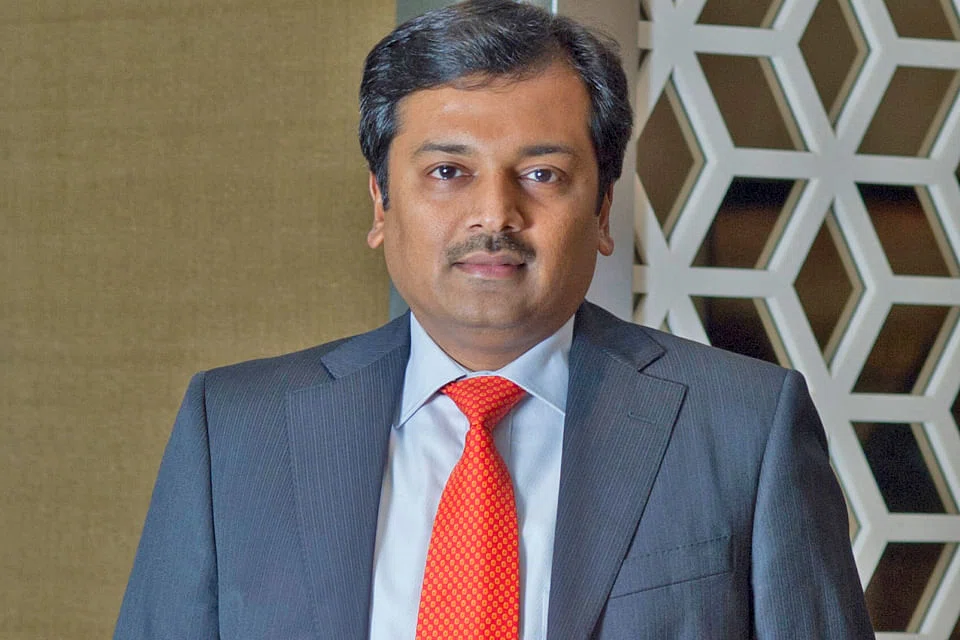
Agreeing with this assessment, Anand Selvakesari, Citibank's Asia Pacific head for global consumer banking, told The Business Times that the republic "is well positioned to be a leading fintech hub as it is already a springboard for digital innovation with the strong support from the government".
Referring to next month's inaugural Singapore Fintech Festival, Mr Selvakesari noted that Citibank looked forward to "connecting with the global fintech community and contributing to the further development of an already thriving ecosystem in Singapore". The Singapore FinTech Festival is being organised by the Monetary Authority of Singapore (MAS), in partnership with the Association of Banks in Singapore (ABS). Citibank is the festival sponsor.
Mr Selvakesari noted that Citi created a new unit called Citi FinTech in New York last October to lead the bank's transition to a smartphone-centric business model and reinvent how it works and what it delivers. Its mandate is to build the bank of tomorrow, delivering a radically simple, connected customer experience with the smartphone at its centre and it's making good progress, he added.
The Citi official added that fintech is part of the bank's efforts to transform its business model to be "simpler, dramatically faster, more scalable and digital". "We have embarked on a radical digitisation and simplification journey that is designed to deliver a remarkable client experience" whenever and wherever the client wants, he added.
The Citi official noted that the sheer scale of the fintech explosion - US$20 billion in venture cap in 2015 and 4,000-5,000 new startups - requires everyone to take a step back and recalculate their trajectory and speed. "This is a global phenomenon with significant activity in markets stretching around the world from the US to Asia-Pacific and our comparatives are changing.
"Best in class service leaders are defining customer expectations, not other banks. And the bar rises every day and we must rise to meet that challenge," Mr Selvakesari said.
Fintechs are a result of the new economy which is about frictionless transactions, curated customer journeys, higher value, seamless and remarkable customer experiences. Financial products are inherently digital products (powered by software and data) and are therefore highly amenable to digital sales and delivery, Mr Selvakesari said.
"At the moment, disruption is on the periphery. While fintechs bring superior agility, focus, cost efficiency, and a disruptor's mindset, incumbents (traditional banks) still have the upper hand in terms of scale, brand, balance sheet and ability to deal with regulation," Mr Selvakesari noted. He added that as a result, pitting incumbent banks against startup fintechs in a winner-take-all competition is "appealing to many but not an accurate view of the current or future landscape".
Explaining, Mr Selvakesari noted that fintechs cannot easily build the secure and sizable infrastructure of large banks, and no single bank could consistently produce the latest digital experiences that would be better than the best emerging out of the fintech ecosystem.
"In my view, the key is for banks to become extraordinarily adept at integrating the best fintech innovation. Fintechs need the scale and other strengths incumbent banks already have. Banks need to keep up with the evolving environment, for their customers' sake and for their own. And consumers need choice, and to be able to trust that their interests are protected.
"Ultimately, I believe it will be a vastly better future for consumers and I hope a vastly better future for our industry as we recraft strategy, structure, processes and culture to fully realise the power and potential of new technology, whatever shape that takes," Mr Selvakesari added.
The Citi official noted that the bank is already a big player in the digital space. "Citi in Asia draws around 20 million visits to our online properties every month and 90-95 per cent of all transactions already happen outside the branches.
"One out of every four new credit card accounts acquired comes from digital sources and over 50 per cent of our clients are actively using digital banking channels. We are targeting 10 million active digital customers within the next two years from a client base of around 15 million consumers in Asia, he added.
He noted that Citi's global mobile application is being rolled out across Asia in 2016. This is the latest Citi mobile app, featuring a world class user interface that is developed upon extensive research in multiple countries and includes new features such as Snapshot and Touch ID - which provides customers with quick access to an overall snapshot view of their deposits, credit card balances and recent transactions without having to log on to their accounts, he noted.
"This new app has had phenomenal success in gaining traction amongst our customers with its easy-to-use functionality and interface that have enabled our customers to bank wherever they want conveniently with over 500,000 downloads in Asia so far."
Mr Selvakesari added that customers have told Citi that they prefer ease of authentication when calling the bank's hotline. "We heard them and have since introduced voice biometrics authentication - the first bank in Asia to do so - which allows our customers who call into our contact centres to have their identity automatically verified within 15 seconds or less.
He noted that the bank has, till now, introduced voice biometrics in Singapore, Australia, Hong Kong and Taiwan. "We will be rolling out to all our consumer banking markets in Asia-Pacific in the coming months. With around 15 million consumer banking customers in the region, we expect to have at least one million customers actively using voice biometrics authentication over the next 12 months."
Mr Selvakesari noted that while globalisation and urbanisation are prevailing trends, digitisation is by far the most powerful, disruptive force transforming the way we live, work, engage, consume and communicate. "Never before in human history has a common technology been adopted at the rate of the smartphone. The world has chosen smart devices, fast networks, brilliant apps and cloud computing as the new solution stack.
"It has the capacity to be vastly more powerful, vastly more convenient at a fraction of the historical cost. No industry is immune - music, media, retail, transportation, travel and, of course, banking. I call it the extinction phase where you either rapidly adapt and new life forms are created and new means of competition are created or you go extinct," Mr Selvakesari added.
TRENDING NOW
US dollar falters after Iran’s offer to reopen Hormuz sends oil lower

He built the Vingroup empire. Now South-east Asia’s richest man is handing some key roles to his sons
Floods compound Philippine growth woes from public-works scandal

Tokyo reverses baby bust with AI matchmaking and generous subsidies

