

Slow to change, Kodak now clings to a future beyond film
But CEO Jeff Clarke is mining the history of the company for its underlying technologies
New York
OF THE roughly 200 buildings that once stood on the 526-hectare campus of Eastman Kodak's business park in Rochester, New York, 80 have been demolished and 59 others sold off. Terry Taber, bespectacled, 60, and a loyal Kodak employee of 34 years, still works in one of the remaining Kodak structures, rubble from demolition not far from its doors.
Mr Taber oversees research and development at Kodak. Many people might be surprised to know that Kodak is still in business at all, much less employing someone in the hopeful-sounding enterprise of developing new technology ideas. But if the film company, which emerged from bankruptcy in 2013, has any light in its future, Mr Taber is likely to have something to do with it.
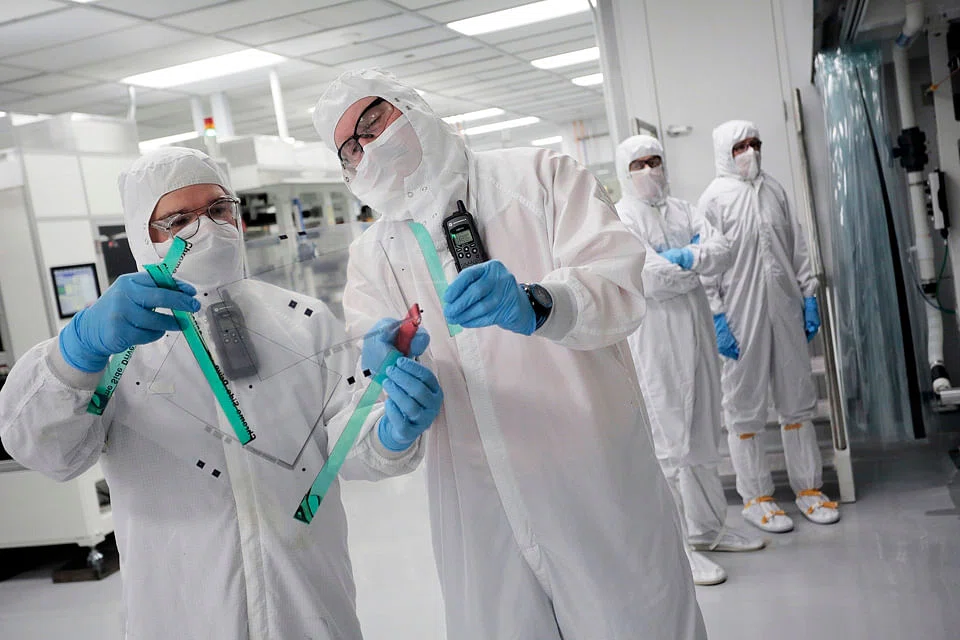
In a warren of basement labs, some of the 300 scientists and engineers who work for Mr Taber are studying nanoparticle wonder inks, cheap sensors that can be embedded in packaging to indicate whether meats or medicines have spoiled, and touch screens that could make smartphones cheaper.
Much of this is old stuff, left over from the company's glory days. But Mr Taber's boss hopes that somewhere in those projects there might be a nugget of gold.
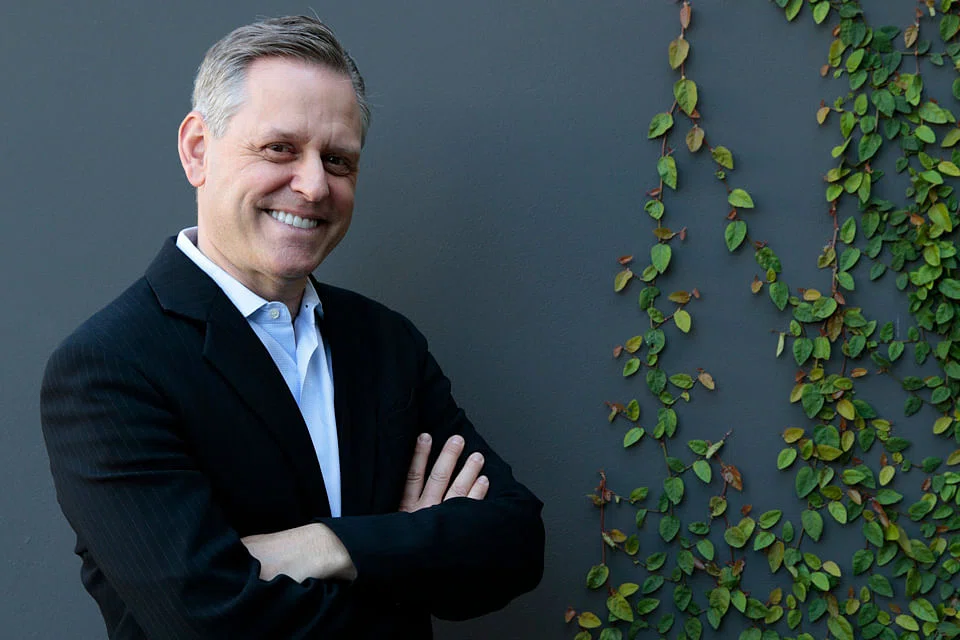
"I'm mining the history of this company for its underlying technologies," said Jeff Clarke, 53, who became Kodak's chief executive last year. Mr Clarke has no delusions that Kodak could bring those technologies to market on its own; it will need corporate partners to make actual products. "We'll never be able to prosecute the value of our intellectual property with Kodak-branded sales," he said in an office in the same tower where George Eastman once looked out on his global tech empire.
What happens after a tech company is left for dead but the people left behind refuse to give up the fight? At Kodak, the answer is to dig deep into a legacy of innovation in the photography business and see if its remaining talent in optics and chemistry can be turned into new money in other industries.
Once a household name as big in its day as Apple and Microsoft have been for later generations, Kodak was part of everyday life, its film - sold in a yellow box - recording births, vacations, weddings. And then Kodak became a cautionary tale about what happens when a tech company is slow to change. For Kodak, the advent of digital photography was ruinous. Today it has US$2 billion in annual sales, compared with US$19 billion in 1990 when consumer film was king. It now has 8,000 employees worldwide; it had 145,000 at its peak.
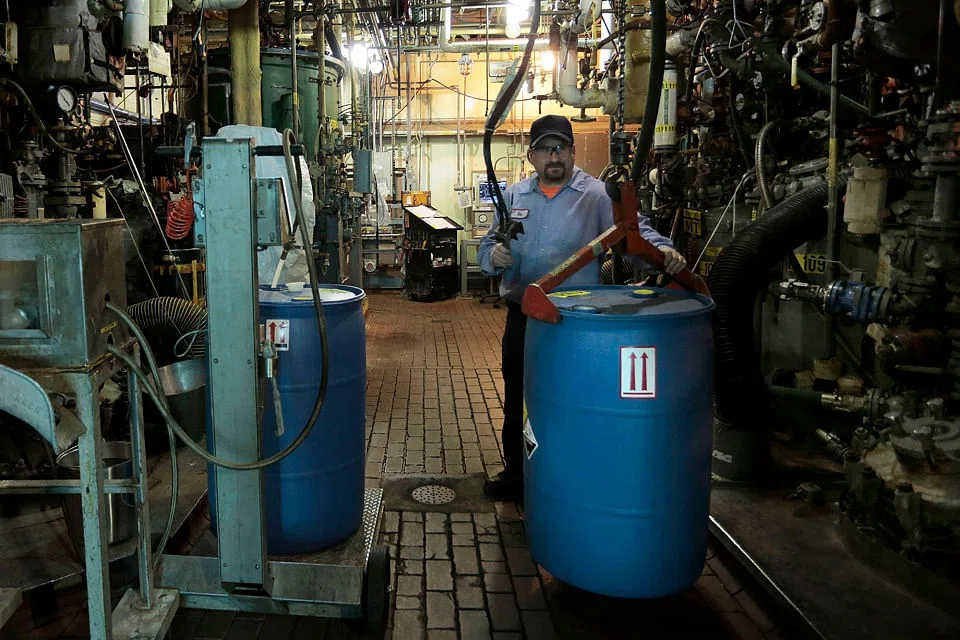
Since emerging from bankruptcy, the company has mostly served niche film markets - there are still a few die-hard directors who refuse to shoot digital - and provides equipment for printing newspapers, on packaging and the like. Much of its revenue comes from legacy businesses. For Kodak's new chief executive, along with veterans like Mr Taber, the key to survival is in its research legacy, thousands of patents and a coterie of scientists who are making new discoveries.
At the research lab, a laser prints a 256-count mesh of silver wires one-hundredth of a centimetre across, thinner than a credit card, in one second. That technology could be the basis of a new kind of phone screen, cheaper and more useful than the touch screen. It is work that Mr Taber and his veteran team are clearly proud of.
"People ask me why I'm still here," he said. "It's because I see the possibilities."
Mr Clarke is impatient. He came to Kodak a year ago and says he was shocked that the company had done so little to capitalise on the work of its scientists. Kodak's technology for packaging sensors, he noted, was developed years ago. No one figured out what to do with it.
"We missed enormous opportunities," he said. Kodak has a market capitalisation of about US$800 million. He noted that GoPro, a maker of cameras for extreme sports, is worth more than six times as much.
Mr Clarke was raised in Hamilton, New York, not far from Rochester, and got an economics degree from the State University of New York at Geneseo. He has seen the industry through several periods of upheaval. Mr Clarke started at the Digital Equipment Corp (DEC), another tech giant doomed to miss a big technology change, the PC boom of the 1990s. DEC eventually merged with Compaq Computer, a PC maker, in 1998. When Compaq then merged with Hewlett-Packard (HP) in 2002, Mr Clarke, by then a well-regarded financial manager, was one of two people in charge of the merger and of shedding 15,000 of 145,000 combined employees.
The merger created years of internal strife, but saved US$2.5 billion and gave HP a commanding market share in personal computers and computer servers. In line to become HP's chief financial officer, Mr Clarke left the company abruptly in 2003, saying he was tired of waiting for the job. HP termed his exit "mutually agreed to and appropriate".
After the unceremonious departure from HP, Mr Clarke became something of a corporate mechanic, shaping up companies with layoffs and other cost-cutting, and working closely with private equity and venture investors. He became chief executive of Travelport just before it was acquired by the Blackstone Group, and managed the initial public offering of Orbitz, which Travelport owned. He came to Kodak last March, having been contacted by a headhunter retained by the private equity groups that bought most of Kodak's debt.
Kodak re-appeared on the public markets in September 2013, though the bulk of the company is still owned by private equity and investment firms, including BlueMountain Capital Management, Franklin Resources and Serengeti Asset Management. "We invested in Kodak because it was, and is, an attractive, asset-rich, operational turnaround story with exciting technologies centered on digital printing," Jody LaNasa, the founder and managing partner of Serengeti, wrote in an email. Serengeti indicated it will hold on to its Kodak assets for a long time.
With about US$750 million in cash, a 2014 net loss of US$114 million and possibly more losses this year, the company needs to find partners to help develop and sell what Mr Clarke thinks Kodak can offer. Among his partners for future business is Bobst, a US$1.3 billion Swiss company that makes machinery to manufacture cardboard boxes. Bobst is interested in using Kodak's digital printing technology to personalise packaging, said Jean-Pascal Bobst, the chief executive. "It could be revolutionary for corrugated boxes." Other partners include a printing company in Utah and a machinery company in Rochester that is owned by a refugee from the old Kodak and is working on the touch screens.
Much of the technology, like the packaging sensors, existed inside Kodak long before Mr Clarke arrived. Last summer, Mr Clarke created a new division, Kodak Technology Solutions, to incubate more businesses.
"We have invisible inks that people could use in anti-piracy or counterfeiting, sensors for smart packaging, maybe antimicrobial threads for medicine that use silver," said Eric-Yves Mahe, Kodak's head of software and the head of Kodak Technology Solutions. "The challenge is, people have been shaken."
Kodak was a prototype tech company.
George Eastman built and defined Kodak. In Rochester, people still refer to Eastman by his first name, the way the names "Bill" and "Steve" have special meaning in Seattle and Silicon Valley. Mostly residents talk about what George might have done to stop Kodak's decline.
A micromanager to rival Apple's Steve Jobs, Eastman found time in the middle of an antitrust investigation to badger underlings about Kodak's rubber bands. He hired detectives to check on the loyalty of his salesmen. He also gave workers a theatre that showed free movies to each of the three daily work shifts.
In 1932, his health failing, Eastman discussed numerous poisons with his doctor and had the physician outline on his chest the location of his heart. In the end, the 77-year-old chose a Luger, leaving behind a note that read, "My work is done - Why wait?"
Eastman's paternalistic legacy lasted decades after his suicide. Kodak's yellow-and-red logo was on free backpacks at the Rochester Little League, free floats at the town pool, free lunchboxes and tote bags. Unlike Google, Kodak didn't transport employees on private buses. People bought cars using guaranteed annual bonuses.
Kodak tried to change and grow. It diversified into pharmaceuticals, paying US$5.1 billion for Sterling Drug in 1988. Kodak's researchers invented digital photography and put the technology in professional cameras in the 1990s. There were plans to move to digital consumer cameras, but the cash Kodak made on traditional photography made it complacent.
There always seemed to be time.
By 2001, even before smartphone cameras, film sales started to fall 20 to 30 per cent every year. A huge expenditure to get Kodak into home printing, a last bid for the consumer, failed.
Mr Clarke isn't pursuing anything so ambitious. And while Kodak was synonymous with Rochester for decades, the new CEO lives across the country in San Francisco, where he stayed after the HP merger. While he has appeared at some local events, he has yet to meet Rochester's mayor and rarely stays in town more than a few nights at a time. Few see him in the traditional Kodak mould, an executive who will be around for decades.
"Clarke is what Kodak needs," said William Pollack, who runs the Kingsbury Corp, the small Rochester-area manufacturer that is teaming up with the new Kodak on touch-based sensors. "He's more like an entrepreneur, and he never sleeps in the same place two nights running. People say, 'He's not Rochester, he's not Kodak.' I say, 'Good for him.' "
Spend much time around Kodak, and the company's faded glory is apparent. Mr Clarke emphasises the power that history still gives the Kodak brand. But the odds are stacked against his salvage job.
"The question isn't tech-related, it's competition," said Amer Tiwana, an analyst at CRT Capital Group. "Kodak's intellectual property seems to be slightly better, but the hazard is that their competitors, eight or 10 strong ones in each market, kill them on pricing. They might never get to profitability on the new stuff."
In 2013, Kodak sold 1,100 patents related to digital image capture to a group of 12 companies, including Apple, Samsung and Facebook, for US$527 million. Kodak retained the same access to the patents as the bidders, should it wish to compete in, say, photography once again. And it kept about 7,000 other patents, largely connected to the chemistry and physics of creating images, which the market sees as having relatively little value.
Commercial film is a dwindling business. The 3.47 billion linear metres of film Kodak manufactured as late as 2007, enough to circle the earth about 88 times, has shrunk 96 per cent. In July, just three months after he took over, Mr Clarke moved to retain part of the past. Supported by directors such as Quentin Tarantino and JJ Abrams, he reached an agreement with major Hollywood studios to continue buying Kodak movie film for several years. The deal was formalised in February.
"It's still an important business for us. We had to make sure we had a way to sustain that," said Mr Clarke. "It would have been 300 more jobs lost, another factory shut. Besides, we want to keep it open, because that's where we'll produce the touch screens."
Mr Clarke says the culture George Eastman created is a problematic legacy. At an October meeting of 80 employees, he was asked when Kodak's 20-plus years of layoffs would end. "My answer, of course, was 'Never,' " Mr Clarke recalled. "No individual company can say that things aren't going to change." Some people thanked him for the candour, after years of promises that this cut would be the last. In December, Mr Clarke made good on his word, with more restructuring and layoffs.
There is, indeed, no sign that the changes will stop coming. NYT
TRENDING NOW

Nvidia reinstates Jensen Huang as CEO; Trump says move poses no national security risk

Indonesia’s coal tycoon Low Tuck Kwong replaced as Bayan Resources president-director

Nvidia surges 33% after reinstating Jensen Huang, reviving AI trade; stocks soar in US and Europe

Consider lowering homeownership barriers for some non-resident foreigners

