

Tapping the power of connected data through the cloud
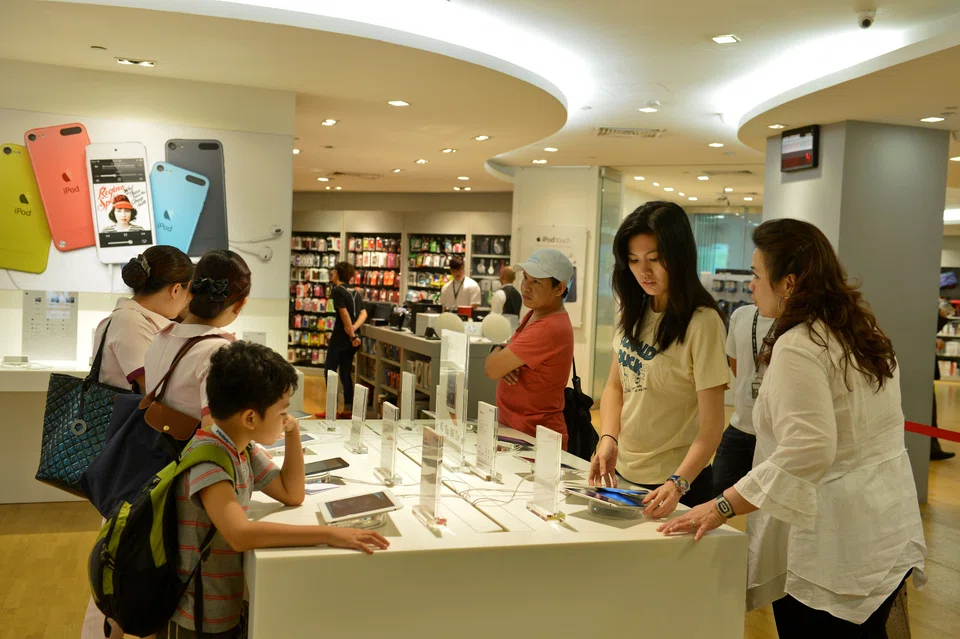
THE proliferation of connected devices is transforming the way we interact with each other and with objects around us. Even as the number of connected devices continues to grow, it is not just about getting countless unconnected devices online. The key lies in being able to consume the data streamed from each device, to use that connected data to extract insights and use that information in a practical and intelligible way.
Asia is expected to be at the forefront of the connected ecosystem revolution within the next five years, with analyst firm IDC predicting the Internet of Things (IoT) to be a US$678 billion market opportunity for Asia-Pacific, excluding Japan (APEJ).
In fact, in the APEJ region alone, there will be 8.6 billion connected "things". Recognising this opportunity, a number of governments across Asia have pushed ahead with digital economy initiatives, and smart city initiatives, such as India, South Korea, Malaysia, Thailand, and Singapore.
Singapore's Smart Nation programme, which seeks to harness the power of Infocomm Technology (ICT), networks, and data to support better living, is a prime example of how connected devices are transforming our lives. From smart mobility and smart living initiatives that bring citizens data, and trialing smart technologies, Singapore is an ideal test bed for the future of connected living. The cloud plays a critical role in harnessing data produced from billions of connected devices.
The Infocomm Development Authority of Singapore (IDA) announced the launch of a Data-as-a-Service (DaaS) pilot during late 2014, which is an important building block for Singapore's Smart Nation push.
IDA signed a Memorandum of Intent (MOI) with Amazon Web Services to provide the global cloud computing platform for data providers to make available their datasets so that developers can easily build services and applications, or value-add unto existing datasets.
As the connected ecosystem continues to grow, we are seeing companies across a vast range of industries innovate and disrupt their own ecosystems with the cloud.
Healthcare
Digital connectivity is changing how healthcare services are being delivered. Areas that have trouble accessing modern healthcare facilities and experts can now do so. These technologies have helped emerging markets around the world provide better healthcare services to its citizens.
Currently, there is a shortage of radiologists in many countries around the world. Lifetrack Medical Systems, an innovative healthcare solutions provider based in Manila, is addressing this challenge by leveraging today's most advanced cloud computing technologies to bring its software and services to clients, anywhere in the world.
Specifically, Lifetrack Medical Systems pairs up resident radiologists with experienced local and international practitioners through a cloud-based solution. The resident radiologists make an initial reading of the medical scans and images in a browser-based viewer that supports their assessments with interactive educational content. A report is then submitted for a more experienced senior radiologist to review, edit and provide further comments. This cloud-based approach has greatly accelerated the learning process and raised the standard of the resident radiologists, achieving sustainable social impact through the global scale of radiology training.
Location
Location-aware technologies and their sensors in our mobile devices, connected cars, and environment, have become ubiquitous. But the key to improving location services is data - lots of it. By analysing data collected about users' personal habits and preferences, location-based services providers can develop patterns of usage that let them provide a wider variety of relevant services.
A great example is GrabTaxi, the taxi-booking app that has grown astronomically since its public launch in 2012, and that has launched services across South-east Asia. GrabTaxi leveraged the cloud platform to create and deploy a system that had the processing ability to locate where the customers are as well as where the nearest taxi to the customers was located. Location-based services also afford GrabTaxi's customers a sense of security as the driver is tracked by the system throughout the journey. Using the cloud enables GrabTaxi to process 12 bookings per second and provide consistently good user experience, as well as efficiently analyse data related to the usage, location and trip experience of both the passengers and drivers.
Finance
In the quest for making financial services available to more people, a new breed of financial-technology companies have presented a new approach in the way banks could assess borrowers' creditworthiness. Traditionally, individuals who do not have a bank account or credit history would not have easy access to credit. Now Lenddo, a provider of credit scores for financial institutions, is introducing the inclusion of thousands of other variables, such as social media data to more accurately assess one's ability to pay, even with the lack of a credit history. The ability to analyse vast amount of data points is made possible through the use of big data analytics, powered by today's most advance cloud computing technologies.
It's not enough any more to simply perform historical analysis and batch reports. In situations where one needs to make well-informed decisions in near real-time, the data and insights must also be timely and immediately actionable. Cloud allows the processing of data as it flows into applications, powering real-time dashboards and on-the-fly analytics, and enabling real time decision-making. Its scalability allows businesses to continuously capture and store vast amounts of data points per hour from a large number of diverse sources such as website click-streams, financial transactions, social media feeds, IT logs, and location-tracking events to use streaming data to power real-time dashboards, generate alerts, implement dynamic pricing, and more.
A great example is Akindo Sushiro, the market-leading sushi restaurant chain in Japan, with over 356 conveyor belt sushi restaurants throughout the country. Harnessing the power of cloud computing, Sushiro analyses billions of data points on their customers' order behaviour to forecast demand, thus reducing wastage and consequently, lowering costs. Each plate on the conveyor belt is equipped with a RFID (Radio Frequency Identification) tag and whenever a customer lifts the plate off the belt, a data stream is sent to the cloud where it is analysed real-time using their existing business intelligence tools. The results are relayed to Sushiro's ordering system, via a monitor screen in each shop's kitchen, the amount of sushi and types of raw materials required to serve each shop's customers in two intervals of 60-seconds and 15-minutes from the point in time when customers place their orders. By deploying this unique cloud-based real-time business computing model to analyse vast amount of data, Sushiro has drastically reduced raw material inventory and food disposal loss by 98.5 per cent.
Today, the cloud has become the "new normal". Connected data that is driven by real-time, contextual and location-based insights have become increasingly ubiquitous, enabled by cloud computing that is critical for data collection, fast processing, analysis and collaboration in order to make insightful decisions to drive desired business outcome. Given the large volume of data that is generated and processed by connected devices today, it is impossible to do it anywhere else efficiently but the cloud.






