

Tencent plans to take US-listed streaming firm DouYu private: sources
 Add BT as a preferred source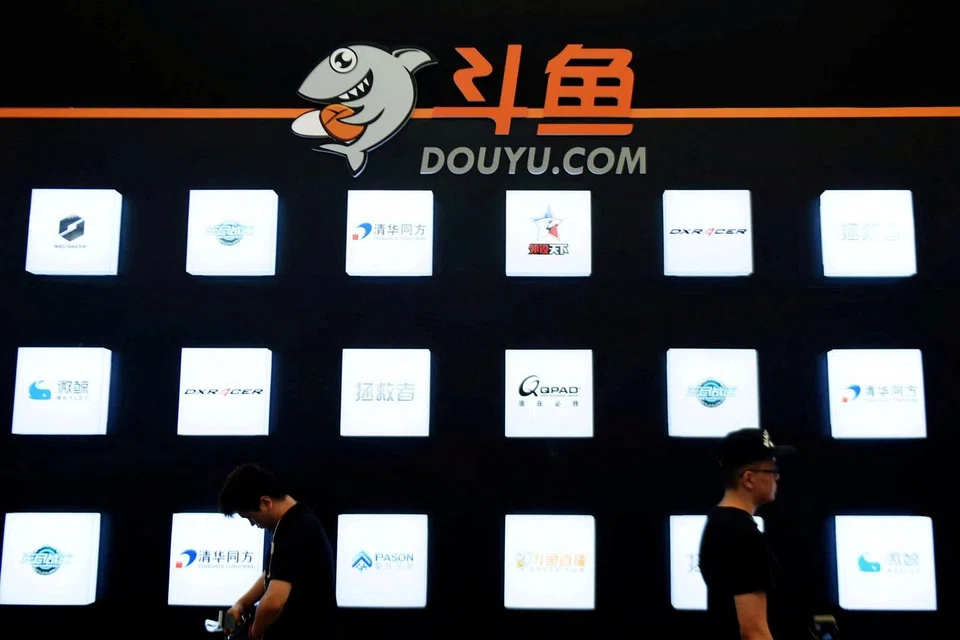
DeeperDive is a beta AI feature. Refer to full articles for the facts.
[HONG KONG] Tencent plans to take DouYu International private amid disagreements over strategy among executives at the Chinese videogame streaming firm, 2 people with direct knowledge of the matter said.
Tencent, the biggest shareholder in Nasdaq-listed DouYu with a 37 per cent stake, wants to team up with at least one private equity firm for the deal and is currently talking to investment banks, they said.
It is aiming to complete the deal this year, said one of the people.
Shares in DouYu, one of Tencent's main platforms for game marketing and China's No 2 videogame streaming site, surged as much as 17.6 per cent on the news, closing 14 per cent higher on Thursday (Jan 27).
The company has been debating its business strategy after Tencent's plans to merge it with bigger rival Huya were blocked by regulators in July last year on antitrust grounds.
There have been differences among DouYu executives over whether to stick with game livestreaming as its core business or shift towards more profitable entertainment livestreaming, said the other person.
Navigate Asia in
a new global order
Get the insights delivered to your inbox.
That tension has not abated even after DouYu co-founder and co-CEO Zhang Wenming, who had favoured diversifying revenue streams, resigned last month, the person added. DouYu has said Zhang's departure was due to personal reasons. Co-founder Chen Shaojie now runs the company.
The take-private plans reflect Tencent's desire to have a firm grip on its core gaming affiliates at a time when it faces a raft of regulatory issues, said the people, who were not authorised to speak on the matter and declined to be identified.
DouYu's stock price has slid 60 per cent since July, giving it a market value of US$717 million on Wednesday. This meant it is attractively priced for a take-private deal, they added.
Tencent and DouYu declined to comment. Zhang and Chen did not immediately respond to a request for comment made via DouYu.
Tencent, owner of hit games Honor of Kings and PUBG Mobile, has like other Chinese Internet firms been grappling with a regulatory crackdown on the sector and in the third quarter posted revenue growth of just 13 per cent - its slowest since it went public in 2004.
In addition to the blocking of the DouYu-Huya deal, it has also had to contend with efforts by authorities to rein in gaming by minors, while curbs on other industries have also dampened advertising appetite.
At the same time, competition is growing both at home and globally.
ByteDance, owner of Douyin, the domestic version of Tiktok, and which also has a games unit, has made sizeable inroads into the video games business. Microsoft last week said it would acquire Call of Duty maker Activision Blizzard for US$68.7 billion in cash - the biggest gaming industry deal in history.
New rules in the offing from China's cyberspace regulator will also require the nation's big Internet companies to seek approval for new investments and fundraising, sources have told Reuters.
The regulator has denied issuing a document to that effect.
"In such a challenging regulatory and competitive environment, it is becoming more important for Tencent to strengthen the control of existing gaming-related portfolio companies such as DouYu," said the second person.
There have been some US$13.7 billion in take-private deals for US-listed Chinese companies over the past 2 years, compared to a combined US$5.8 billion for 2018 and 2019, according to Refinitiv data.
Undervalued shares and increased scrutiny by US regulators have often been cited as reasons for the deals. The average premiums paid by buyers jumped to 53 per cent last year from 36 per cent in 2020, the data showed. REUTERS
Decoding Asia newsletter: your guide to navigating Asia in a new global order. Sign up here to get Decoding Asia newsletter. Delivered to your inbox. Free.
Share with us your feedback on BT's products and services
TRENDING NOW

Air India asks Tata, Singapore Airlines for funds after US$2.4 billion loss
Beijing’s calculated silence on the Iran war

China pips the US if Asean is forced to choose, but analysts warn against reading it like a sports result

Richard Eu on how core values, customers keep Singapore’s TCM chain Eu Yan Sang relevant

