

Thailand's 'startup godfather' sees crisis as opportunity
Bangkok
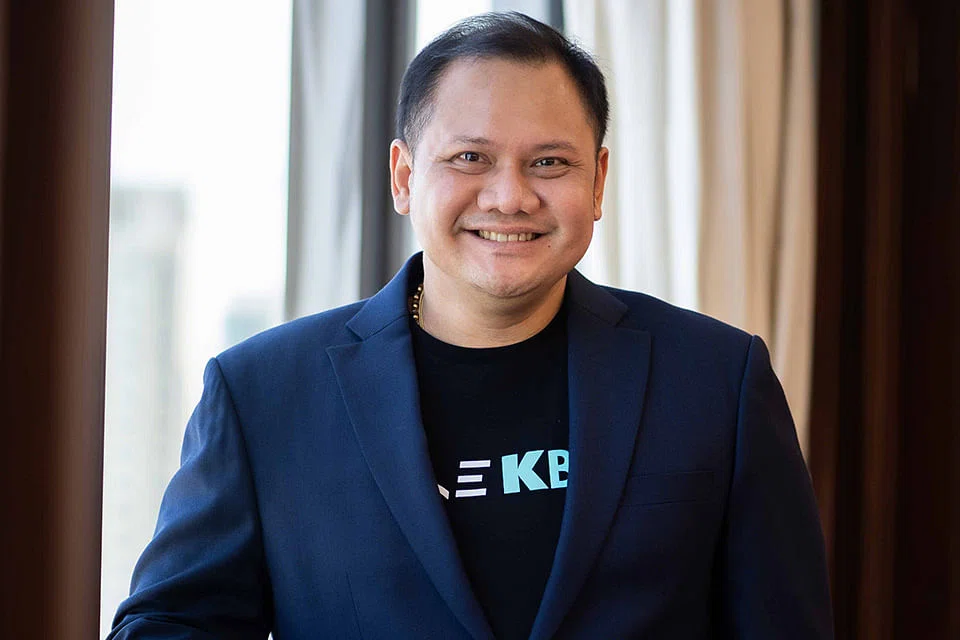
HE is 43 years old, charismatic and widely regarded as Thailand's "start-up godfather", having invested in dozens of startups during his career.
Ruangroj Poonpol, the chairman of Kasikorn Bank's digital arm, is a recognised face in the country's technology sector, and these days he is eager to make the most of the disruption brought about by the ongoing Covid-19 pandemic.
"This is a crisis in itself, but it presents an opportunity to do things differently. It gives us a mandate to accelerate ourselves in terms of digital transformation," said Mr Ruangroj, a man who is also known by his childhood nickname "Krating", or bull.
In a recent interview with The Business Times, the Stanford Business School graduate spoke of how the pandemic has made his job at Kasikorn Business Technology Group (KBTG) a lot easier.
KBTG is a technology company under Kasikorn Bank, which is Thailand's second largest lender in terms of assets.
KBTG was set up to make the bank a leader in digital transformation, a key priority given how Thailand's top six banks have invested heavily in cyber banking, e-wallets and new applications.
"We are doing many things now that we couldn't last year, like working from home 100 per cent while maintaining security," said Mr Ruangroj, who became chairman in January 2019 after stints at McKinsey and Google.
"The pandemic accelerated the digital transformation that was expected to take shape over two years into two months," he added.
KBTG's pandemic-related innovations have included new applications facilitating online food ordering and assisting restaurants in their own digitalisation process.
The firm expects to launch 52 innovations on the market by the time Thailand's economy - the second-largest in South-east Asia - rebounds in 2022.
Internet and mobile phone transactions accounted for 70 per cent by volume of all payment transactions processed through payments systems in the first five months of 2020, compared with 60 per cent in all of 2019, according to a recent report by S&P Global Ratings.
Besides its Thailand-based operations, KBTG this year set up fintech Kasikorn Vision Information Technology in Shenzhen, with registered capital of 300 million yuan (S$61.1 million), to serve the Chinese market, facilitate Thailand-China trade and source Chinese technology.
While Mr Ruangroj is working full time at KBTG these days, he also continues to keep a close eye on Thailand's startup scene. He is a director of venture capitalist funds and incubators such as 500 Startups and 500 TukTuks.
Some observers in Thailand's technology sector say Mr Ruangroj's corporate status at Kasikorn Bank may help the startup sector when it comes to innovation and other areas.
"You need someone like him to represent the big corporations, but at the same time be in the market all the time, talking to the frontline, finding new products, new ideas," said Peter Kopitz, co-founder and chief commercial officer of aCommerce, which is hoping to have an initial public offering in 2021.
Thailand's tech startup scene has arguably lagged in the region behind countries like Singapore and Malaysia, where the governments have been proactive in establishing legislation and regulations to facilitate the industry.
It is also trailing behind Indonesia and Vietnam, whose larger populations have drawn more international interest from global private equity funds and other investors.
But Mr Ruangroj says that the Covid-19 crisis may give Thailand's local startups an unexpected fillip, at least in some sectors.
"Covid-19 has disrupted the entire travel technology industry, but it accelerated e-commerce, logistics and even education technology," he said.
What he feels is needed at this point to give the sector a boost is to produce and highlight more success stories that can inspire others.
"The experts say that the turning point for every startup ecosystem is when you have an exit of more than US$100 million," said Mr Ruangroj, referring to acquisitions of startups by global investors.
"It will catch the attention of investors and it proved that the startup itself can return the money to investors.
On the downside, however, the Covid-19 crisis has made it much more difficult for startups to raise money.
Mr Ruangroj notes that it is an opportune time for special-purpose acquisition companies, known as "blank cheque companies" set up to raise capital for pre-IPOs, to enter the scene.
"These activities are still lacking in Thailand, and in South-east Asia in general. This is a huge gap that needs to be filled," he said.
TRENDING NOW

Philippine power giant First Gen rebuffs foreign offers, plans up to US$2.6 billion in expansion

Cliff Tan has 7 million followers and a 4-month waitlist. Why won’t he expand his business?

Could stablecoins be the future of money?

From finance aspirant to Asean CEO: TUV SUD’s Jonas Strahberger on finding people who believe in you

