Top specialists warn about 'malicious use' of artificial intelligence
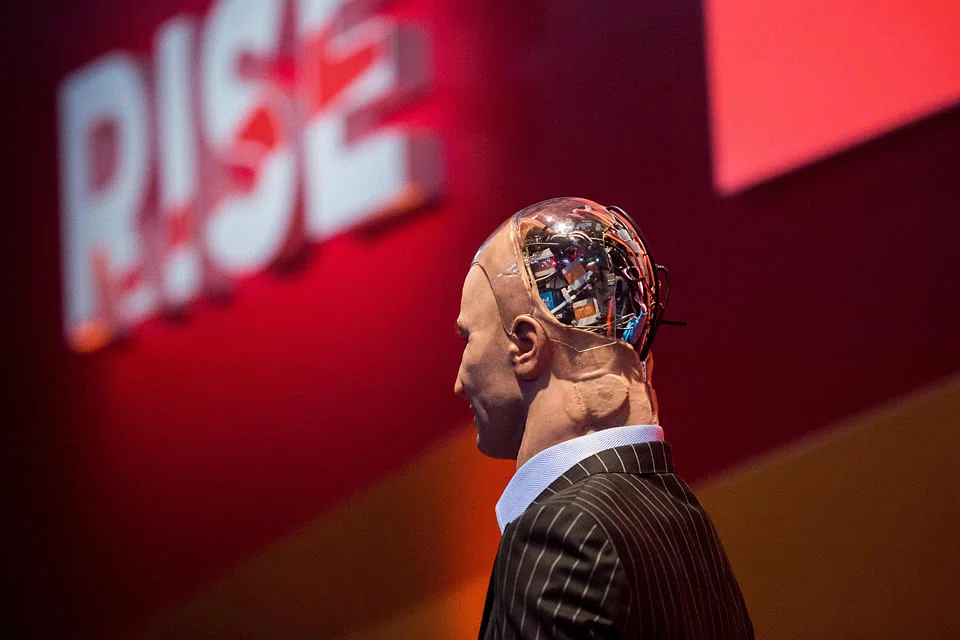
Paris
ARTIFICIAL intelligence (AI) could be deployed by dictators, criminals and terrorists to manipulate elections and use drones in terrorist attacks, more than two dozen specialists said on Wednesday, as they sounded the alarm over misuse of the technology.
In a 100-page analysis, they outlined a rapid growth in cyber crime and the use of "bots" to interfere with news gathering and penetrate social media among a host of plausible scenarios in the next five to 10 years.
Seán Ó hÉigeartaigh, executive director of the Cambridge Centre for the Study of Existential Risk, said: "Our report focuses on ways in which people could do deliberate harm with AI. AI may pose new threats, or change the nature of existing threats, across cyber, physical and political security."
The common practice, for example, of "phishing" - sending e-mails seeded with malware or designed to finagle valuable personal data - could become far more dangerous, the report said.
Currently, attempts at phishing are either generic but transparent - such as scammers asking for bank details to deposit an unexpected windfall - or personalised but labour intensive - gleaning personal data to gain someone's confidence, known as "spear phishing".
Mr Ó hÉigeartaigh said: "Using AI, it might become possible to do spear phishing at scale by automating a lot of the process." Such acts are thus harder to spot.
In the political sphere, unscrupulous or autocratic leaders can already use advanced technology to sift through mountains of data collected from omnipresent surveillance networks to spy on their own people. The report said: "Dictators could more quickly identify people who might be planning to subvert a regime, locate them and put them in prison before they act."
Likewise, targeted propaganda along with cheap, highly believable fake videos have become powerful tools for manipulating public opinion "on previously unimaginable scales".
An indictment handed down by US special prosecutor Robert Mueller last week detailed a vast operation to sow social division in the United States and influence the 2016 presidential election in which so-called "troll farms" manipulated thousands of social network bots, especially on Facebook and Twitter. Another danger zone on the horizon is the proliferation of drones and robots that could be repurposed to crash autonomous vehicles, deliver missiles, or threaten critical infrastructure to gain ransom.
Co-author Miles Brundage, a researcher at Oxford University's Future of Humanity Institute, said: "Personally, I am particularly worried about autonomous drones being used for terror and automated cyber attacks by both criminals and state groups."
The report details a plausible scenario in which an office-cleaning SweepBot fitted with a bomb infiltrates the German finance ministry by blending in with other machines of the same make. The intruding robot behaves normally - sweeping, cleaning, clearing litter - until its hidden facial recognition software spots the minister and closes in.
In this sci-fi story, a hidden explosive device is triggered by proximity, killing the minister and wounding nearby staff.
Mr Ó hÉigeartaigh said: "This report has imagined what the world could look like in the next five to 10 years. We live in a world fraught with day-to-day hazards from the misuse of AI, and we need to take ownership of the problems."
The authors called on policymakers and companies to make robot-operating software unhackable, to impose security restrictions on some research, and to consider expanding laws and regulations governing AI development.
Giant high-tech companies - leaders in AI - "have lots of incentives to make sure that AI is safe and beneficial", the report said.
Another area of concern is the expanded use of automated lethal weapons. Last year, more than 100 robotics and AI entrepreneurs - including Tesla and SpaceX chief executive Elon Musk, and British astrophysicist Stephen Hawking - petitioned the United Nations to ban autonomous killer robots, warning that the digital-age weapons could be used by terrorists against civilians.
They warned in a joint statement, also signed by Google DeepMind co-founder Mustafa Suleyman that, after the invention of machine guns and the atomic bomb, lethal autonomous weapons threaten to become the third revolution in warfare. AFP