

What you tweet might tell Yellen it is time to raise rates
Fed economists are looking into non-traditional data to improve the accuracy and timeliness of their forecasts
Washington
YOUR Google search or a tweet about your job is part of a vast trove of private economic information that might help Federal Reserve chair Janet Yellen and her colleagues get a more complete picture of where the economy is headed.
Economists at the Fed are looking into whether non-traditional data could improve the accuracy and timeliness of the forecasts that they put before monetary policy decision makers every six weeks or so. First, though, they want to be satisfied about the quality and reliability of the information.
The project comes as digital information about the economy is exploding. Companies post billions of prices online for everything from milk to haircuts, and households query Google Inc's search engine for the best mortgage rates or car deals. Retailers also collect billions of pieces of information about consumer preferences by capturing data every time a customer swipes a membership card at a grocery store or shops online.
For Fed economists, "the aspiration is to be sure we are aggressively pushing the envelope in putting in front of policymakers as accurate a picture of the economy as best as we can understand it", David Wilcox, director of the Fed Board of Governors' Division of Research and Statistics, said in a Feb 10 interview.
Current forecasting methods have their shortcomings. The economy is constantly shifting, eluding economic models that assume fairly predictable responses to low interest rates or low petrol prices. Turning points are notoriously hard for forecasters to identify.
Government statistical information is also often stale. When Fed officials meet this week, for example, the most recent report on their preferred inflation index will be from January.
Data that the Fed collects itself, or uses from private sources, is routinely "anonymised". The New York Fed, for example, produces a household debt and credit report from a national sample drawn from anonymous Equifax credit data.
Fed officials do not foresee private sector data replacing their use of US government statistics on everything from inflation to how workers flow in and out of the labour force.
The goal is to shorten "the time lag between what is happening and what your understanding of that is", said David Stockton, the Fed's former chief forecaster who is now a senior fellow at the Peterson Institute for International Economics in Washington.
Fed economists are reviewing research papers by Google chief economist Hal Varian on how search terms can be useful as spending indicators, and work by University of Michigan computer scientists and economists who have built a labour market indicator from social media posts. Mr Varian and a co-author showed in a research paper how a Google search index for real estate agencies tracked house sales.
"Google data seems to be helpful in getting real-time estimates of initial claims for unemployment benefits, housing sales and loan modification, among other things," Mr Varian told the Atlanta Fed in an interview published on the Atlanta Fed's website last April.
Also under review are labour market data produced by human resources company ADP Research Institute of Roseland, New Jersey, and Massachusetts Institute of Technology's Billion Prices Project, which collects online data from retailers. An associated company, called Price Stats, produces daily, monthly and annual price indexes.
Fed officials also intend to review research which suggests that an estimate of gross domestic product (GDP) can be constructed from the financial statements of the largest US companies.
"There is a lot of data out there that could be very valuable in trying to understand what is happening in the economy in the real time," said Mark Zandi, chief economist at Moody's Analytics Inc in West Chester, Pennsylvania, which is assisting ADP's research unit with studies of its data on 24 million employees, whose names are kept confidential.
Mr Zandi called ADP's information a "treasure trove" that can shed light on labour market puzzles such as why wage growth has been stagnant. One answer Moody's has seen in the ADP data: A lot of the new entrants in the labour force are younger, lower-paid workers.
The Fed Board's interest in such data is significant because, with some 330 PhD economists on staff, it is one of the nation's largest economic research organisations. About every six weeks, approximately 60 economists in the central bank's forecasting unit have to come up with a detailed report on the economic outlook for policymakers, who vote on interest rates eight times a year.
Fed officials also have a lot of questions about the quality of private information. Data projects inside private firms often have sponsors, such as Mr Varian at Google. What happens if the sponsors go away?
Also, the samples of people who enter a search term such as "Iphone 6" on Google may not be representative of the diversity of consumers in the US economy.
The Fed's go-slow approach "is entirely justified", said Stephen Oliner, a resident scholar at the American Enterprise Institute in Washington and a former senior adviser at the Fed Board. "You don't want to build big models that depend on data that are potentially unreliable."
Mike Cafarella, a computer scientist at the University of Michigan who helped build its social media tool to predict initial jobless claims, says that concerns about sampling and the sustainability of data inside private companies are important.
Still, "social media is a lot more representative of the country than you might think", he said.
Michigan researchers track word sets such as "I lost my job" in a stream of tweets that the university receives in an arrangement with Twitter Inc. From that information, they produce an index that aims to track initial claims for unemployment. They have also had some success at identifying the demographics of the people posting those messages, Mr Cafarella said. None of the University of Michigan's data contains personal information.
If a private company decided to shut off the supply of data, then there would probably be other sources, he said. Use of social media is increasing, not decreasing.
"We would be remiss or worse if we didn't make an aggressive effort to catalogue what is available and to try to rigorously test what is useful and would pass the standard of reliability," the Fed's Mr Wilcox said. BLOOMBERG
TRENDING NOW

‘If there’s a price to be paid, so be it’: George Yeo says Singapore must safeguard its reputation

South-east Asia has lost Nvidia’s best salesman
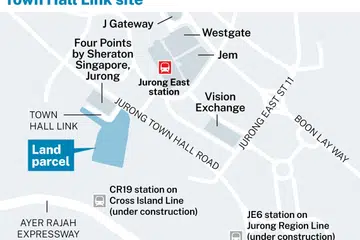
CapitaLand, Far East, Sing Holdings team up for S$1.8 billion bid at S$910 psf ppr for Jurong Lake District site

Beyond the greenback, Vietnam’s big borrowers turn to Asian-currency bonds

