

Upskilling for gig workers poses different problems needing different solutions
Platforms offer learning portals, but that’s insufficient when time is money for workers

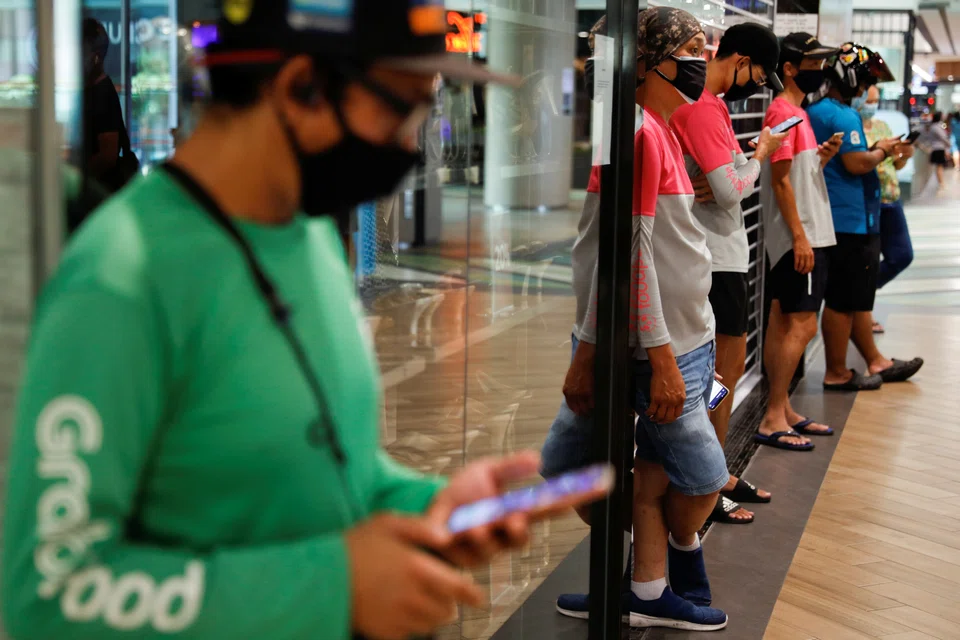
JOB stagnation in platform work – whether driving a taxi or private-hire vehicle or delivering food – is becoming a problem in some markets. While Singapore has taken steps to strengthen platform-worker protections, more needs to be done to boost job mobility in the long term, through paid training schemes and better working conditions.
Platform workers are often more vulnerable than other workers because they cannot find other jobs, or require flexible hours due to caregiving or medical needs.
In a survey of 958 ride-hailing drivers last year, the Institute of Policy Studies (IPS) found that job mobility was a significant concern. Nearly half – or 46 per cent – said they could not find other kinds of suitable work due to personal reasons, such as caregiving responsibilities.
More worryingly, only 31 per cent felt they could easily get a job similar to their previous role or related to their field of education. This was even though about half were open to leaving the platform job if there were opportunities.
There are various reasons why platform workers find it difficult to transition to other full-time employment.
One factor could be hectic schedules, resulting in a lack of time to gain new skills. The IPS survey found that 29 per cent of the drivers worked more than 59 hours a week, with top earners having to work as long as 14 hours a day.
Unlike employees, platform workers do not enjoy paid time off for training. For those who ride or drive as a full-time vocation, taking time off to upskill means losing income.
Another factor is the poor income and working conditions in alternative vocations. One driver in the IPS study previously worked long hours as a bus supervisor, and could not find the time to see his daughter. Despite those hours, he said he took home less than S$1,000 a month.
A delivery rider cited in another IPS study used to work in the hotel industry, but progression was dismal. He took 10 years to become a manager, but even then, his annual increment was only S$100. “I cannot earn S$5,000 with that job, unless I reach director level. Might as well do riding; at least if I work hard, I can earn S$5,000,” he told IPS.
Yet, pay for gig-economy work has a cap too. And there are other drawbacks. The take-home pay of S$5,000 seems attractive, but workers often fail to account for Central Provident Fund (CPF) contributions they would be entitled to in other roles.
Gig workers’ earnings are also reliant on the platforms’ individual algorithms, which aren’t transparent to workers.
Data released by the Ministry of Manpower in January shows the median income for platform workers in 2022 was S$2,500 for private-hire car drivers, S$1,500 for taxi drivers and S$2,000 for delivery workers. All figures were higher than in 2021.
Singapore has said it will work towards mandatory contributions to CPF ordinary and special accounts, from both workers and platforms. How the new rules affect pay will depend on how the platform companies react.
If the platforms choose to keep pay at current levels, then overall pay may increase, thanks to the employer contribution, but take-home pay is likely to be hit, dealing a blow to already cash-strapped workers.
The opportunity cost of staying on in platform work is higher for young workers – who make up a sizeable proportion of delivery riders – when they could enjoy better career and income progression in other fields.
Some platforms have announced initiatives to help workers pick up new skills. Grab has set up a GrabAcademy portal to help workers keen on exploring career opportunities outside the platform, with courses and coaching. Foodpanda has partnered e-learning platform Gnowbe and Temasek Polytechnic to set up a portal for riders to upskill.
The National Trades Union Congress (NTUC) has also been rolling out financial, digital literacy training, safety and wellbeing workshops, and business skills training for self-employed persons, including platform workers.
These efforts are a step in the right direction, but more needs to be done to dismantle exit barriers for platform workers. Training initiatives paid for by the government or potential employers would be a bigger step forward, removing the high opportunity cost to upskilling. More employers could also be roped in specifically to train and offer placements to former platform workers.
Yeo Wan Ling, who advises the various platform worker associations under NTUC, said: “NTUC also recognises that there is a trade-off for platform workers when they take time off work for training or upskilling, as that would translate to a loss in income. Training allowances would help to alleviate the financial impact on platform workers.”
Beyond training, it is also time for a serious conversation about extending flexi-work arrangements to blue-collar workers – a perk that is today largely available only to those sitting in offices.
A poll by IPS in January found that blue-collar workers are less likely to believe they have meaningful careers. Some experts reckon this reflects how the blue-collar workforce has internalised society’s perception of the lower value of their work.
And yet the Covid-19 pandemic has taught us the opposite – blue-collar workers are frontliners who keep essential services moving. While remote working is not possible for many of these jobs, flexible schedules and welfare initiatives should be introduced.
In a speech in October last year, Deputy Prime Minister Lawrence Wong flagged that Singapore does not sufficiently value hands-on technical work and “heart” work such as community care. He called for the country to “respect those who labour with their hands and hearts, and confer upon them the same status as other paths”.
A greater emphasis on work-life balance for blue-collar work would be a start, such that turning to the gig economy isn’t the only option for those who desperately need the flexibility.
All employees should have access to flexible work practices at workplaces, including working from home, flexi-hours as well as part-time work, to support their caregiving responsibilities, said NTUC’s Yeo. The organisation will continue to encourage employers to adopt flexible work arrangements via a set of tripartite standards. The aim is for this to cover four in 10 employees by the end of 2022. (*see amendment note)
*Amendment note: An earlier version of this story stated the deadline for NTUC’s aim on flexi-work arrangements as the end of this year. It is instead the end of 2022.
TRENDING NOW

Once staunchly pro-China, Malaysian Chinese businesses are now distancing themselves from Beijing

Stocks to watch: HPL, Aims Apac Reit, Zico, Advanced Systems Automation, ComfortDelGro

‘How many will survive?’: Bubble fears arise as China’s humanoid robotics face reality check

Smaller board lots can’t fix a market run by three banks

