

Asia: Markets hit as investors spooked by trade pact delay talk
 Add BT as a preferred source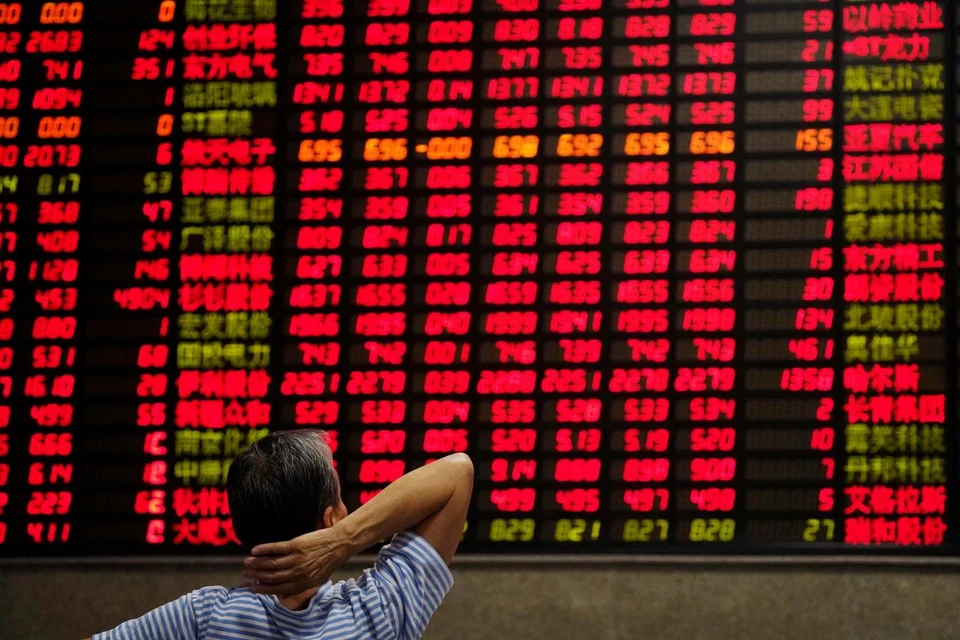
DeeperDive is a beta AI feature. Refer to full articles for the facts.
[HONG KONG] Asian markets mostly fell on Thursday after investors were spooked by speculation the much-anticipated signing of the China-US trade pact could be delayed.
Broad-based optimism that the economic superpowers would soon complete part one of a wider agreement has been the basis of a rally in global equities for several weeks.
But that confidence was given a slight jolt Wednesday by reports that a planned meeting between Donald Trump and Xi Jinping to put pen to paper may be put back to December as they iron out some issues and try to find a place to hold the ceremony.
A day earlier, the Financial Times and Wall Street Journal had said the White House was considering dropping existing tariffs on more than US$100 billion of imports to seal an agreement.
While officials said the deal is still on track, a seed of doubt was planted in the minds of nervous traders, who have witnessed several false dawns in the past.
"One could take the view that by not committing to meet the original deadline for signing the so-called phase one agreement... it gives more time for a somewhat more comprehensive agreement to be thrashed out - potentially involving a US commitment to wind back some existing tariffs," said National Australia Bank's Ray Attrill.
Navigate Asia in
a new global order
Get the insights delivered to your inbox.
"But markets have understandably jumped the other way, exhibiting a slight loss of confidence that anything more substantial than an agreement not to further lift tariffs - in return for some increase in US agricultural purchases - can be agreed."
WEIGHING THE RISKS
Wall Street ended flat and Asia struggled in early business.
Hong Kong fell 0.5 per cent after five days of gains, while Shanghai was off 0.3 per cent, while Singapore eased 0.1 per cent, Seoul shed 0.2 per cent and Taipei gave up 0.5 per cent. Tokyo was slightly lower at the break.
There were gains, however, in Sydney and Manila.
Stephen Innes, senior market analyst at AxiTrader said investors were trying to weigh the risks.
"A possible rollback in a chunk of tariffs should be a monumentally more colossal affair than a delay in the date from mid-November to December," he said in a note.
"But... with delay comes the chance that risk-on sentiment has too long to ferment, stalls and then maybe reverses as the waiting game weighs."
Oil prices stabilised after tumbling more than one per cent on Wednesday in reaction to a bigger-than-expected build in US reserves as well as worries that major producers will not push for deeper output cuts.
With Opec and other top producers led by Russia meet next month, Bloomberg News cited sources as saying they were likely to maintain their current agreement for caps - which are due to run out in March - well into 2020.
The limits have helped support oil prices for years, in the face of weakening demand, the China-US trade war and slowing global economic growth.
"It will prove very difficult to formally agree new, deeper cuts," Harry Tchilinguirian, head of commodity markets strategy at BNP Paribas, said. "A rollover of current cuts for the rest of 2020, with an emphasis on compliance by all members, is the path of least resistance."
AFP
Share with us your feedback on BT's products and services
TRENDING NOW

Ministry of Home Affairs Permanent Secretary Pang Kin Keong to retire

Shelving S$5 billion office redevelopment plan proved ‘wise’ as geopolitical risks mount: OCBC chairman

Richard Eu on how core values, customers keep Singapore’s TCM chain Eu Yan Sang relevant

China pips the US if Asean is forced to choose, but analysts warn against reading it like a sports result

